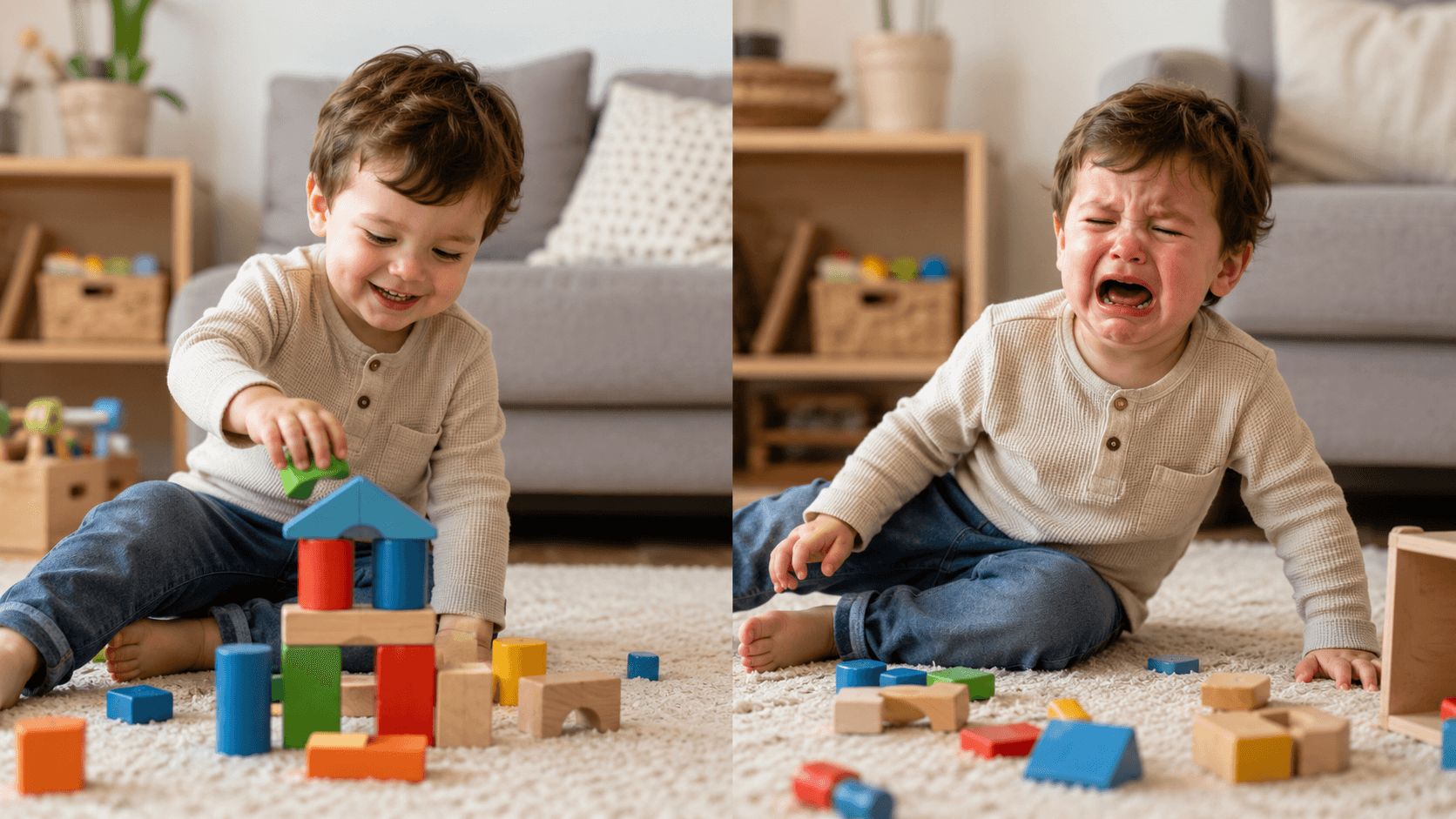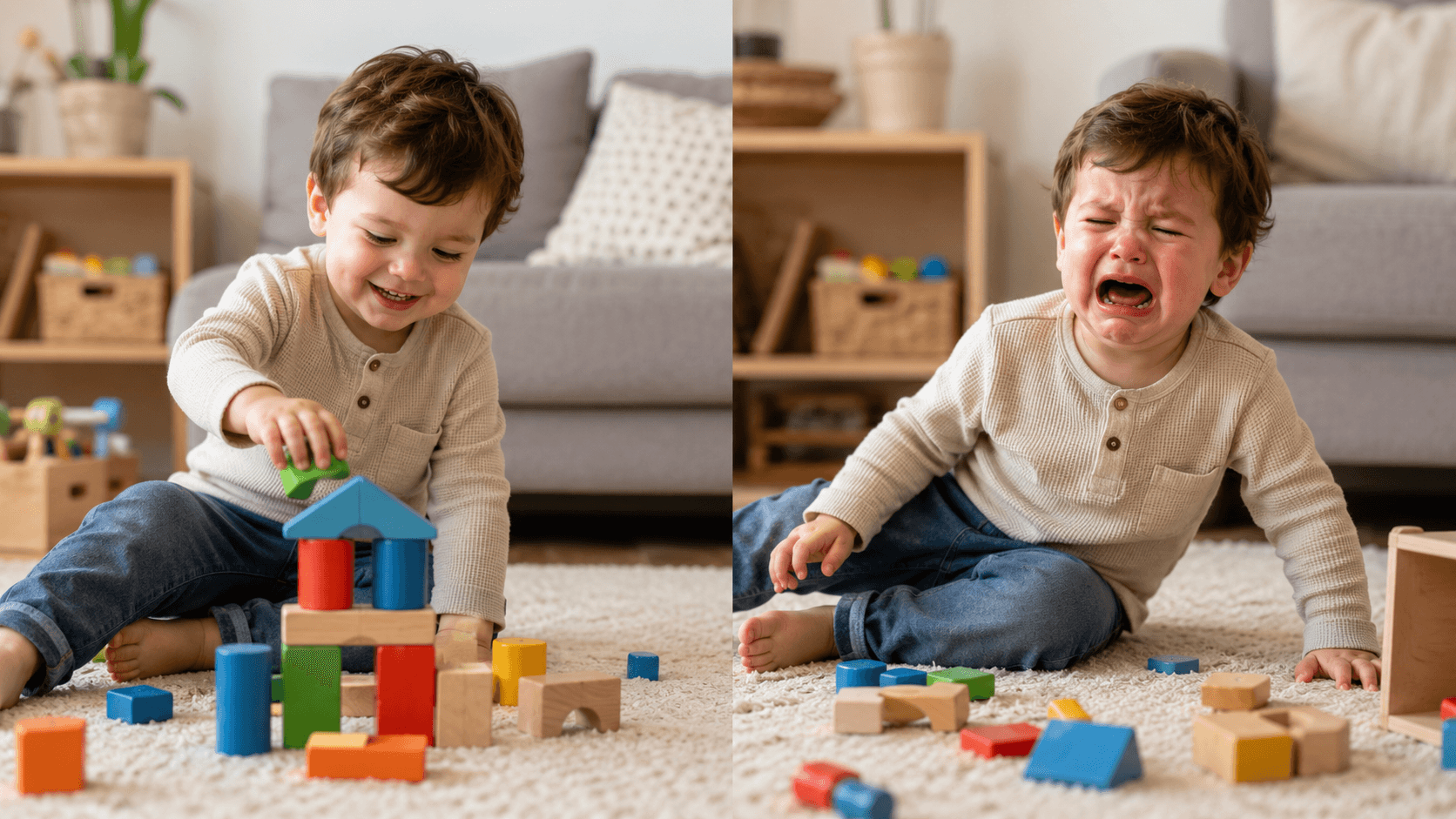
Toddler behavior can be confusing. One minute your child is sweet, curious, and funny. The next minute they are crying because you peeled the banana "wrong," throwing food, hitting a sibling, refusing shoes, or saying "no" to something they actually want.
If you feel like toddlerhood is intense, you are not imagining it. Ages 1, 2, and 3 are full of rapid development: movement, language, independence, emotions, limits, and big feelings that grow faster than self-control.
The good news: much of what parents call toddler behavior problems is actually normal toddler behavior—especially when children are tired, hungry, overstimulated, frustrated, or trying to communicate without enough words.
The goal is not to "control" your toddler. The goal is to understand what is developmentally normal, set calm limits, prepare the environment, and teach the skills your child is missing. For a broader framework, see our guide to calm, effective child discipline for ages 1-6.
A Montessori-aligned approach asks: What is my child trying to learn, and how can I support independence with clear, respectful limits?
Table of contents
- What is normal toddler behavior?
- Why toddler behavior feels so intense
- Age 1: normal behavior and what helps
- Age 2: normal behavior, "terrible twos," and what helps
- Age 3: normal behavior and what helps
- What to do during difficult toddler behavior
- Common toddler behavior problems and what helps
- Montessori-aligned toddler behavior strategies
- A simple 7-day toddler behavior reset
- What parents should avoid
- When toddler behavior may need extra support
- FAQ
- Related reads
What is normal toddler behavior?
Normal toddler behavior often includes big emotions, limited patience, strong preferences, and repeated testing of boundaries.
Common toddler behaviors include:
- saying "no"
- tantrums
- running away
- wanting independence
- refusing help
- demanding help again
- throwing food
- hitting or pushing
- biting
- grabbing toys
- crying during transitions
- resisting bedtime
- wanting the same routine every day
- melting down when something feels "wrong"
- wanting to do things by themselves
- changing their mind quickly
This does not mean every behavior should be allowed. Normal does not mean "ignore it." It means the behavior is usually a sign of immature skills, not bad character.
Your toddler is still learning:
- impulse control
- emotional regulation
- language
- waiting
- sharing space
- accepting limits
- handling frustration
- moving safely
- communicating needs
- repairing after mistakes
That learning takes repetition.
Why toddler behavior feels so intense
Toddlerhood is intense because development is uneven.
Your toddler may be able to climb the sofa, open drawers, remember where snacks are, and insist on doing everything alone—but still not have the emotional control to handle "not right now."
This mismatch creates many daily conflicts.
Your toddler wants independence
They may think: "I do it myself."
But they may not yet have the coordination, patience, or judgment to do it safely.
Your toddler has big feelings
A toddler's emotions are real and powerful. They may feel devastated by things adults see as small.
Your toddler has limited language
Even when toddlers have words, they may not have the right words during stress.
Your toddler learns through repetition
You may need to repeat the same limit many times:
- "Food stays on the table."
- "I won't let you hit."
- "Shoes go on before we leave."
Repetition is not proof that you are failing. It is how toddlers learn.
Your toddler lives in the present moment
Waiting, transitions, and delayed gratification are hard because toddlers are still developing a sense of time. If these moments are wearing you down, our calm parent guide offers practical ways to stay steady without becoming permissive.
Age 1: normal behavior and what helps
Around age 1, toddlers are often newly mobile, curious, and driven to explore. They learn by touching, dropping, mouthing, carrying, climbing, and repeating.
Common 1 year old behavior
At age 1, you may see:
- throwing or dropping objects
- climbing
- emptying drawers
- putting things in the mouth
- crying during separation
- wanting to be held often
- refusing diaper changes
- grabbing toys
- food throwing
- short attention span
- frustration when they cannot communicate
- strong reactions to transitions
This age is not about "being naughty." It is mostly exploration plus limited communication.
What helps at age 1
Prepare a safe yes-space. Create an area where your child can explore without hearing "no" all day.
Use fewer words. A 1-year-old does not need a lecture. Try: "Not for mouth. Here is your teether."
Redirect physically and calmly. Move unsafe items. Offer a safe alternative.
Use routines. Predictable rhythms reduce stress: meals, nap, outdoor time, bath, bedtime.
Offer real movement. Toddlers need to move. Climbing, carrying, pushing, pulling, and walking are not "extra"—they are developmental needs.
For age-specific activity ideas, see Montessori Activities for Toddlers 12-18 Months.
Age 2: normal behavior, "terrible twos," and what helps
2 year old behavior can feel especially intense because the child wants independence but still has limited impulse control.
This is the age many people call the terrible twos, but that phrase can be misleading. Two-year-olds are not terrible. They are powerful, emotional, curious, and still very immature.
Common 2 year old behavior
At age 2, you may see:
- frequent "no"
- tantrums
- hitting or pushing
- biting
- throwing food or toys
- refusing clothes or shoes
- wanting routines done a specific way
- sudden meltdowns
- difficulty sharing
- running away
- demanding independence
- wanting help immediately after refusing it
- strong frustration when misunderstood
What helps at age 2
Offer choice within limits.
Instead of: "What do you want to wear?"
Try: "Blue shirt or green shirt?"
Use first/then language. "First shoes, then outside."
Keep limits short and consistent. "I won't let you hit."
Give them a job. Two-year-olds often calm down when they feel capable.
Try:
- carrying napkins
- wiping a spill
- putting socks in a basket
- watering a plant
- helping wash fruit
Find more ideas in 40 Montessori Practical Life Activities by Skill Area.
Expect repetition. A 2-year-old may need the same boundary many times before the skill becomes reliable.
For more 2-year-old activities, see Montessori Activities for Toddlers 24-36 Months.
Age 3: normal behavior and what helps
At age 3, many children have more language, imagination, and social awareness. But they are still young. They may sound older than they can actually behave.
Common 3 year old behavior
At age 3, you may see:
- arguing
- bargaining
- big feelings about fairness
- refusing transitions
- testing rules
- lying or fantasy-based stories
- difficulty losing games
- bossiness with peers or siblings
- tantrums when tired
- fears or worries
- intense preferences
- more complex sibling conflict
Three-year-olds may be able to explain what happened, but still struggle to stop themselves in the moment.
What helps at age 3
Use problem-solving language. "You both want the truck. What is the plan?"
Teach repair. Instead of forcing an empty apology, ask: "What can we do to help?"
Use visual routines. A simple chart for morning, bedtime, or cleanup can reduce repeated conflict.
Give more responsibility. Three-year-olds often enjoy real work:
- setting the table
- sorting laundry
- preparing snack
- watering plants
- helping with simple cooking
- cleaning with a small cloth
Respect concentration. If your child is focused, avoid interrupting unnecessarily. Concentration supports self-regulation.
For preschool activity ideas, see Montessori Activities for Ages 3-5.
What to do during difficult toddler behavior
When toddler behavior escalates, parents often want the perfect phrase. But the sequence matters more than the exact words.
Step 1: Move close
Do not shout from across the room if your toddler is hitting, throwing, climbing unsafely, or melting down.
Move close and lower your voice.
Step 2: Stop unsafe behavior
Use a clear limit:
- "I won't let you hit."
- "I won't let you throw blocks."
- "I won't let you run into the street."
If needed, gently block or move your child.
Step 3: Name the feeling or need
- "You're angry."
- "You wanted a turn."
- "You didn't want to leave."
- "You wanted to do it yourself."
Naming the feeling does not excuse the behavior. It helps your child understand what is happening inside.
Step 4: Give the acceptable action
Toddlers need to know what to do instead.
- "You can stomp your feet."
- "Say, 'Turn please.'"
- "Food stays on the table."
- "You can throw the soft ball."
- "You can say, 'Help.'"
Step 5: Follow through calmly
A limit without follow-through becomes confusing.
For example: "Blocks are for building. If you throw them again, I'll put them away."
If the child throws again: "Blocks are going away. We can try again later."
This is not punishment. It is a logical boundary.
Our Montessori chat support can help you understand the likely trigger behind tantrums, hitting, biting, food throwing, transitions, or "not listening"—and suggest a calm plan for your child's age.
Common toddler behavior problems and what helps
Tantrums
Tantrums often happen when a toddler is overwhelmed, tired, hungry, frustrated, or unable to express a need.
What helps:
- stay close and calm
- reduce words
- keep the limit
- offer comfort when accepted
- teach later, not during the peak
Try: "You're upset. I'm here. I won't let you hit."
Read more in Toddler Tantrum: Why It Happens and What Actually Helps.
Hitting
Hitting is common in toddlerhood, especially when language and impulse control are still developing.
What helps:
- block the hit
- say the limit
- name the feeling
- teach replacement words
- support repair
Use our full toddler hitting guide for a step-by-step plan.
Biting
Biting can happen from frustration, sensory needs, teething, excitement, or lack of language.
What helps:
- stay calm
- attend to the bitten child first
- use a short limit
- observe triggers
- offer safe biting alternatives if sensory-related
See Toddler Biting: Why It Happens + How to Stop It.
Food throwing
Food throwing may mean your toddler is done, exploring cause and effect, seeking reaction, or overwhelmed by too much food.
What helps:
- serve smaller portions
- teach "all done"
- use a no-thank-you bowl
- end the meal calmly if throwing continues
See Food Throwing: Why Kids Do It + How to Stop It.
Picky eating
Picky eating is common in toddlerhood. Pressure often makes it worse.
What helps:
- include one safe food
- offer tiny portions
- avoid forced bites
- repeat exposure calmly
- keep meal routines predictable
See Picky Eater: What Helps Without Pressure.
Sibling fighting
Toddlers may grab, hit, interrupt, or become jealous because they do not yet have strong conflict skills.
What helps:
- protect each child's work
- avoid forced sharing
- teach "turn please"
- stop unsafe behavior
- support repair
See Siblings Fighting: What to Do Without Taking Sides.
"Not listening"
Often, toddlers are not ignoring you on purpose. They may be focused, overwhelmed, tired, or unclear about what you expect.
What helps:
- get close
- say their name
- use one instruction
- show what you mean
- use first/then language
- reduce repeated shouting
Try: "First shoes, then outside."
Montessori-aligned toddler behavior strategies
Montessori-aligned parenting is not permissive. It is respectful, observant, and firm.
1. Prepare the environment
A toddler in an unprepared environment hears "no" constantly.
Prepare the home so your toddler can succeed:
- safe low shelves
- fewer toys available
- child-sized tools
- a place for shoes
- a basket for books
- accessible cloths for spills
- safe movement opportunities
Toy rotation can help reduce chaos. See Montessori Toy Rotation at Home: Ages 1-3.
2. Offer freedom within limits
Toddlers need freedom, but not unlimited freedom.
Examples:
- "You may choose the red cup or blue cup."
- "You may walk or hold my hand. I won't let you run into the street."
- "You may be angry. You may not hit."
3. Use real work to build regulation
Practical life is one of the best behavior supports because it gives toddlers purposeful activity.
A bored toddler often creates chaos. A capable toddler can participate.
Try:
- pouring water
- wiping spills
- sweeping crumbs
- washing vegetables
- sorting socks
- carrying laundry
- feeding a pet with help
- setting napkins on the table
4. Protect concentration
If your toddler is focused on safe play, pause before interrupting.
Concentration builds patience, coordination, and self-control.
5. Observe before correcting
Ask:
- When does the behavior happen?
- What happened right before?
- Is my child tired, hungry, overstimulated, or needing connection?
- Is the expectation too difficult?
- Does the environment make this harder?
- What skill is missing?
Observation helps you respond to the cause, not just the behavior.
A simple 7-day toddler behavior reset
Use this when everything feels chaotic.
Day 1: Track the hardest behavior
Write down when it happens, where it happens, and what happens right before.
Day 2: Reduce one trigger
Examples:
- earlier snack
- fewer toys
- shorter outings
- more outdoor time
- simpler bedtime
- less waiting
Day 3: Choose one limit phrase
Use the same phrase every time. For example: "I won't let you hit."
Day 4: Teach one replacement
For example:
- "Say, 'Help please.'"
- "Say, 'Turn please.'"
- "Food stays on the table."
Day 5: Add one practical life job
Give your toddler one real daily responsibility.
Day 6: Create one yes-space
Make one area safer and simpler so your toddler can explore with fewer corrections.
Day 7: Review what improved
Look for small wins:
- shorter tantrums
- less hitting
- easier transitions
- more cooperation
- calmer mealtimes
- faster repair
Progress is not perfection.
What parents should avoid
Avoid long lectures
Toddlers cannot process long explanations during stress. Use fewer words.
Avoid labels
Instead of: "You're naughty."
Try: "I won't let you throw."
Avoid threats you cannot follow through on
Empty threats reduce trust and clarity.
Avoid expecting adult-level self-control
Your toddler is still developing impulse control.
Avoid too many choices
Too many options overwhelm toddlers. Use two choices: "Walk or be carried?"
Avoid forced sharing
Forced sharing can increase conflict. Protect the child who is using the item, then teach turn-taking.
When toddler behavior may need extra support
Most toddler behavior is normal and improves with development, routine, and consistent limits.
Consider extra support if:
- aggression is frequent, intense, or worsening
- your child often seems unable to calm even with support
- your child loses skills they previously had
- language delay is making frustration much harder
- sleep problems are severe
- mealtimes are extremely stressful
- your child has frequent choking, gagging, or feeding concerns
- your child is hurting themselves or others often
- you feel unable to keep everyone safe
- your gut says something is not right
You can talk with your pediatrician, a child development specialist, speech-language pathologist, occupational therapist, or child therapist depending on the concern.
Getting support is not overreacting. It is responsive parenting.
FAQ
What is normal toddler behavior?
Normal toddler behavior includes tantrums, saying no, wanting independence, testing limits, difficulty sharing, big emotions, and impulsive behavior. Toddlers still need calm limits and skill-building.
Is 2 year old behavior supposed to be this hard?
Often, yes. Two-year-olds want independence but still have limited language, patience, and impulse control. The "terrible twos" are really a stage of rapid growth, not a sign that your child is bad.
What are common toddler behavior problems?
Common toddler behavior problems include tantrums, hitting, biting, food throwing, refusing transitions, running away, sibling conflict, and not listening. Many improve with routine, a prepared environment, clear limits, and repeated practice.
How do I discipline a toddler in a Montessori-aligned way?
Use respectful, firm limits. Prepare the environment, offer limited choices, redirect unsafe behavior, use natural consequences, and teach repair. Avoid shame, threats, and long lectures.
Why does my toddler behave worse with me?
Many toddlers release big emotions with the parent they feel safest with. It can also happen because they want connection, attention, or help regulating after holding it together elsewhere.
How can I reduce toddler tantrums?
Look for triggers, keep routines predictable, offer limited choices, reduce hunger and tiredness, use fewer words during stress, and teach replacement language when calm.
Related reads on Montessori Parent Guide
- Montessori Activities for Toddlers 12-18 Months
- Montessori Activities for Toddlers 24-36 Months
- Montessori Activities for Ages 3-5
- Toddler Hitting
- Toddler Biting
- Food Throwing
- Picky Eater
- Siblings Fighting
- Montessori Practical Life Activities
- Montessori Toy Rotation at Home
- How to Be a Calm Parent
- Parenting Stress
Our Montessori chat support can help you understand what may be normal for your child's age, identify likely triggers, and choose a calm, practical response for tantrums, hitting, biting, transitions, meals, or sibling conflict.
Final thought
Toddler behavior can feel loud, messy, and exhausting. But most of it is not a sign that something is wrong with your child. It is a sign that your child is still learning how to be a person.
They are learning how to wait, ask, stop, choose, repair, share space, handle frustration, and trust limits.
Your role is not to be perfect. Your role is to stay steady enough to guide them: prepare the environment, set clear limits, offer real work, and repeat with patience.
Small, consistent responses become the foundation for calmer behavior over time.