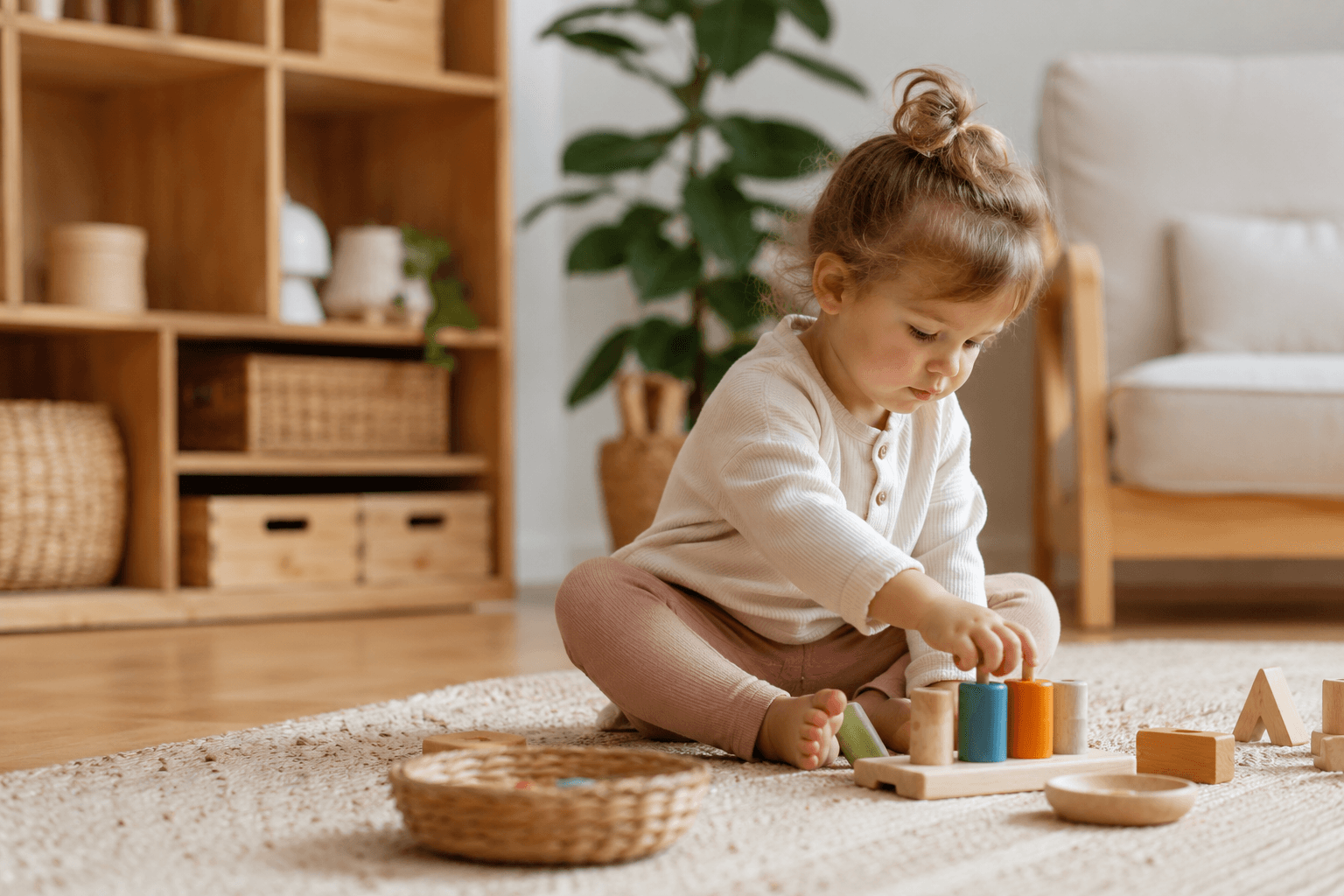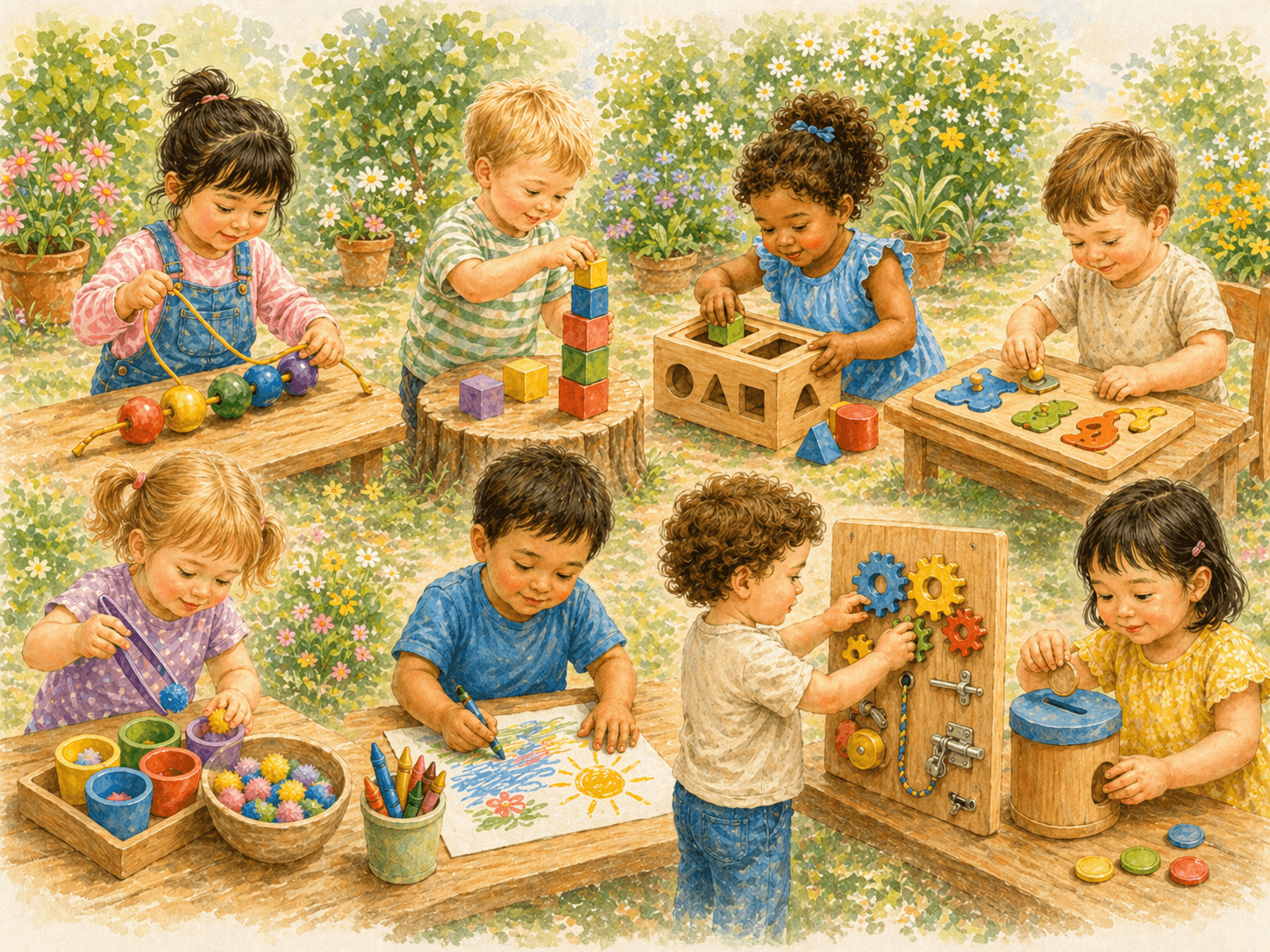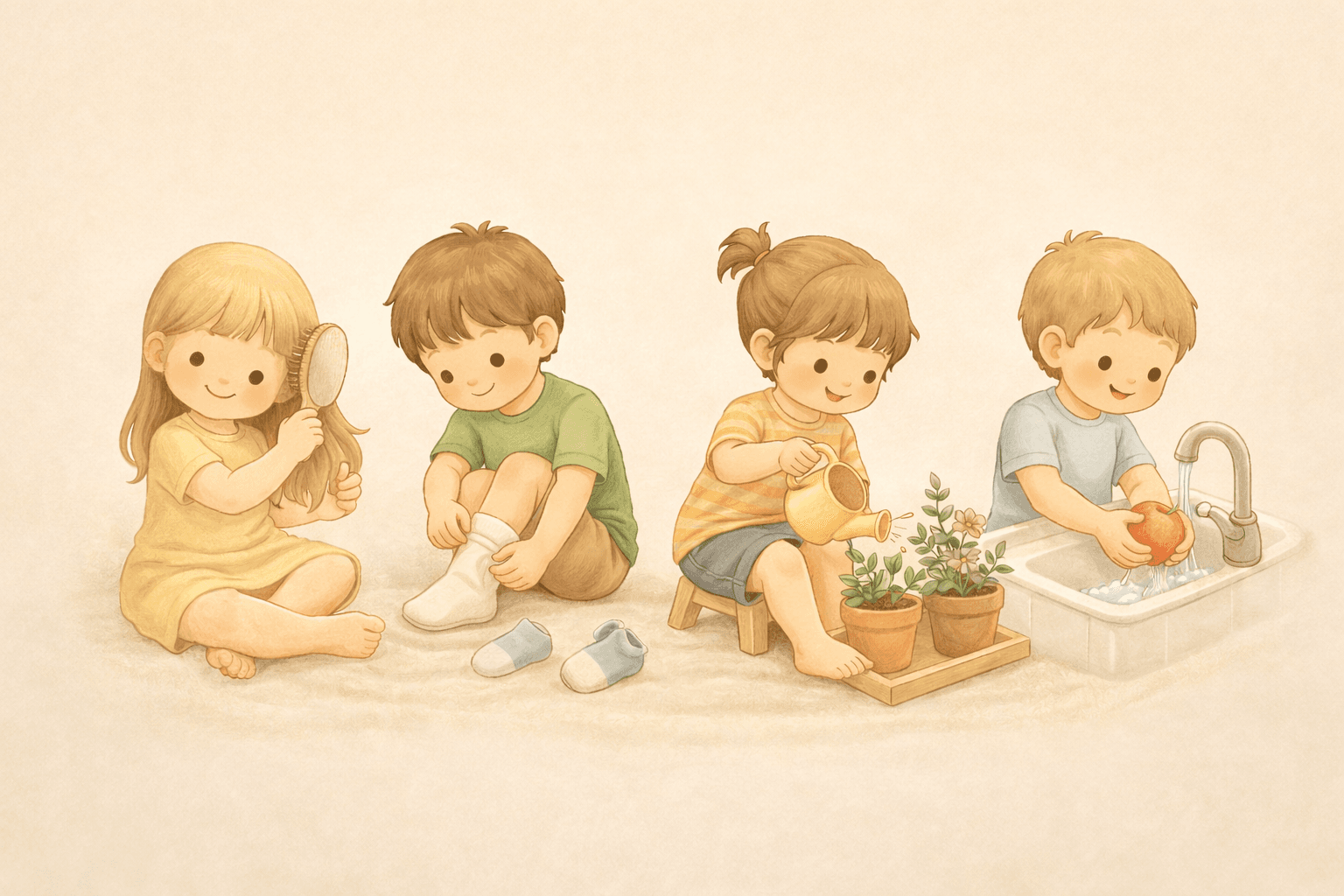
Montessori practical life activities are real, everyday tasks - washing hands, pouring water, preparing food, sweeping - that help children build independence, concentration, coordination, and a sense of order. In Montessori environments, Practical Life is typically organized into five areas: care of self, care of the environment, food preparation, control of movement, and grace and courtesy. These exercises form the foundation of every Montessori classroom and are among the easiest to replicate at home.
This guide gives you 40 practical life ideas plus a clear, Montessori-aligned method to present each activity at home so your child can do it independently (and actually enjoy doing it).
Table of Contents
- Why Montessori Practical Life Activities Matter
- How to Present Montessori Practical Life Activities at Home
- Home Setup: Practical Life Without a Full Montessori Shelf
- Montessori Practical Life Activities: 40 Ideas (Organized by Skill Area)
- Step-by-Step Presentations for 6 High-Value Practical Life Activities
- Age Guidance: What to Offer When
- Montessori Practical Life Materials List
- Troubleshooting: When Practical Life Gets Messy (or Your Child Refuses)
- Montessori Practical Life FAQs
- Printable Summary
- Related Reading
Why Montessori Practical Life Activities Matter
In Montessori, Practical Life is not "busy work." These exercises are purposeful activities that support foundational skills like attention, motor control, responsibility, and independence.
Benefits you can expect over time:
- More willingness to help (because they can actually succeed)
- Improved focus and follow-through
- Stronger fine and gross motor coordination
- Fewer power struggles around "I do it!" moments
- Greater confidence: "I can take care of myself and my space"
How to Present Montessori Practical Life Activities at Home
A Montessori presentation is simple, deliberate, and designed for independence. Your goal is not to entertain or "teach" with lots of words - it is to show the movement and then let your child practice.
The Montessori presentation framework (use this for almost everything)
- Prepare the environment
- Choose a consistent work spot (table or floor mat).
- Use a tray or basket to define the activity.
- Ensure everything is child-sized and complete (tool, materials, cleanup).
- Invite (do not command)
- "Would you like me to show you how to pour water?"
- Demonstrate slowly, with minimal words
- Move at "slow motion" speed.
- Keep language sparse: name key items once, then show.
- Isolate the hardest step (for example, tipping a pitcher) so it is easy to see.
- Offer a turn
- Slide the tray toward your child.
- Say: "Now you try."
- Step back
- Let repetition happen.
- Resist correcting every imperfection.
- Close the cycle
- Show how to put items back and wipe the workspace.
- The "finish" is part of the work.
The three golden rules that prevent most frustrations
- Make it real: Use actual tools that work (small glass, real sponge, functional brush).
- Make it sized-right: Child-sized tools reduce spills and discouragement.
- Make it limited: Offer a few activities at a time; too many choices reduces focus.
Home Setup: Practical Life Without a Full Montessori Shelf
You can create a Practical Life area with just a few basics:
- A low tray or basket collection (4-8 trays rotating)
- A small sponge cloth stack
- Child-sized broom and dustpan
- Small pitcher and two cups
- Apron or small towel
- Step stool for sink access
- A cleanup caddy (mini spray bottle with water, cloth)
Safety note: choose breakable items only if your home is comfortable with it and your child is ready. Breakable materials often increase care, but safety comes first.
Montessori Practical Life Activities: 40 Ideas (Organized by Skill Area)
Use these as a menu. Start with what your child is already trying to do in daily life.
A. Care of Self (10 ideas)
- Hand washing (sink or basin)
- Nose wiping with tissues and a lidded bin
- Brushing hair (small brush and mirror)
- Brushing teeth practice routine
- Putting on socks
- Putting on shoes (slip-ons first)
- Zipping (jacket or zipper pouch)
- Buttoning (shirt or dressing frame)
- Washing face with warm cloth
- Folding simple clothing (washcloths to shirts)
These align with classic Practical Life "care of the person" work seen in Montessori programs.
B. Care of the Environment (12 ideas)
- Wiping a table
- Cleaning a spill (small towel and sponge)
- Sweeping crumbs
- Dusting shelves (cloth and small tray)
- Polishing (mirror, wood, or metal with a safe product)
- Washing dishes (basin method)
- Scrubbing vegetables (soft brush)
- Watering plants
- Flower arranging (small vase and pitcher)
- Sorting recycling
- Cleaning windows (spray bottle with water)
- Putting away groceries (light items)
Care of the environment is a core Practical Life pillar and is widely cited as a key area of Montessori home practice.
C. Food Preparation (10 ideas)
- Peeling a banana
- Slicing soft foods (banana, strawberries) with a child-safe knife
- Spreading (butter, hummus) on toast or crackers
- Pouring water (small pitcher)
- Pouring dry goods (beans or rice) with a funnel option
- Spooning (transfer beans between bowls)
- Juicing citrus (hand juicer)
- Cracking an egg (start with tapping practice)
- Washing fruit
- Setting the table (napkins, cutlery, cups)
Food prep is a common Practical Life theme in Montessori classrooms and at home.
D. Control of Movement (4 ideas)
- Carrying a tray (two hands, slow walking)
- Walking the line (tape line on the floor)
- Transferring with tongs
- Opening and closing containers (jars, tins, snaps)
Preliminary exercises like carrying a tray and controlled transfers are Practical Life foundations.
E. Grace and Courtesy (4 ideas)
- Greeting (hello and goodbye with eye contact)
- Interrupting politely (hand on shoulder, wait)
- Offering help ("Can I help you?")
- Table manners (napkin, "please/thank you," passing food)
Grace and courtesy lessons are often included as part of Practical Life work.
Want a printable summary? Download the PDF.
Enter your email to unlock this Practical Life printable.
Step-by-Step Presentations for 6 High-Value Practical Life Activities
Below are home-friendly Montessori presentations you can replicate easily.
1. Pouring Water (Pitcher to Cup)
Tray setup: small pitcher (1/4 full), two small cups, sponge cloth.
Presentation:
- Carry tray to table.
- Hold pitcher with two hands.
- Pour slowly until cup is nearly full; stop.
- Set pitcher down gently.
- If spill: fold cloth and wipe once, refold, wipe again.
Control of error: the child can see overflow immediately; sponge is built in for independence.
2. Pouring Dry Goods (Beans or Rice)
Tray setup: two bowls, small pitcher or cup, beans or rice, small brush and mini dustpan optional.
Presentation tips:
- Start with large beans (easier to control) before rice.
- Pour close to the target bowl to reduce scatter.
3. Spooning Transfer
Tray setup: two bowls, spoon, beans (or pom-poms for beginners).
Presentation:
- Show how to level the spoon by lightly tapping the bowl edge.
- Move slowly; speed causes spills.
Progression: spoon to tongs to tweezers.
4. Washing Hands (Sink or Basin)
Setup: step stool, soap, towel within reach.
Presentation sequence:
- Turn water on (show gentle pressure).
- Wet hands.
- Soap: rub palms, backs, between fingers.
- Rinse.
- Dry hands and hang towel.
- Turn water off.
Montessori note: keep everything reachable so the child completes the full cycle independently.
5. Sweeping
Setup: child broom and dustpan, defined crumb area.
Presentation:
- Demonstrate short, controlled strokes.
- Sweep toward one pile point.
- Hold dustpan steady; sweep into pan.
Common pitfall: broom too big. Child-sized tools matter.
6. Spreading (Snack Prep)
Tray setup: small plate, spread, spreading knife, crackers or toast, cloth.
Presentation:
- Scoop a small amount.
- Spread from center outward.
- Place knife down safely on the plate edge.
Independence win: your child can make their own snack with dignity.
Age Guidance: What to Offer When
Montessori practical life exercises are individual, but here is a practical rule of thumb by age:
12-18 months
Focus on simple, one-step actions your child is already attempting:
- Putting items in and out of a basket
- Wiping a table with a damp cloth
- Watering plants with a very small pitcher
- Pulling off socks and shoes
- Placing toys back on a low shelf
See more in our guide to Montessori activities for 1 year olds.
18 months - 3 years
This is the peak window for practical life. Toddlers can handle multi-step activities:
- Pouring water (pitcher to cup)
- Spooning and transferring between bowls
- Food prep basics (peeling bananas, spreading)
- Sweeping with a child-sized broom
- Dishwashing with a basin setup
- Dressing: zipping, buttoning, putting on shoes
- Folding washcloths and small towels
Find more age-specific ideas in our toddler activity guide and activities for 2 year olds.
3-6 years (preschool)
Children at this stage are ready for longer sequences and real responsibility:
- Complete food preparation (cracking eggs, making a sandwich, juicing)
- Polishing sequences (mirror, wood, metal)
- Full cleaning routines (wash, dry, put away)
- Folding sequences progressing from washcloths to shirts
- Sewing with large needles and burlap
- Gardening tasks (planting seeds, weeding, harvesting)
For more preschool-age activities beyond practical life, see our Montessori activities for ages 3-5.
If you are unsure where to start, choose the activity your child is already trying to do (even messily). That is usually the right starting point.
Not sure which practical life activity to offer next? Montessori Parent Guide helps you choose age-based practical life activities, set them up simply at home, and turn everyday routines into opportunities for independence.
Montessori Practical Life Materials List
You do not need to buy a full Montessori practical life curriculum. Here is a starter materials list organized by category:
Essential items (start here)
- Small pitcher (glass or ceramic, 1-cup size)
- Two small cups or bowls
- Child-sized broom, dustpan, and mop
- Small sponges and cloth towels
- Step stool for sink and counter access
- A few trays or baskets to define activities
- Child-safe spreading knife
- Small apron
For food preparation
- Hand juicer
- Vegetable scrub brush
- Crinkle cutter or child-safe knife
- Small cutting board
- Mixing bowls and wooden spoon
- Egg cups for cracking practice
For care of the environment
- Small spray bottle (filled with water)
- Polishing cloths and safe polish (beeswax works well)
- Small watering can
- Hand whisk broom for tables
- Small bucket for washing activities
For fine motor and transfer work
- Tongs (kitchen tongs, then smaller tweezers as skills grow)
- Funnel for pouring practice
- Various containers with different lids (screw tops, snaps, latches)
- Large beads and laces for threading
Most of these are available at dollar stores or already in your kitchen. The key is child-sized: tools that actually fit small hands reduce frustration and increase independence.
Troubleshooting: When Practical Life Gets Messy (or Your Child Refuses)
If your child keeps spilling
- Reduce quantity (1/4 pitcher, tiny bowls)
- Slow your demonstration
- Switch rice to beans
- Check tool size
If your child loses interest quickly
- Rotate fewer trays at once
- Align to current interest (water play? offer pouring and sponge)
- Keep presentations under 2 minutes
If you feel stressed by the mess
- Prioritize activities with contained cleanup (tray and cloth)
- Use a washable mat under water work
- Remind yourself: the goal is skill-building, not perfection
Montessori Practical Life FAQs
What are Montessori practical life activities? They are purposeful, real-life tasks (care of self, care of environment, food preparation, movement control, grace and courtesy) that support independence and concentration. Unlike academic exercises, practical life activities use real tools and produce real results.
What are the 5 areas of practical life in Montessori? The five areas of Montessori practical life are: (1) care of self — dressing, hand washing, grooming; (2) care of the environment — cleaning, tidying, plant care; (3) food preparation — pouring, cutting, spreading, cooking; (4) control of movement — carrying, walking carefully, transferring; and (5) grace and courtesy — greetings, manners, polite interrupting.
How many practical life activities should I offer at home? A strong starting point is 4-8 rotating options. Fewer choices often leads to deeper focus and repetition.
Do I need special Montessori materials? No. Most Montessori practical life activities use everyday household items. What matters is child-sized tools, a clear setup, and a consistent presentation. See the materials list above for specifics.
How do I know when to move to a harder activity? When your child completes the full cycle (do, clean up, reset) with confidence, add a small complexity: more steps, smaller tools, or a new transfer method.
Why does my child refuse practical life activities? Common reasons: the activity is too hard (simplify it), the tools are adult-sized (switch to child-sized), or too many options are available at once (reduce to 3-4 trays). Sometimes the child simply is not in a sensitive period for that skill — try a different category and come back later.
Related Reading
- What is Montessori? A Parent's Complete Guide
- Montessori Activities for Toddlers (1-3 Years): The Complete At-Home Guide
- Montessori Activities for 1 Year Olds (12-24 Months): 20 Simple, Practical Ideas
- 15 Montessori Activities for 18 Month Olds
- Montessori Activities for 2 Year Olds (24-36 Months): 25 Purposeful Activities
- Montessori Preschool Activities (Ages 3-5): 30 Classroom-Style Works
- 10 DIY Montessori Materials You Can Make for Under $20
- Setting Up Your Child's Montessori Bedroom: Complete Guide
- Montessori Language Activities (Ages 1-5)
- Montessori Toy Rotation: Step-by-Step for Ages 1-3
- Montessori Toys for 1 Year Olds