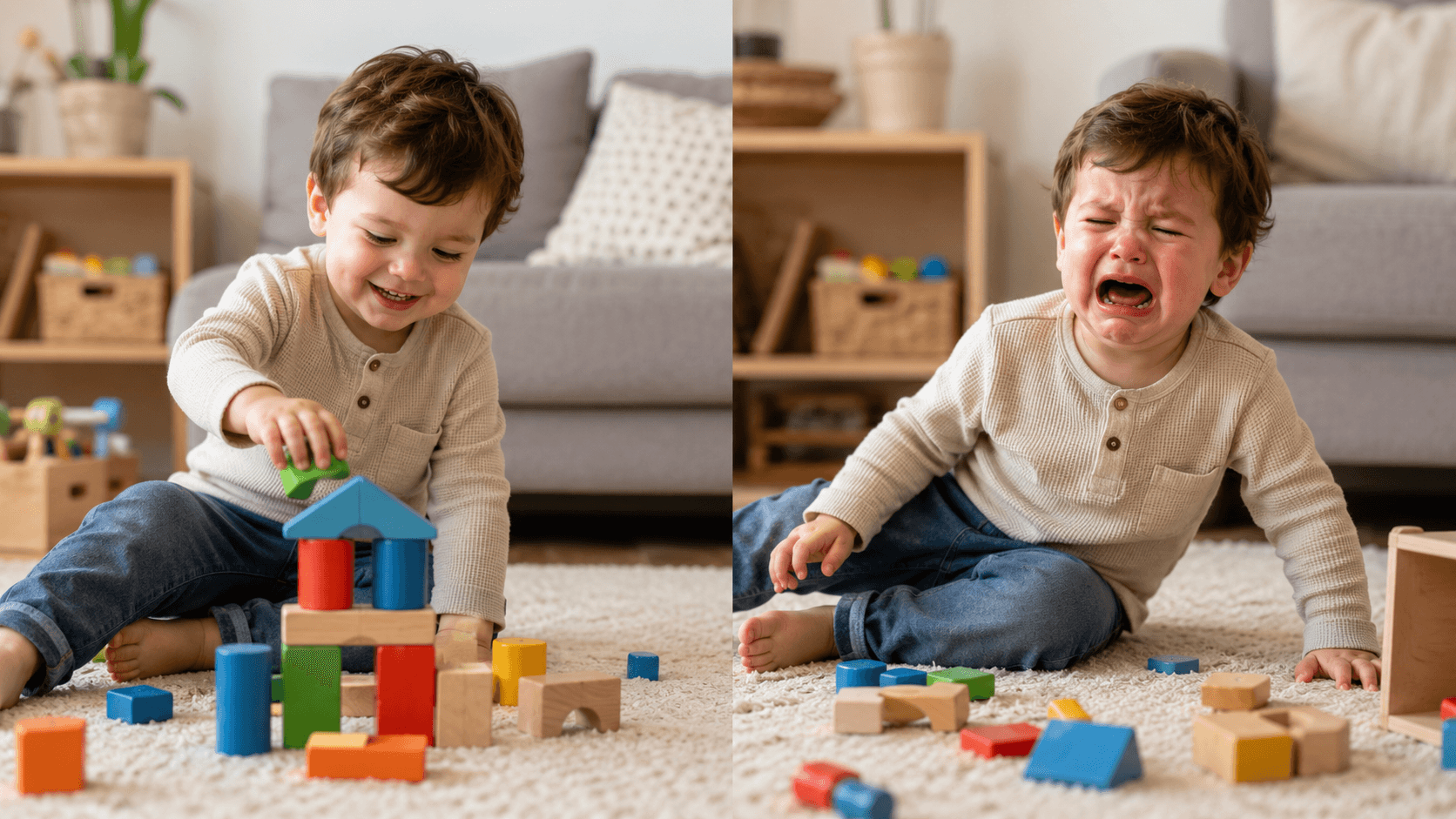
If you are dealing with toddler biting, you are not alone, and it does not mean your child is "bad" or aggressive. Biting is often a fast toddler way to communicate a need: teething discomfort, frustration, excitement, overload, or wanting space. The goal is to stop the bite, keep everyone safe, and teach a replacement skill your child can use next time.
This guide covers:
- what to do in the moment
- why toddlers bite
- a simple plan to stop biting over time
- biting at daycare, biting + hitting, and biting parents
- when to get extra support
Why Toddlers Bite
Understanding the "why" helps you choose the right prevention plan.
1. Teething or oral discomfort
For younger toddlers especially, biting can bring fast sensory relief.
2. Big feelings + low impulse control
Frustration, anger, jealousy, and "I cannot have that" can spill into biting before words show up.
3. Overstimulation or excitement
Some children bite when they are overwhelmed by noise, crowding, transitions, or intense play.
4. Communication gap
When words disappear under stress, the body communicates instead.
5. Wanting space or protecting a toy
Biting can become a quick "back off" when a toddler does not yet have social scripts.
6. Cause-and-effect learning
If biting reliably creates a big adult reaction, it can repeat.
What To Do In The Moment
A Montessori-aligned response is: protect safety, stay calm, teach a replacement. Avoid shame and big reactions.
Step 1: Stop the bite immediately
Move in close, separate bodies, and place your hand between mouths and skin if needed.
Step 2: State the limit in one sentence
Use one short phrase every time:
- "I won't let you bite."
- "Biting hurts."
- "Teeth are not for biting people."
Long lectures do not help during dysregulation.
Step 3: Attend to the bitten child first
This matters. It communicates that biting does not win attention.
- "Are you okay? I'm here."
Step 4: Offer one replacement that matches the trigger
If it is teething or an oral need:
- offer a teether or crunchy snack if appropriate
- "You can bite this."
If it is frustration or anger:
- "You can stomp."
- "You can squeeze this pillow."
If it is about space:
- "Say: 'Move.'"
- "Say: 'Stop.'"
- "Step back."
Step 5: Repair after calm
Do not force "sorry." Focus on repair actions:
- bring ice or a tissue
- offer gentle touch if the other child wants it
- "Let's try again with gentle mouth and gentle hands."
If biting happens at daycare, during transitions, or when your toddler is tired, our Montessori chat support can help you identify the likely trigger and choose a calm, consistent response.
How To Stop Toddler Biting: A 2-Week Plan
This is where most families see change: reduce repeat bites by tracking patterns, teaching one replacement, and making the environment easier.
Days 1-3: Identify the pattern
Track three things:
- when biting happens
- what happened right before
- what calms your child fastest
A pattern usually appears quickly.
Days 4-7: Pick one replacement and practice daily
Choose one replacement based on the most common reason:
- oral need: bite teether or crunchy food
- frustration: stomp + breathe, or squeeze a pillow
- space: "Move." "Stop." "My turn."
Practice when calm like a game:
- "Show me stop."
- "Show me biting your teether."
- "Show me stomping."
Consistency beats variety.
Days 8-10: Reduce the top triggers
Most toddlers bite more when they are:
- hungry or tired
- crowded or overstimulated
- fighting over toys
Prevention helps fast:
- offer snack and water before playdates or errands
- keep playdates shorter
- put fewer toys out at once
- keep duplicates of high-conflict toys
If toy conflict is a big trigger, Montessori Toy Rotation at Home: Ages 1-3 can help reduce tension quickly.
Days 11-14: Align all caregivers
Share one simple plan:
- "We block."
- "We say, 'I won't let you bite.'"
- "We comfort the bitten child."
- "We offer one replacement."
Mixed responses usually keep the behavior going longer.
Toddler Biting At Daycare
If daycare biting is your main issue, this dedicated guide will help: Biting at Daycare: What to Tell Teachers + A Consistent Plan That Works.
Daycare biting is common because toddlers are:
- sharing space and toys
- managing transitions
- getting less 1:1 attention
Ask the teachers:
- when biting happens
- who is being bitten
- what usually happens right before
Then align on:
- one boundary phrase
- one replacement skill
- one repair action
The best results come when home and daycare respond the same way.
Toddler Biting And Hitting
If you are seeing biting and hitting together, it often points to:
- big frustration with low regulation
- sensory needs
- overtiredness or transition stress
The same structure works:
- block with a calm boundary
- offer one replacement skill
- practice during calm moments
- reduce predictable triggers
If hitting is also part of the pattern, read Toddler Hitting: What to Do in the Moment + How to Stop It.
Toddler Biting Parents
Parents are common targets because they are the safest people.
What helps:
- the same calm boundary: "I won't let you bite."
- a quick replacement: teether, stomp, or "help"
- reconnecting after calm so biting does not become the fastest route to attention
If biting happens while you are busy, preempt it:
- involve your toddler in a small job
- set up a nearby "yes" activity
Montessori Practical Life Activities can reduce frustration-driven behavior by giving toddlers more meaningful work and independence.
What Not To Do
These reactions usually backfire:
- big emotional reactions
- long lectures in the hot moment
- biting back
- shame or labels like "mean" or "bad"
- inconsistent responses
When To Get Extra Support
Consider extra support if:
- biting is frequent and intense across settings for months
- injuries are happening despite a consistent plan
- sensory, language, or regulation difficulties seem likely
- you feel overwhelmed
Start with your pediatrician and ask about:
- developmental screening
- OT for sensory or regulation support
- speech support if communication is a struggle
- parent coaching
FAQ
Is toddler biting normal?
It is common in toddlerhood, especially during teething, transitions, or periods of big emotion. With consistent boundaries and replacement skills, it usually improves.
How long does a toddler biting phase last?
Often weeks to a few months, depending on triggers, language development, and consistency across caregivers.
Should I force my child to say sorry?
No. Focus on repair: check the hurt, help the other child, and practice the replacement skill.
Related Reading
Behavior guides:
- Toddler Hitting: What to Do in the Moment + How to Stop It
- 2 Year Old Hitting: Why It Happens + What to Do
- 3 Year Old Hitting: Why It Happens + What to Do
- Toddler Hitting Head: Why + What to Do
Closing Thought
Biting is scary because it hurts, but it is also solvable. When you respond calmly, teach one replacement, and reduce predictable triggers, most toddlers move through this phase.