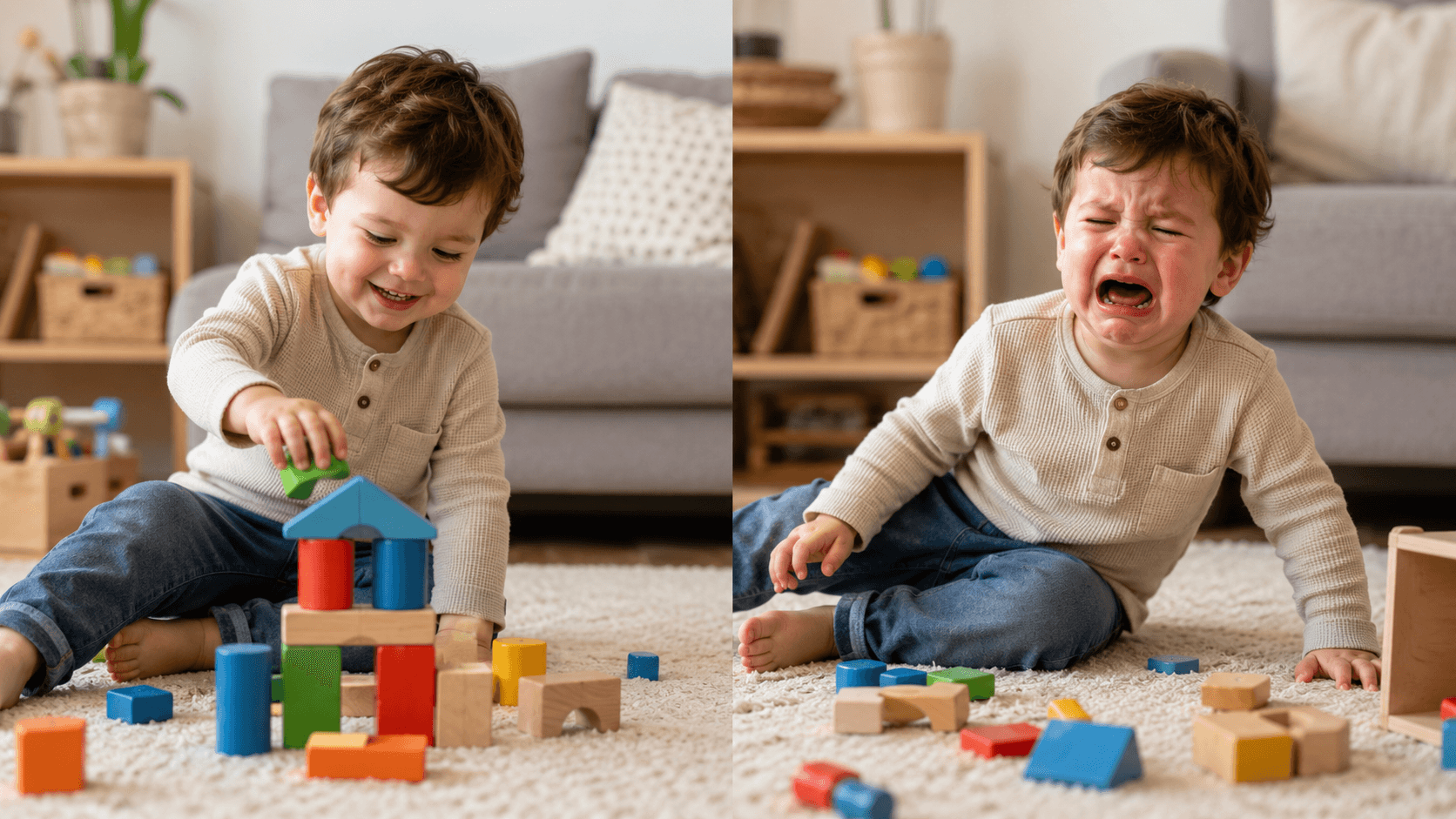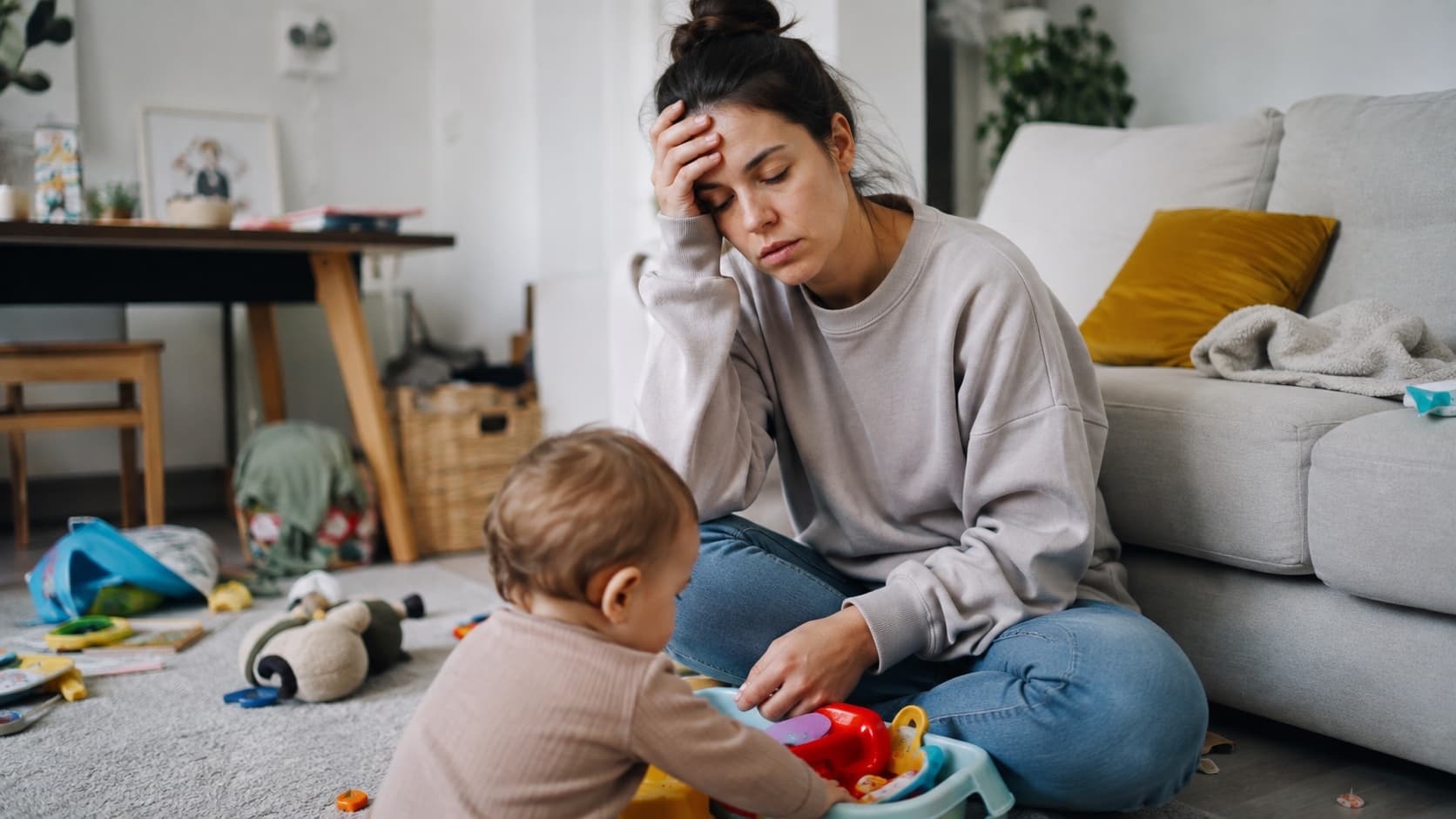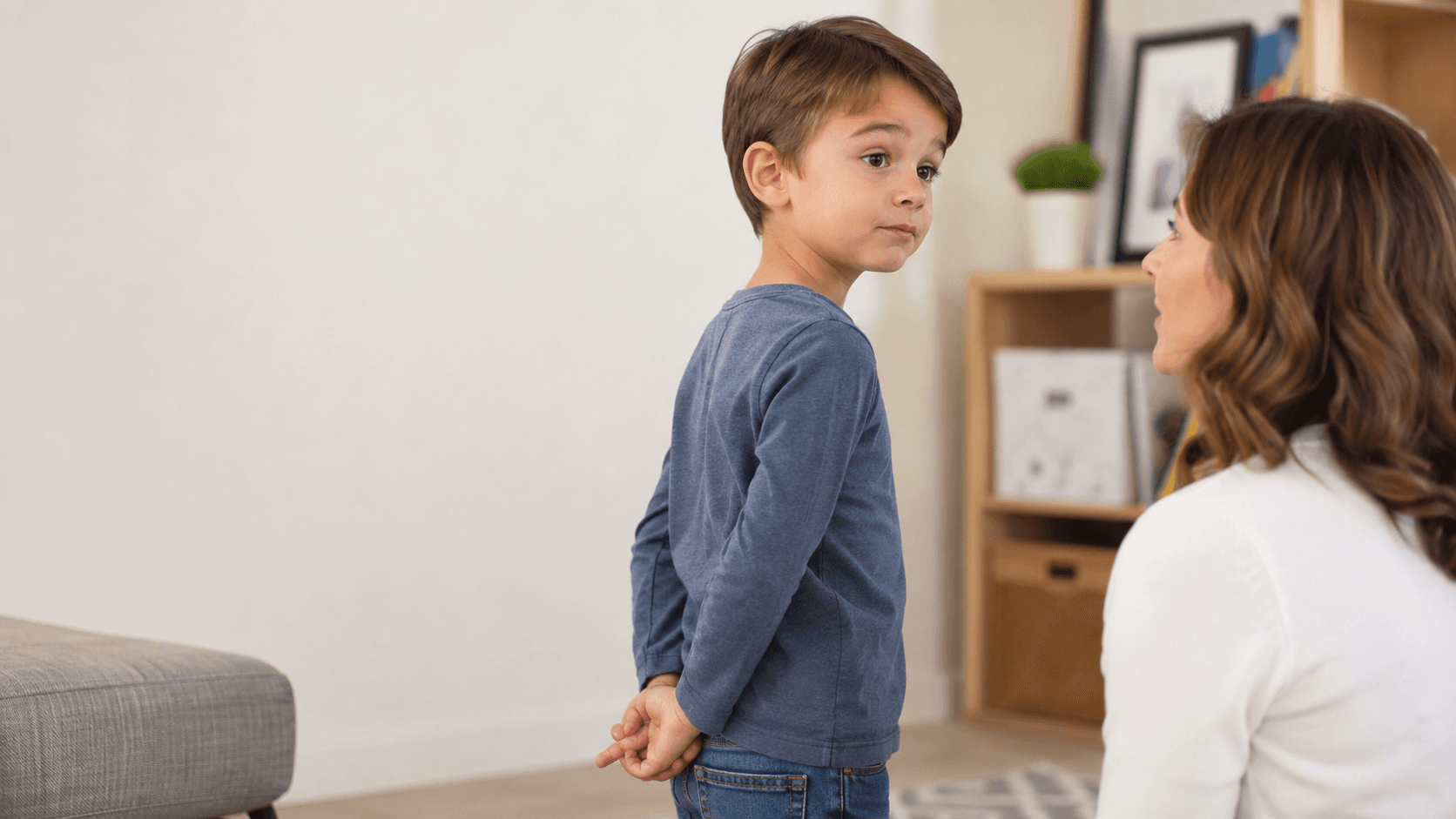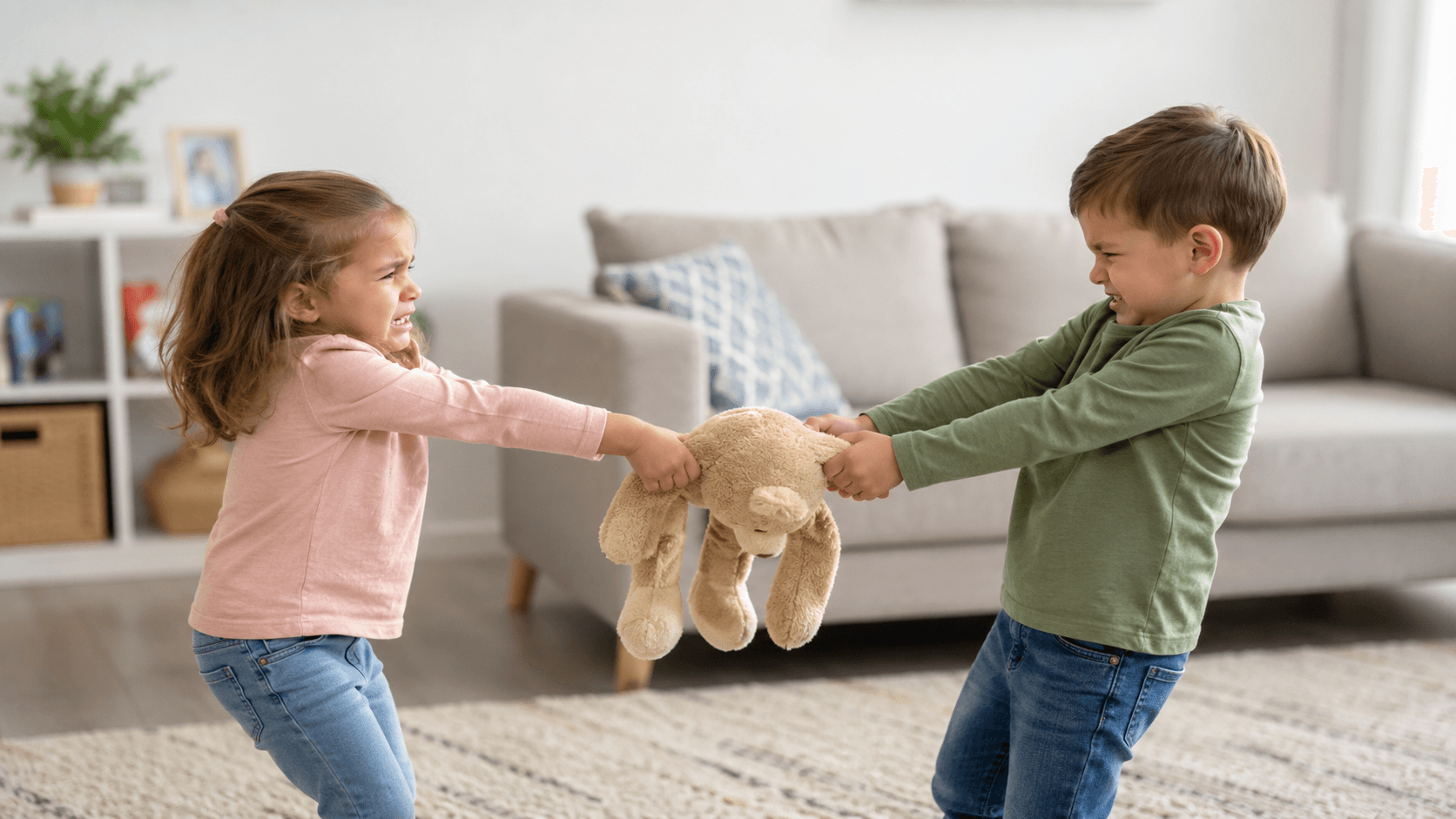
When siblings are fighting again, it can feel like the whole house is on edge. One child grabs a toy. Another screams. Someone hits, cries, tattles, or says, "That's not fair!" And you may find yourself repeating the same words every day:
- "Stop fighting."
- "Share with your brother."
- "Be nice to your sister."
- "Why can't you just get along?"
If this sounds familiar, you are not alone. Siblings fighting is one of the most common and stressful family dynamics parents face.
But sibling conflict is not just "bad behavior." Children are still learning how to handle jealousy, frustration, turn-taking, attention, fairness, space, and strong feelings. Your job is not to eliminate every disagreement. Your job is to keep everyone safe, reduce repeated conflict patterns, and teach children how to repair and solve problems.
A Montessori-aligned approach focuses on respect, observation, clear limits, independence, and peaceful problem-solving—not shame, forced sharing, or choosing a "bad child" and a "good child."
Table of contents
- Why siblings fight
- Sibling rivalry vs normal conflict
- What to do when siblings are fighting
- What not to do during sibling fights
- How to stop siblings from fighting so often
- Montessori-aligned strategies for sibling conflict
- Scripts parents can use
- What if a toddler hits a sibling?
- What if your child is jealous of a new baby?
- What if siblings fight all day?
- When to step in and when to wait
- When to get extra support
- FAQ
- Related reads
Why siblings fight
Siblings fight for many reasons. The behavior you see may be yelling, grabbing, hitting, pushing, crying, or tattling—but underneath, the child is often struggling with a need or skill.
Common reasons include:
- wanting the same toy
- feeling jealous
- wanting parent attention
- feeling that something is unfair
- needing personal space
- being tired, hungry, or overstimulated
- not knowing how to enter play
- not knowing how to ask for a turn
- feeling powerless
- copying behavior they have seen
- reacting impulsively before they can stop themselves
Sibling conflict often increases during stressful family seasons: a new baby, school transitions, moving homes, sleep disruption, parental stress, or changes in routine.
For more on parent stress and family atmosphere, see Parenting Stress: Why Parents Feel Overwhelmed + What Helps.
Sibling rivalry vs normal conflict
Not all sibling conflict is a crisis.
Normal sibling conflict may look like:
- arguing over toys
- wanting the same seat
- complaining about fairness
- brief shouting
- taking turns badly
- needing adult help to solve a problem
Sibling rivalry may be more intense when:
- one child often feels replaced or less important
- competition for parent attention is constant
- one child repeatedly dominates the other
- conflict becomes the main way they interact
- one child is often blamed or labeled
- fights escalate quickly into hitting or cruelty
The goal is not "my children never fight." The healthier goal is:
"My children are learning how to disagree, repair, and live together respectfully."
What to do when siblings are fighting
When siblings are fighting, your first job is not to find out who started it. Your first job is to restore safety and calm.
Step 1: Move close
Do not shout from another room if the conflict is escalating. Move near them.
Your calm presence can reduce the intensity.
Step 2: Stop unsafe behavior
Use a firm, simple limit:
- "I won't let you hit."
- "I won't let you grab from her hands."
- "I won't let you push."
If needed, gently separate bodies.
Safety comes before problem-solving. For more on hitting, see Toddler Hitting: What to Do in the Moment + How to Stop It.
Step 3: Describe what you see
Avoid instant blame.
Try:
- "I see two children who both want the truck."
- "You both look upset."
- "The blocks were knocked down, and now everyone is angry."
This helps children feel seen without turning you into a judge.
Step 4: Give each child a voice
Ask one at a time:
"What happened for you?"
For younger children, you may need to translate:
- "You wanted a turn."
- "You were still using it."
- "You didn't like being pushed."
Step 5: State the limit and the next step
Example:
"The truck cannot be grabbed. We need a plan."
Then offer options:
- "One child uses it now, then we set a timer."
- "You can build together with two trucks."
- "The truck rests on the shelf until bodies are calm."
- "You can choose a different work."
Step 6: Support repair
Repair is more useful than a forced apology.
Repair might be:
- rebuilding what was knocked down
- giving back the item
- getting an ice pack
- using kind words
- helping clean up
- making a plan for next time
Instead of forcing "say sorry," try:
"Your brother got hurt. What can we do to help?"
What not to do during sibling fights
These reactions are understandable, but they can make fighting worse over time.
Don't always ask "Who started it?"
This often turns children into lawyers. Each child argues their case, and the conflict becomes about winning adult approval.
Instead, focus on:
"What happened, what was hurt, and what needs repair?"
Don't label one child as the problem
Avoid:
- "You're always the aggressive one."
- "Your sister is the nice one."
- "You're the troublemaker."
- "Why do you always ruin things?"
Labels become identities.
Don't force sharing
Forced sharing often creates more resentment.
Instead of:
"Give it to your brother. You need to share."
Try:
"You're using it now. When you're finished, your brother can have a turn."
This respects concentration and ownership of work, which is more Montessori-aligned.
Don't compare siblings
Avoid:
"Why can't you be calm like your sister?"
Comparison increases rivalry.
Don't ignore repeated aggression
Some conflict is normal. Repeated hitting, bullying, intimidation, or cruelty needs clear adult intervention.
Respectful parenting does not mean passive parenting.
How to stop siblings from fighting so often
The most effective sibling strategy is prevention. Look for the pattern before the fight begins.
1. Observe the trigger
For three days, notice:
- What time do fights happen?
- Which toys or spaces cause conflict?
- Is one child tired or hungry?
- Is the younger child interrupting the older child's work?
- Is the older child seeking privacy?
- Is the fight really about parent attention?
- Does conflict happen when you are busy?
In Montessori, observation comes before correction. You cannot solve the pattern until you see the pattern.
2. Protect each child's work
Children need to know their play or work will not constantly be interrupted.
Create simple rules:
- "Work in your hands stays with you."
- "You may watch, but you may not touch."
- "Ask before joining."
- "When someone is finished, you may have a turn."
This is especially important if one child is a toddler and the other is older.
3. Reduce competition for high-conflict toys
Some toys create repeated fights.
Try:
- put away the most conflict-heavy toy temporarily
- offer duplicate basics when possible
- use separate work mats
- rotate toys to reduce clutter
- create a "special shelf" for older child materials
- keep small or delicate items out of toddler reach
Toy rotation can reduce overwhelm and grabbing. Follow the Montessori Toy Rotation at Home guide for ages 1-3 to set up a calmer shelf.
4. Create personal spaces
Children need shared family space and protected personal space.
Possible setups:
- each child has a basket for personal items
- older child has a high shelf
- younger child has safe accessible choices
- each child has a work mat
- each child has a quiet corner
- special projects can be saved safely
A prepared environment reduces unnecessary conflict.
5. Give attention before they fight for it
Sometimes siblings fight because conflict gets the fastest parent attention.
Try "special connection moments":
- 5 minutes reading with one child
- inviting one child to help cook
- a short walk together
- bedtime one-on-one check-in
- saying, "I'll be with you after I finish this, and I will come back."
You do not need hours. Small, predictable attention can reduce rivalry.
6. Teach entry into play
Many fights start because one child does not know how to join.
Teach phrases:
- "Can I play?"
- "Can I have a turn when you're done?"
- "Can I build next to you?"
- "Can I watch?"
- "I'm still using this."
Practice when calm, not only during conflict.
7. Use practical life to build cooperation
Children often fight less when they have real shared purpose.
Try cooperative jobs:
- setting the table together
- folding towels
- washing vegetables
- watering plants
- matching socks
- wiping the table
- carrying laundry
- preparing snack
Practical life gives children meaningful work and reduces the need to compete for entertainment. Find more ideas in Montessori Practical Life Activities by Age.
Not sure why your children keep fighting over the same things? Our Montessori chat support can help you identify the likely trigger—attention, toys, transitions, jealousy, age gap, or lack of personal space—and build a calmer sibling plan for your home.
Montessori-aligned strategies for sibling conflict
Montessori at home is not about children being perfectly quiet or always peaceful. It is about creating an environment where children can practice independence, respect, and responsibility.
1. Use "freedom within limits"
Children are free to choose work and play, but not free to hurt, grab, destroy, or intimidate.
Phrase:
"You may be angry. You may not hit."
2. Respect concentration
If one child is deeply focused, do not force them to include a sibling every time.
Phrase:
"She is working now. You may watch quietly or choose your own work."
This teaches respect for another person's activity.
3. Teach grace and courtesy
Grace and courtesy means practicing respectful social behavior.
Practice phrases like:
- "May I have a turn when you're done?"
- "Stop. I don't like that."
- "I'm using this."
- "Can we trade?"
- "Can I help?"
- "I need space."
Role-play with dolls, blocks, or stuffed animals.
4. Use natural repair
If one child knocks down another child's work:
"The tower was knocked down. It needs repair. You can help rebuild or give space while she rebuilds."
If one child hurts another:
"He is crying. We need to check his body. You can bring the ice pack."
Repair connects action with responsibility.
5. Avoid forced affection
Do not require hugs, kisses, or immediate forgiveness.
Try:
"You don't have to hug. You do need to make sure your brother is safe."
Respect includes bodily autonomy.
Scripts parents can use
When siblings both want the same toy
"You both want the truck. Grabbing is not okay. Who is using it now?"
Then:
"When she is finished, you may have a turn."
When one child hits
"I won't let you hit. Move back. You were angry because he took the block. You can say, 'I'm using that.'"
When one child tattles
"Are you asking for help or trying to get your sister in trouble?"
Then:
"If you need help, I can help you solve it."
When both children are yelling
"I can't understand two voices at once. I will listen to one child, then the other."
When one child says "That's not fair"
"You wanted the same thing. Fair does not always mean same. Let's look at what each person needs."
When an older child is frustrated by a younger sibling
"You need a place where your work is safe. Let's move this to the table."
When a younger child wants to join
"You want to play too. Ask: 'Can I have a turn?'"
What if a toddler hits a sibling?
A toddler who hits a sibling is usually acting from impulse, frustration, jealousy, or lack of language. That does not make hitting okay.
Use a simple sequence:
- Stop the hand.
- Say the limit.
- Name the feeling.
- Offer the replacement.
- Support repair.
Example:
"I won't let you hit. You wanted the toy. Say, 'Turn please.' Your sister is crying. Let's get a cloth."
Avoid long lectures. Toddlers need repetition and close supervision. Read the toddler hitting guide for a full in-the-moment plan.
What if your child is jealous of a new baby?
Jealousy of a new baby is common. Your older child may love the baby and resent the baby at the same time.
Signs of jealousy may include:
- baby talk
- clinginess
- hitting or rough touching
- sleep disruption
- more tantrums
- saying "send the baby back"
- wanting to be held more
- acting helpless
Try not to panic. Your child is adjusting to a major change.
Helpful responses:
- "It's hard to wait when I'm holding the baby."
- "You miss when it was just us."
- "You are still my child. I love being with you."
- "You may touch the baby gently. I won't let you hurt her."
Give the older child real roles, not forced responsibility:
- bring a diaper
- choose baby's socks
- sing a song
- put a cloth in the laundry
- help prepare snack for themselves while baby feeds
Also protect one-on-one time, even if it is short.
What if siblings fight all day?
If siblings fight all day, you need a system, not just better words.
Try this one-week reset:
Day 1: Track triggers
Write down when fights happen and what they are about.
Day 2: Remove one repeated trigger
Put away or duplicate the toy that causes the most conflict.
Day 3: Create protected spaces
Give each child a basket, shelf, or work area.
Day 4: Teach one phrase
Practice:
- "I'm using this."
- "Can I have a turn when you're done?"
Day 5: Add one cooperative job
Let them set the table, wash fruit, or carry laundry together.
Day 6: Give each child short one-on-one time
Even 5-10 minutes can help.
Day 7: Review what improved
Ask:
"What helped our home feel calmer this week?"
Do not expect perfection. Look for fewer explosions, shorter fights, and better repair.
When to step in and when to wait
Parents often wonder: should I intervene or let them solve it?
Step in immediately if:
- someone is being hit, pushed, bitten, or hurt
- one child is scared
- one child is much more powerful
- property is being destroyed
- the same child is always targeted
- the conflict is escalating quickly
Wait briefly if:
- both children are using words
- no one is unsafe
- they are negotiating
- the conflict is mild
- they have solved similar problems before
You can stay nearby and say:
"I'm here if you need help."
This supports independence without abandoning them.
Siblings fighting and parental stress
Sibling fights can be one of the fastest ways to overwhelm a parent. The noise, urgency, and emotional intensity can trigger your own stress response.
When you feel yourself about to yell, try:
"Pause. Move close. Lower voice. Protect safety."
A calm parent does not mean a passive parent. It means your nervous system is not adding more fire to the moment.
Read Parenting Stress: Why Parents Feel Overwhelmed + What Helps for more ways to lower the daily load.
When to get extra support
Most sibling fighting improves with structure, supervision, and consistent repair.
Consider extra support if:
- one child is repeatedly afraid of the other
- aggression is frequent or severe
- one child is always blamed or targeted
- conflict includes cruelty, threats, or intimidation
- sibling fighting is causing major family distress
- behavior is worsening despite consistent support
- you feel unable to keep everyone safe
Support may include a pediatrician, child therapist, family therapist, school counselor, or parent coach.
Quick parent checklist
When siblings are fighting:
- Move close.
- Stop unsafe behavior.
- Avoid asking "Who started it?" first.
- Describe what you see.
- Let each child speak.
- State the limit.
- Help them repair.
- Protect each child's work.
- Avoid forced sharing.
- Observe repeated triggers.
- Prepare the environment to reduce conflict.
FAQ
How do I stop siblings from fighting?
Start by stopping unsafe behavior calmly. Then focus on patterns: protect each child's space, reduce high-conflict toys, teach turn-taking language, avoid forced sharing, and help children repair after conflict.
How do I get siblings to stop fighting over toys?
Do not force instant sharing. Identify who is using the toy, protect that child's turn, and teach the other child to ask for a turn when it is available. Use timers only when both children understand and accept the plan.
Is sibling rivalry normal?
Yes, some sibling rivalry is normal. Children are learning fairness, attention-sharing, boundaries, and emotional regulation. But repeated aggression, fear, or one-sided targeting needs adult support.
Should I punish siblings for fighting?
Punishment alone rarely teaches conflict skills. Use clear limits, logical consequences, and repair. For example, if a toy is being used to hurt or provoke, the toy may need to rest until bodies are calm.
What should I do when my toddler hits a sibling?
Stop the hitting immediately and calmly. Say, "I won't let you hit." Name the feeling, offer words like "turn please" or "help," and support repair.
Should siblings be forced to apologize?
A forced apology often becomes empty. Instead, focus on repair: checking if the other child is okay, rebuilding, returning the item, or practicing what to say next time.
Related reads on Montessori Parent Guide
- Toddler Hitting: What to Do in the Moment + How to Stop It
- Toddler Biting: Why It Happens + How to Stop It
- Montessori Practical Life Activities by Age
- Montessori Toy Rotation at Home: Ages 1-3
- Mindfulness Activities for Kids
- Parenting Stress: Why Parents Feel Overwhelmed + What Helps
- Child Development Milestones for Ages 0-6
If siblings are fighting often and you cannot tell whether the problem is jealousy, toys, attention, age gap, or routine, you don't have to figure it out alone. Our Montessori chat support can help you understand the pattern and choose a practical plan for calmer sibling moments at home.
Final thought
Siblings do not need to be best friends every minute. They need a home where conflict is handled safely, respectfully, and consistently.
When you stop unsafe behavior, protect each child's work, reduce predictable triggers, and teach repair, sibling fighting becomes less chaotic over time.
The goal is not perfect peace. The goal is children learning how to live with another person—with limits, empathy, and respect.