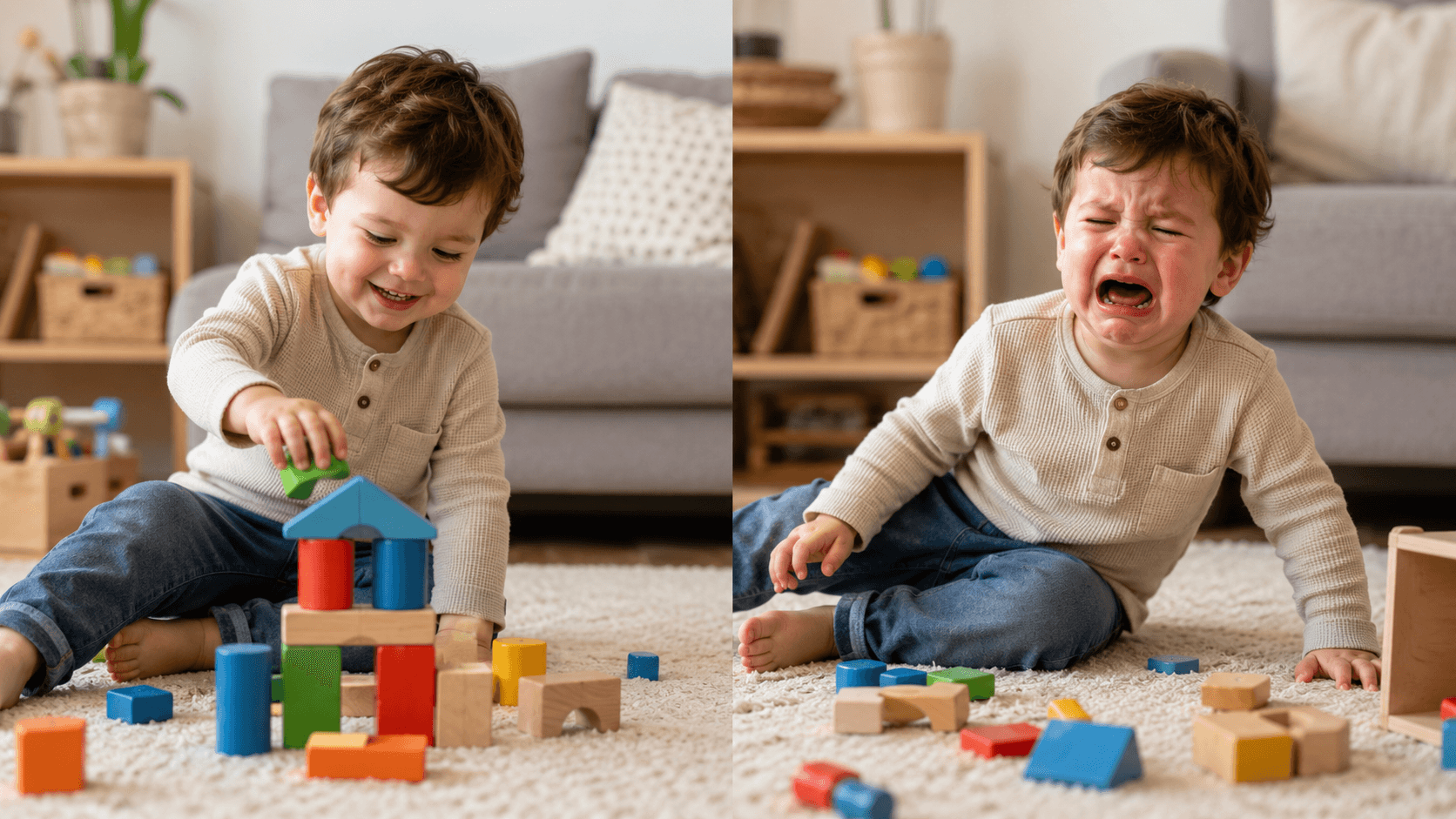
If you are searching for 3 year old hitting, you are likely seeing a different pattern than age 2. Many 3-year-olds have more language and awareness, but hitting can still show up when emotions run hot, especially during peer conflict, transitions, or moments when they feel powerless.
This post is specific to ages 36-48 months. You will get:
- why hitting happens at age 3
- what to do in the moment without escalating
- what to teach when calm (preschool-ready replacement skills)
- hitting at preschool, with friends, and with siblings
- when to seek extra support
For the complete guide across ages 1-4, use the main pillar: Toddler Hitting: What to Do in the Moment + How to Stop It.
Why 3-Year-Olds Hit
1. Social conflict feels bigger
At age 3, children care more about turns, fairness, and rules:
- "I was first."
- "That is mine."
- "You cannot do that."
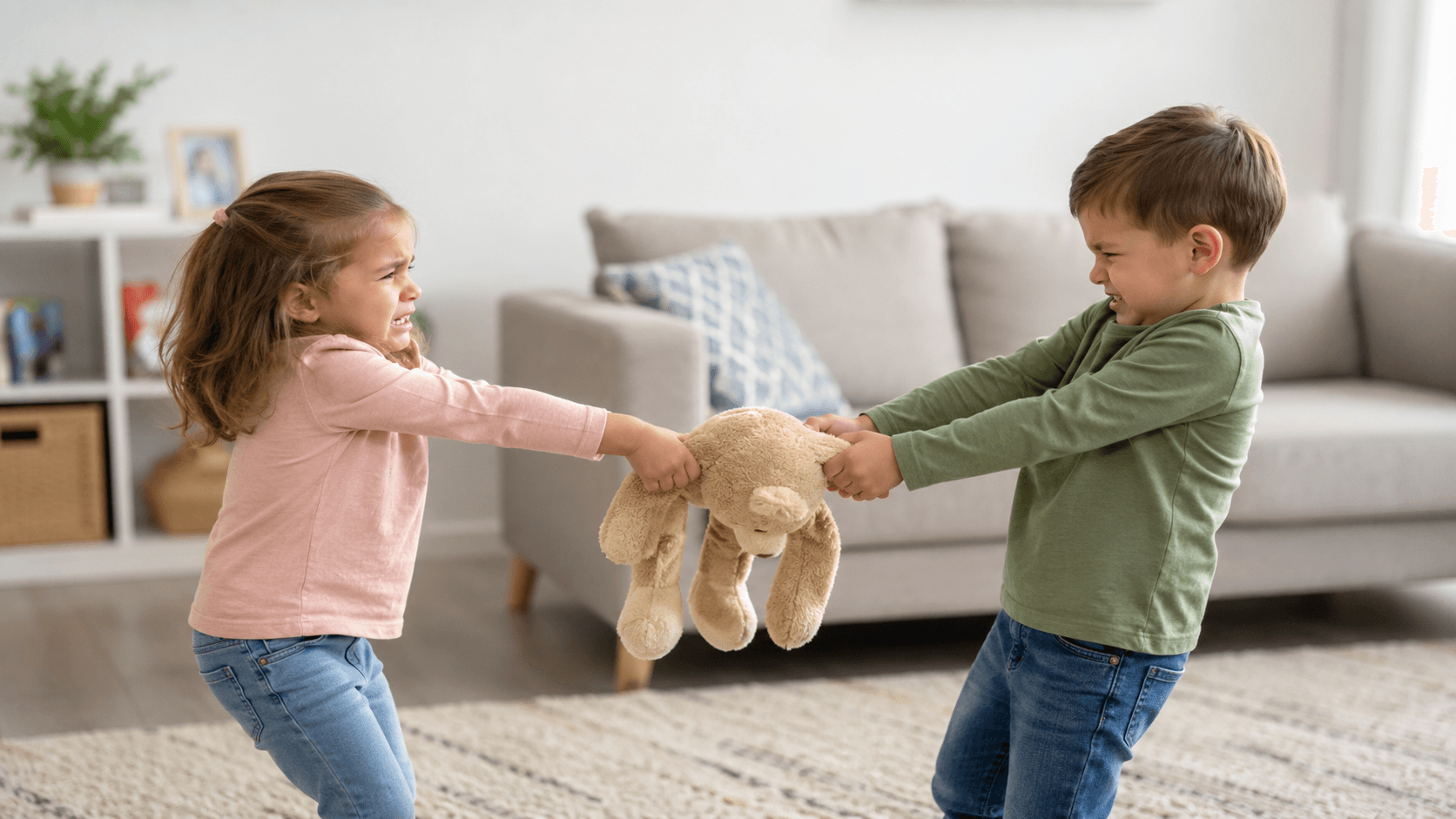
Hitting often appears during peer conflict, not only frustration.
2. Emotions are bigger, regulation is still developing
A 3-year-old can use words when calm, then lose access to language when flooded.
3. Boundary and power testing
Some hitting is an experiment in control:
- "Will I still get to play?"
- "What happens if I hit when I am mad?"
4. Defensive hitting
Some children hit to stop something they dislike or to create space.
5. Overstimulation and fatigue still matter
Busy days, hunger, late naps, and crowded environments remain major triggers.
Helpful framing: at age 3, the goal is not only to stop the hit, but to teach conflict skills children can actually use with peers.
What To Do In The Moment (Preschool Version)
You still need calm and clear limits. At age 3, add one short coaching step.
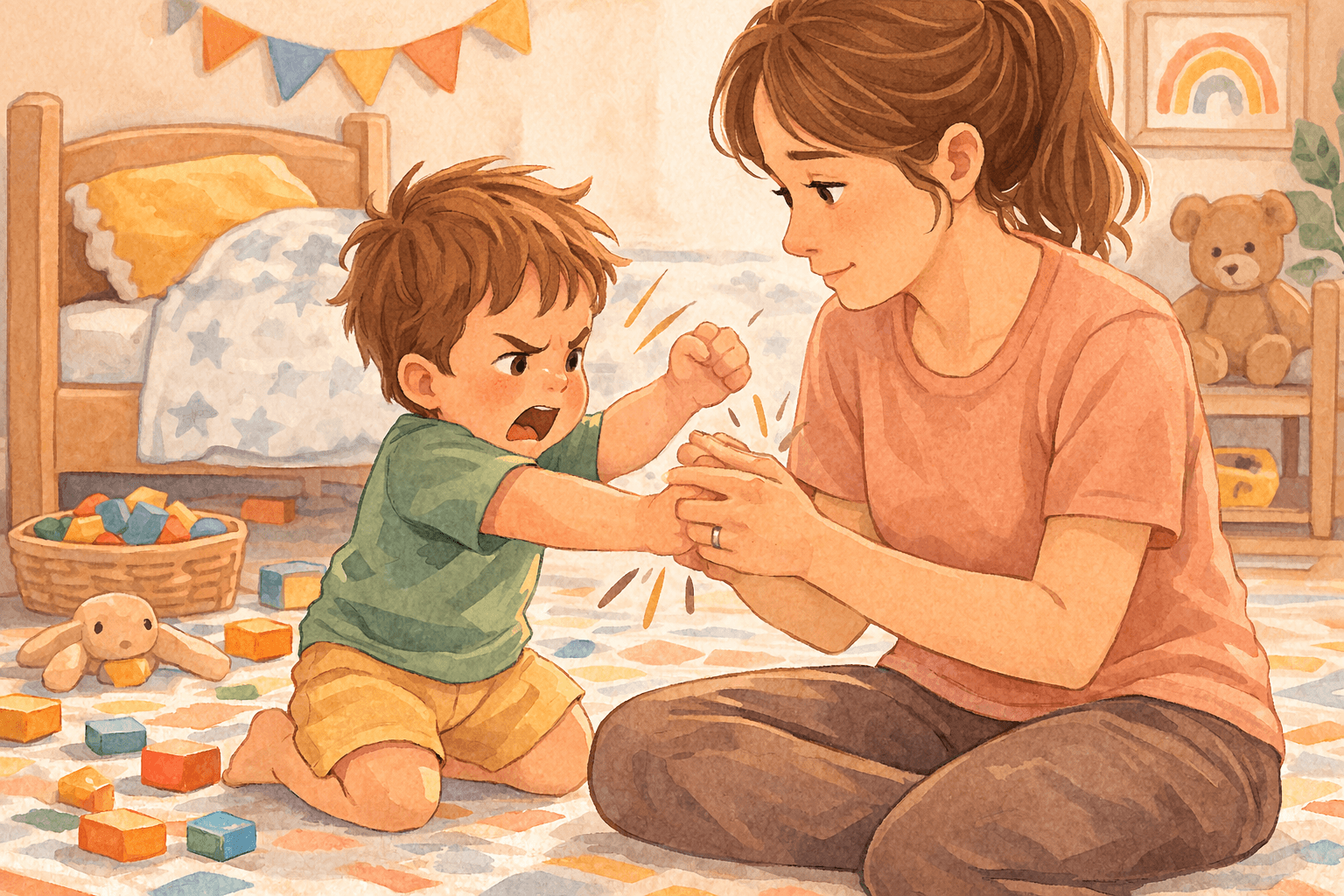
Step 1: Stop the hit and protect the other child
Move close, block the hand, and separate bodies if needed.
Step 2: Name the limit
Use one sentence:
- "I won't let you hit."
- "Stop. Hitting hurts."
- "I can't let you hurt people."
Step 3: Name the feeling or goal
Help your child move from body to words:
- "You are mad."
- "You wanted a turn."
- "You did not like that."
Step 4: Offer one replacement
- "Say: 'Stop. My body.'"
- "Say: 'Turn please.'"
- "Hands down. Step back."
Step 5: Repair after calm
- check who was hurt
- bring ice or tissue
- practice one replacement phrase once
Do not force apologies. Focus on repair and skill practice.
Not sure what to say when your toddler hits? Our Montessori chat support can help you respond with firm, calm limits without yelling and build a plan for the week ahead.
The Preschool Skill That Reduces Hitting Fastest: Conflict Scripts
At age 3, many children hit because they do not have a practiced sentence for conflict.
Teach and practice these scripts like a game (30 seconds daily):
- "Stop. My body."
- "Turn please."
- "Help me."
Practice with role-play:
- You take a toy.
- Child says "Turn please."
- You hand it back.
- Repeat.
This aligns with Montessori grace and courtesy: short language modeled and practiced when calm.
A Two-Week Preschool Plan
Days 1-3: One rule + one repair routine
Rule:
- "I won't let you hit."
Repair routine:
- check hurt
- help with ice or tissue
- reset play with "Try again with words"
Days 4-7: Practice stop + space and turn please
Add one physical regulation tool:
- step back
- hands on knees
- one slow breath (blow out like a candle)
Keep practice short and playful.
Days 8-10: Preempt hot moments
At age 3, hitting often clusters around:
- preschool transitions
- sharing favorite items
- tired afternoons
- unstructured playdates
Preempt with structure:
- fewer toys out
- shorter playdates with clear end time
- one activity at a time setups
- outdoor movement before indoor play
Prepared environments reduce conflict.
Days 11-14: Coach early before hands fly
When you see early signs (tense body, grabbing), step in early:
- "Looks like you both want that. Say: 'Turn please.'"
- "If you are mad, say: 'Stop. My body.'"
- "If you need help, tap me and say 'help.'"
At age 3, early coaching works better than after-the-fact lectures.
If Your 3-Year-Old Hits During Playdates Or Preschool
Before the playdate
- keep it short (45-90 minutes)
- start with parallel-friendly activities (play dough, blocks, water painting)
- avoid one high-value toy that triggers fights
In the moment
- stop the hit: "I won't let you hit."
- coach script: "Turn please." or "Stop. My body."
- guide reset: "Try again."
After the playdate
Skip long lectures. Do one short review:
- "When you were mad, hands hit. Next time we say, 'Stop. My body.' Let's practice once."
If Your 3-Year-Old Hits Siblings Or The Baby
At age 3, sibling hitting often links to fairness and attention.
What helps:
- 10 minutes of daily one-on-one special time
- predictable helper roles
- duplicates for high-conflict items
- separate zones during tired times
In the moment:
- "I won't let you hit."
- "You wanted space or a turn. Say: 'Stop. My body.'"
- give sibling a reset plan too (move back, ask for help)
When To Get Extra Support
Consider support if:
- hitting is frequent and intense across settings for months
- preschool functioning is impacted by repeated aggression
- injuries continue despite consistent response
- sensory, language, or regulation challenges seem significant
- you feel overwhelmed or unsure
Start with your pediatrician. You can also ask about parent coaching, OT, or speech-language support.
Related Resources
Hitting and behavior guides:
- Toddler Hitting: What to Do in the Moment + How to Stop It (All Ages)
- 2 Year Old Hitting: Why It Happens + What to Do
- Toddler Hitting Head: Why + What to Do
- Toddler Biting: Why It Happens + How to Stop It
Activities that help:
- Montessori Preschool Activities (Ages 3-5)
- Best Montessori Toys for 3 Year Olds
- Montessori Toy Rotation: Step-by-Step for Ages 1-3
One Line To Remember
At age 3, hitting decreases fastest when children practice conflict scripts ("Stop. My body." "Turn please." "Help me.") and adults coach early at the first signs of conflict.