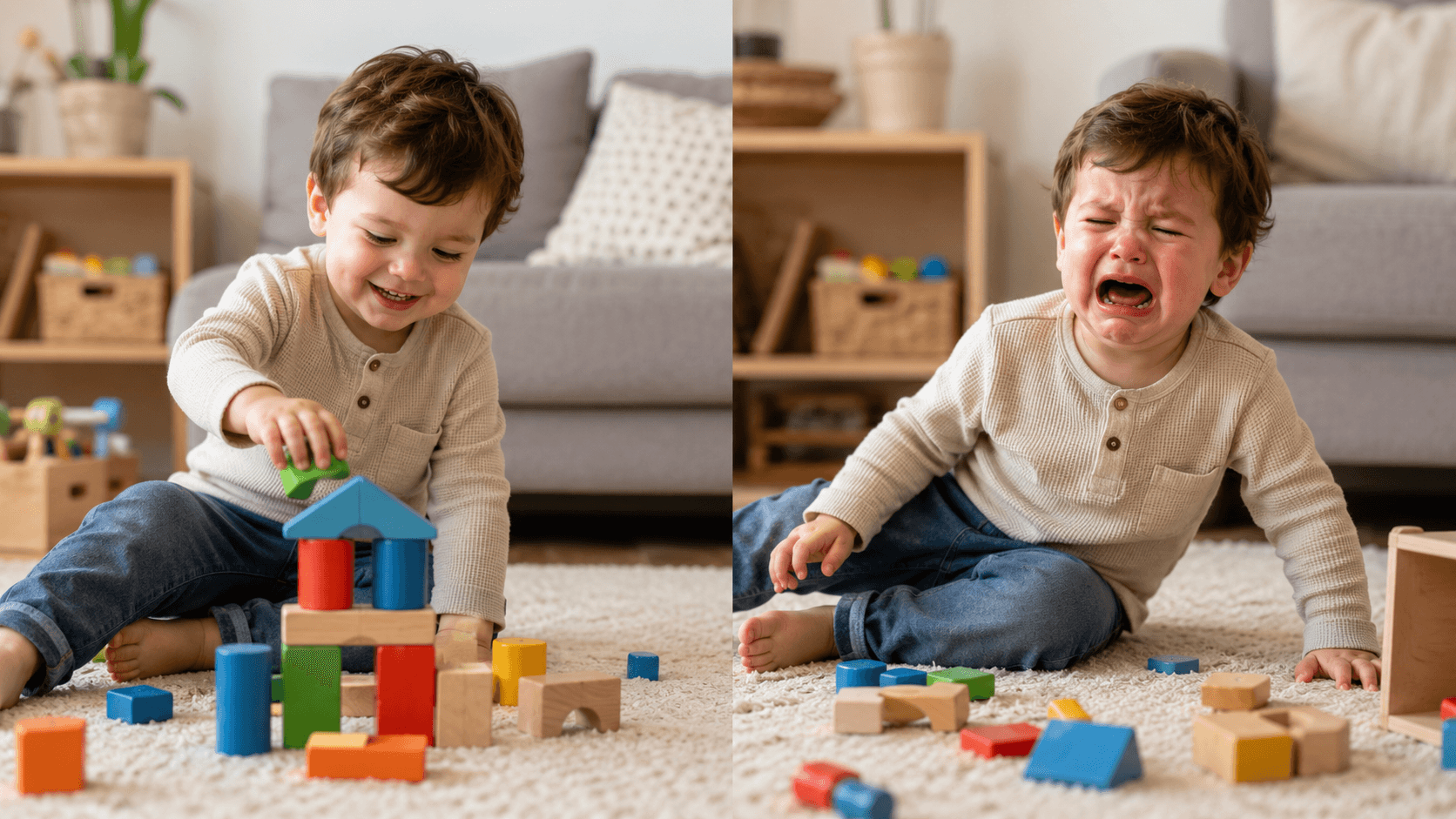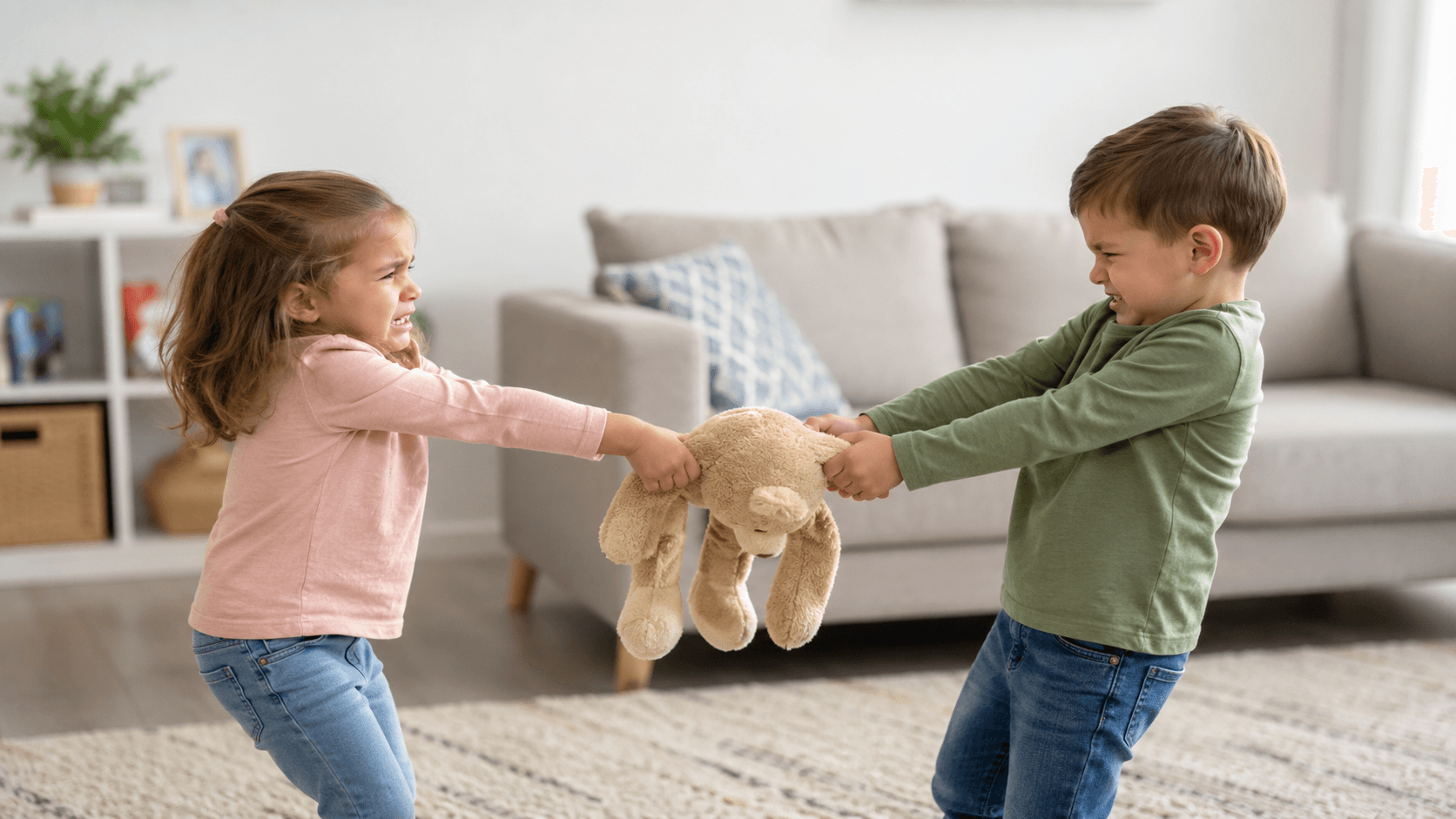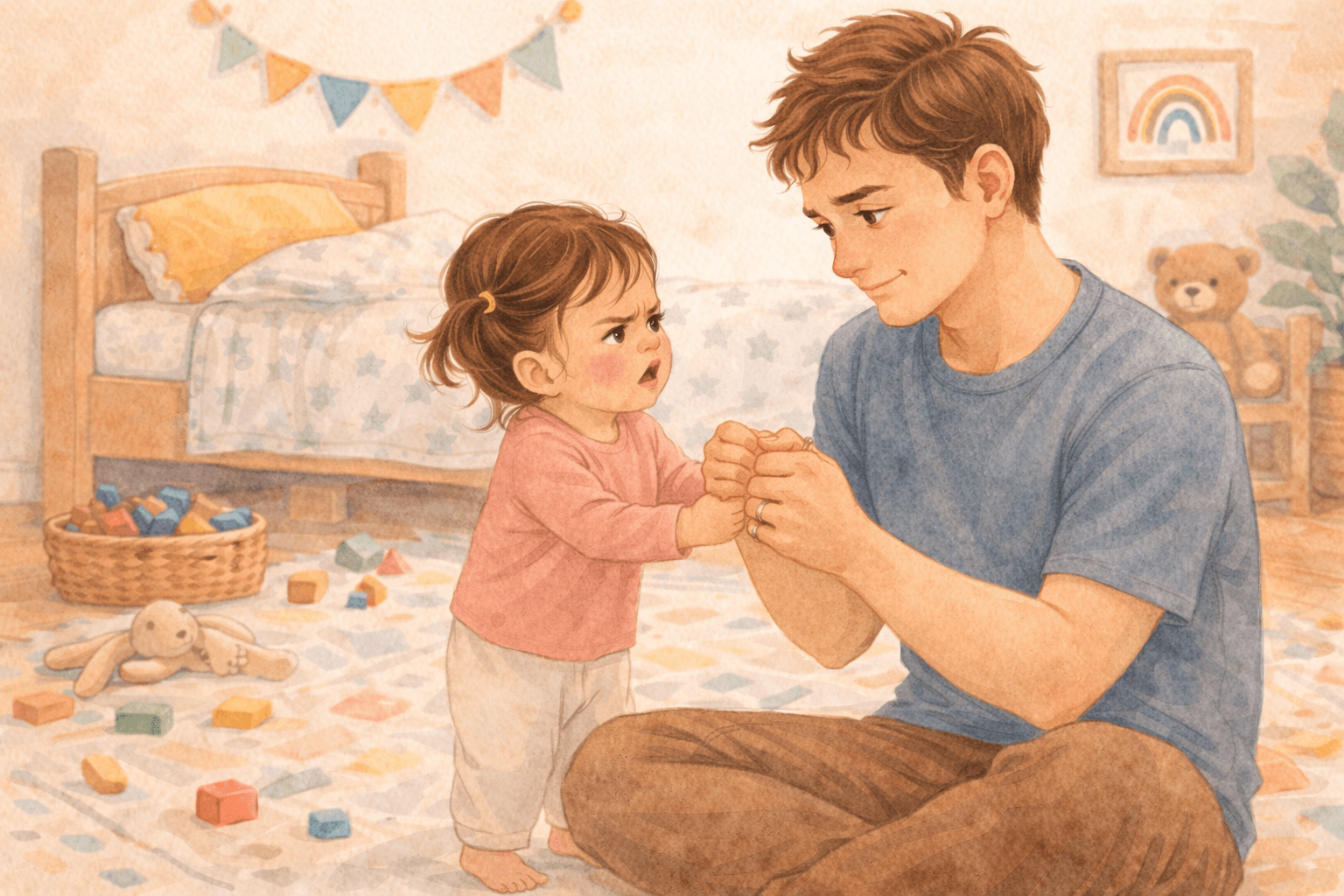
If you are dealing with 2 year old hitting, you are in the most common age for this behavior to peak. Two-year-olds have big feelings and big wants, but their impulse control and language often disappear in the moment, so hitting becomes a fast, physical way to communicate.
This is a 24-36 months playbook: age-2 triggers, exactly what to do in the moment, and a practical plan that reduces hitting over the next two weeks.
For a broader all-ages guide (1-4), read Toddler Hitting: What to Do in the Moment + How to Stop It.
Why Hitting Is So Common At Age 2
Hitting at 2 is usually not mean behavior. It is a skill gap plus a trigger.
1. Waiting feels impossible
Sharing toys, leaving the park, car seat transitions, and bedtime can become hit-risk moments.
2. Language collapses under stress
A child can speak well when calm, then lose words during frustration. The body takes over.
3. Transitions overwhelm the nervous system
Stopping play, switching activities, getting dressed, and cleanup are classic age-2 triggers.
4. Sensory overload or sensory seeking
Some children hit when overwhelmed (noise, crowds, tiredness). Others hit while seeking strong input (crashing, squeezing, rough play).
5. Independence drive can create power struggles
At this age, "I do it" is strong. When adults take over quickly, some children push back physically.
What To Do In The Moment (Age-2 Friendly)
At age 2, long explanations rarely land. You want calm, clear, and consistent.
Step 1: Stop the hit calmly
Move close and gently block the hand. If needed, move the other child away first.
Step 2: State one limit sentence
Pick one phrase and use it every time:
- "I won't let you hit."
- "Stop. Hitting hurts."
- "Hands are not for hitting."
Step 3: Offer one replacement
Give one action your child can do right now:
- "Stomp feet."
- "Squeeze the pillow."
- "Hands on knees."
- "Tap me and say help."
Step 4: Repair after calm
When the storm passes:
- "Hitting hurts. Let's check."
- "Let's help with ice or a tissue."
- "Show gentle hands."
A simple repair action teaches empathy better than a forced apology.
Not sure what to say when your toddler hits? Our Montessori chat support can help you respond with firm, calm limits without yelling and build a plan for the week ahead.
The Fastest Way To Reduce 2 Year Old Hitting: Fix Top Triggers
Most families see the fastest improvement by adjusting these hot zones.
Trigger 1: Hungry, tired, or overstimulated
Fix: offer snack and water before transitions, and protect sleep. Even a slightly earlier bedtime can reduce hitting episodes.
Trigger 2: Toy conflict
Sharing is not a strong age-2 skill yet. Reduce competition:
- fewer toys out at once
- duplicates of high-conflict toys
- "one for you, one for me" setups
For setup ideas, see Montessori Toy Rotation at Home: Ages 1-3.
Trigger 3: Transitions
Transitions are often the number one daily trigger. Add predictability and a small job:
- "Two more turns" plus a timer
- "Carry the shoes"
- "Help me close the door"
- "Hold the wipes" or "push the stroller"
Small responsibilities can reduce power struggles.
A Two-Week Training Plan For Age 2
Days 1-3: One script + one replacement
Pick one boundary phrase: "I won't let you hit."
Pick one replacement: stomp or pillow squeeze.
Practice 30 seconds daily during calm moments:
- "Show me gentle hands."
- "Show me stomping."
- "Hands on knees."
Consistency beats variety at age 2.
Days 4-7: Teach three power phrases
Choose short phrases your child can use:
- "Turn."
- "Help."
- "Stop."
Practice for one minute during play:
- You hold a toy.
- Child says "turn."
- You trade.
- Repeat.
Days 8-10: Make the environment easier
- Put away half the toys.
- Separate play zones during high-stress times.
- Add one reachable independence item (stool, low hook, reachable cup).
Practical life routines can reduce frustration-driven hitting. Read Montessori Practical Life Activities.
Days 11-14: Align all caregivers
Share one response plan with everyone:
- "We block."
- "We say, 'I won't let you hit.'"
- "We offer stomping or pillow squeeze."
Mixed responses usually keep the behavior going longer.
If Your 2-Year-Old Hits Parents
Parents are a common target because they are the safest person.
Use this sequence: boundary + safety reset + reconnect after calm.
- Block and say: "I won't let you hit."
- If it continues: "I'm moving back to keep my body safe. I'm right here."
- Offer replacement: stomp, squeeze, or "help."
- Reconnect briefly after calm (book, cuddle, or one minute of play).
This protects safety and preserves connection without making hitting the fastest route to attention.
If Your 2-Year-Old Hits The Baby Or Siblings
This needs stronger prevention.
Prevention that works at age 2
- Create yes spaces (baby zone + toddler zone).
- Give a safe helper job:
- bring diaper
- choose a book
- carry wipes (with supervision)
In the moment
- "I won't let you hit."
- Move the other child first.
- Redirect immediately: "Hands down. Squeeze pillow." or "Stomp feet."
2 Year Old Hitting At Daycare Or Preschool
Hitting at daycare often comes from overstimulation, toy conflict, or transitions.
Ask teachers:
- when it happens (arrival, cleanup, outdoor time, sharing)
- who is being hit
- what happens right after
Then align on:
- one boundary phrase
- one replacement skill
- one repair action
At home, role-play:
- "Tap teacher's arm and say help."
- "Say turn and wait."
When To Get Extra Support
Ask for help if:
- hitting is intense or frequent across settings for months
- injuries are happening or safety is hard to maintain
- language delays or sensory challenges seem significant
- you feel overwhelmed
Start with your pediatrician and ask about parent coaching, speech support, or OT if needed.
Related Resources
Hitting and behavior guides:
- Toddler Hitting: What to Do in the Moment + How to Stop It (All Ages)
- 3 Year Old Hitting: Why It Happens + What to Do
- Toddler Hitting Head: Why + What to Do
- Toddler Biting: Why It Happens + How to Stop It
Activities that help:
- Montessori Activities for 2 Year Olds (24-36 Months)
- Montessori Toy Rotation: Step-by-Step for Ages 1-3
One Line To Remember
At age 2, hitting drops fastest when you combine one calm script, one replacement skill practiced daily, and fewer predictable triggers (sleep, hunger, transitions, and toy conflict).