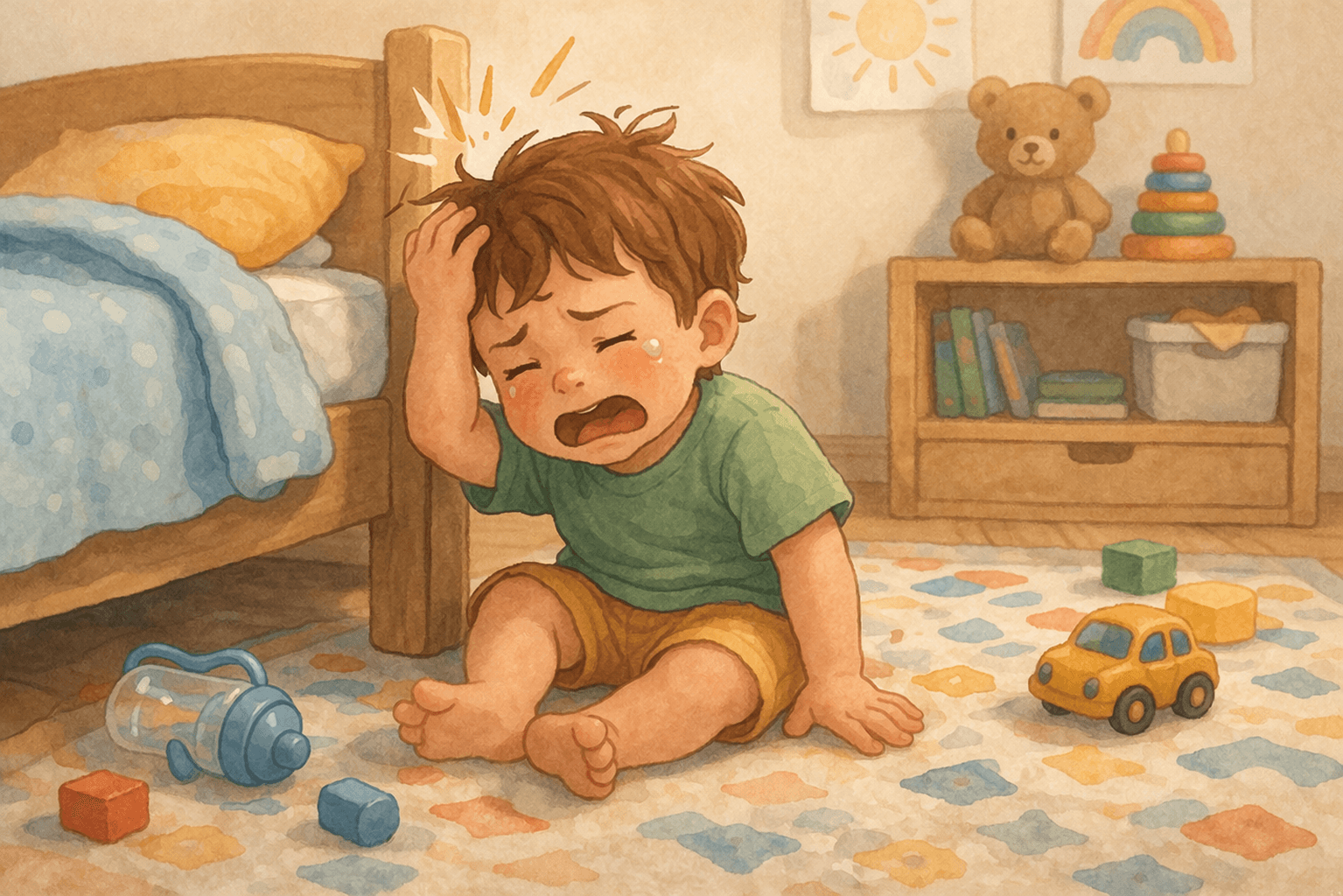
If your toddler keeps hitting their head on the floor, wall, crib, or with their own hands, it can be scary to watch. The good news is that in many cases this behavior (often called toddler head banging) is a form of communication or self-regulation, not a sign your child is trying to seriously hurt themselves.
This guide focuses on what parents actually need:
- why toddlers hit their head (the most common reasons)
- what to do in the moment to keep them safe without escalating
- how to reduce it over the next two weeks
- a simple "when to worry" checklist
This approach is aligned with Montessori-style principles: calm limits, respect, and prevention through environment.
Why Toddlers Hit Their Head
A toddler hitting their head is usually one of these:
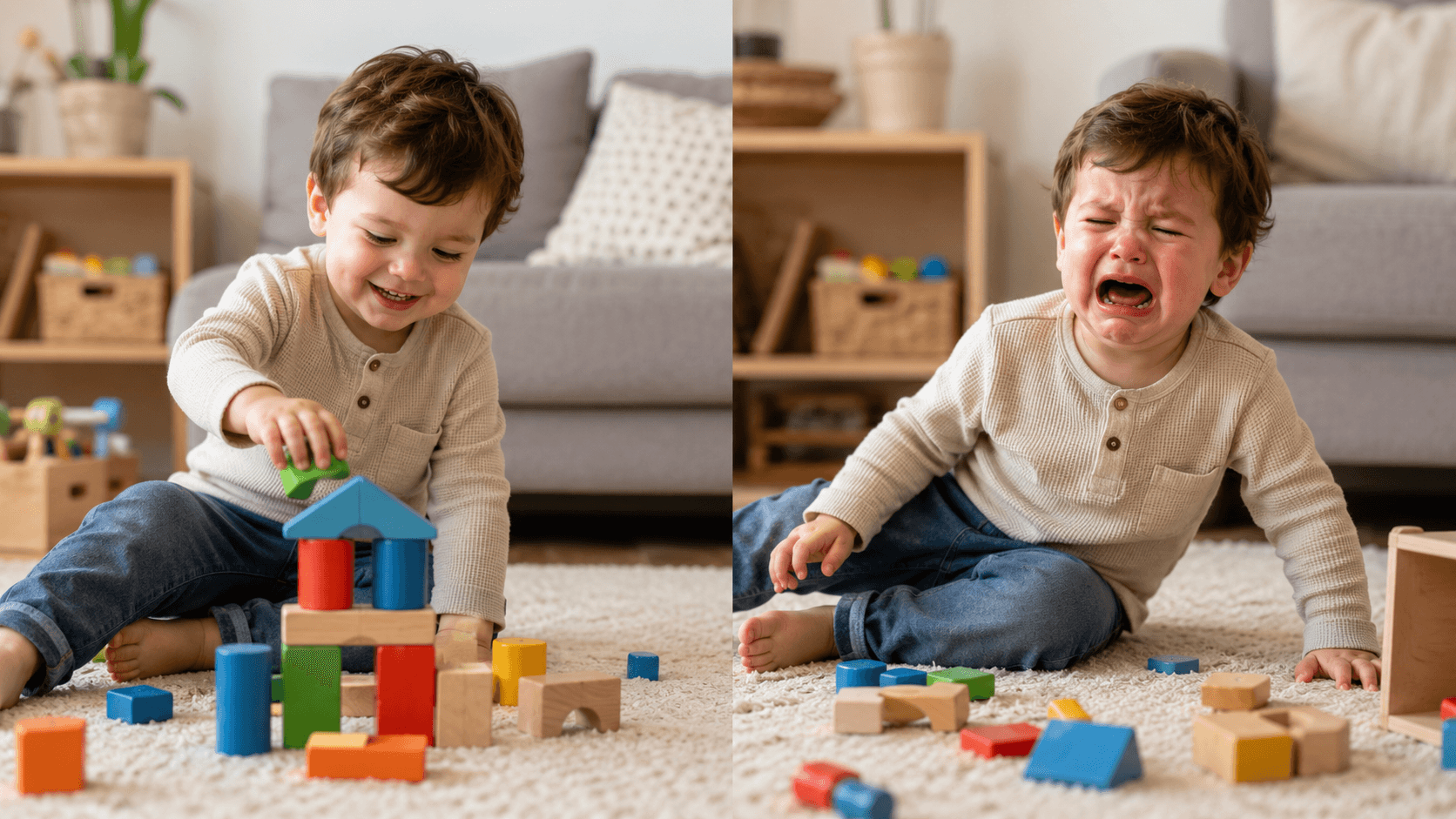
1. Big feelings + limited coping tools
Frustration, anger, disappointment, and "I cannot have that" can overflow into body behavior.
Common trigger moments:
- being told "no"
- transitions (leaving, cleanup, bedtime)
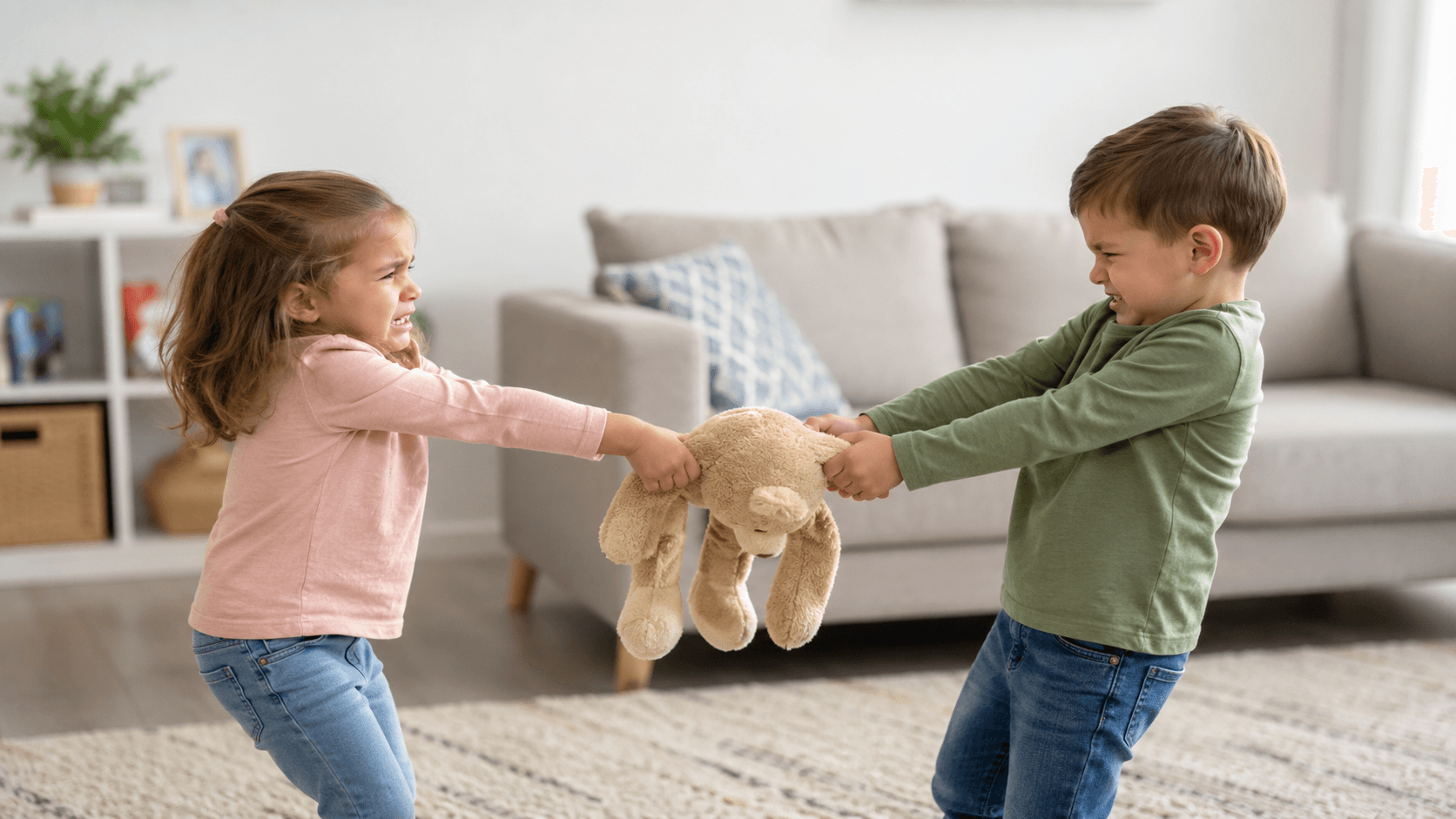
- conflict with siblings
- being tired or hungry
2. Sensory regulation (seeking strong input)
Some toddlers seek intense sensory input to calm their nervous system. Head banging can be a strong sensation that temporarily regulates them.
You might also see:
- crashing into cushions
- seeking tight hugs
- stomping, jumping, or spinning
3. Communication gap
When words fail under stress, a toddler's body communicates instead.
4. Attention loop (not in a "bad" way)
If the behavior reliably brings a big adult reaction, it can repeat, even if your child did not plan it.
5. Routine and transition stress (especially around sleep)
Many parents notice toddler head banging:
- at bedtime or nap time
- in the crib
- when overtired
6. Developmental experimentation
Some toddlers test cause and effect: "What happens if I do this?" Then it can become a habit loop.
Toddler Hitting Head on Floor: What To Do in the Moment
Your goal in the moment is safety plus calm, not a lecture.
Step 1: Make it safer immediately
- Place something soft between your toddler and the hard surface when possible:
- pillow, folded blanket, or couch cushion (supervised)
- Move to a softer area if you can do it calmly.
Step 2: Use one short, steady limit sentence
Pick one phrase and repeat it consistently:
- "I will not let you hurt your head."
- "I am going to keep your body safe."
- "Head is not for hitting."
Keep it short. Big speeches can intensify the moment.
Step 3: Offer a replacement that meets the same need
Give one option based on the trigger.
If it is anger or frustration:
- "You can stomp."
- "You can squeeze this pillow."
- "You can hit the couch cushion."
If it is sensory seeking:
- "Let's do wall pushes."
- "Let's squeeze tight like a burrito."
- "Let's jump five times."
If it is overwhelm:
- "I am here. Let's breathe together."
- "Do you want a hug or space?"
Step 4: Reduce attention to the behavior, increase attention to calm
Stay present, but do not amplify with a big emotional reaction.
When they pause, even for two seconds, give calm connection:
- "I am here."
- "You are safe."
- "Let's try again."
Not sure what to do when your toddler hits their head? Our Montessori chat support can help you identify likely triggers and choose calm, safe responses that fit your child's age.
Toddler Hitting Himself: What It Means and What Helps
If your toddler is hitting themselves, it is often the same categories: big feelings, sensory regulation, or a habit loop.
What helps most is teaching a safer replacement that still works:
- hands on knees (quick reset)
- squeeze ball or pillow squeeze
- stomp plus breathe
- tap your arm and say "help" (if your child can do it)
You are not trying to stop feelings. You are teaching a safer outlet.
What Not To Do
These responses can accidentally increase the behavior:
- yelling or looking shocked (big reactions can reinforce it)
- long lectures (toddlers cannot process this mid-storm)
- holding them down (can escalate panic unless this is a brief safety hold and you are trained)
- asking "Why are you doing that?" in the moment
- punishing dysregulated behavior
Aim for calm safety plus skill-building.
A Simple 2-Week Plan To Reduce Head Banging and Head Hitting
Days 1-3: Identify the pattern
Track three quick notes:
- when it happens (bedtime, transitions, frustration, daycare pickup)
- what happened right before
- what calms your child fastest
Patterns usually show up quickly.
Days 4-7: Pick one replacement and practice daily (30 seconds)
Choose one replacement and practice when calm:
- pillow squeeze
- wall pushes
- hands on knees plus breathe
- stomp five times
Practice like a game so it is easier to access under stress.
Days 8-10: Reduce triggers with one prepared-environment tweak
This is a Montessori-aligned idea: reduce struggle by setup.
Pick one:
- smoother transitions (timer plus a simple job)
- fewer toys out (less conflict)
- earlier bedtime or snack before transitions
- a softer safe spot for calming (cushion corner)
Days 11-14: Teach one simple help signal
Many toddlers hit their head when they want help but cannot access it quickly.
Teach one:
- tap your arm plus "help"
- "hold you"
- "all done"
- "space"
Then respond quickly when they use it.
Bedtime Head Banging: What To Do
If your toddler hits their head in the crib or at bedtime, it is often tied to overtiredness, transition stress, or sensory regulation.
What helps:
- consistent bedtime routine
- earlier bedtime if overtired
- calming sensory input before bed (bath, lotion massage, deep-pressure hugs)
- reduce stimulation right before sleep
In the moment:
- keep lights low
- use a calm voice
- "I am here. You are safe."
- avoid turning it into a big interaction
When To Worry: Quick Parent Checklist
Consider calling your pediatrician promptly if:
- your toddler is hitting their head many times a day and you cannot interrupt it
- it comes with developmental regression (loss of skills)
- there are frequent bruises or injuries
- it happens alongside major concerns about development, hearing, or communication
- you feel unsure, scared, or it is escalating
Seek urgent care now after a head injury if you notice:
- repeated vomiting
- unusual sleepiness and you cannot wake your child
- seizure, fainting, or confusion
- worsening headache or crying that does not settle
- trouble walking, talking, or using their body normally
If your child has had a significant bump, it is always okay to call your pediatrician for guidance.
FAQ
Is toddler head banging normal?
It is relatively common in toddlerhood and often temporary, especially when it is tied to frustration, transitions, or sleep.
How do I stop my toddler from hitting their head?
Focus on:
- safety in the moment
- a consistent replacement skill
- reducing predictable triggers like tiredness and transitions
- teaching a simple help signal
Will ignoring it make it go away?
Ignoring the child is not helpful. Reducing attention to the behavior while staying calm and present often lowers repetition. Pair that with replacement skills and prevention.
Related Reading
Behavior guides:
- Toddler Hitting: What to Do in the Moment + How to Stop It
- 2 Year Old Hitting: Why It Happens + What to Do
- 3 Year Old Hitting: Why It Happens + What to Do
- Toddler Biting: Why It Happens + How to Stop It
Activities that help:
A Calm Closing Thought
Seeing your toddler hit their head can trigger panic because you care. Your best tool is a steady response: protect safety, stay calm, and teach a safer replacement. Over time, the replacement becomes the habit.
If you are feeling stuck, you do not have to figure it out alone.