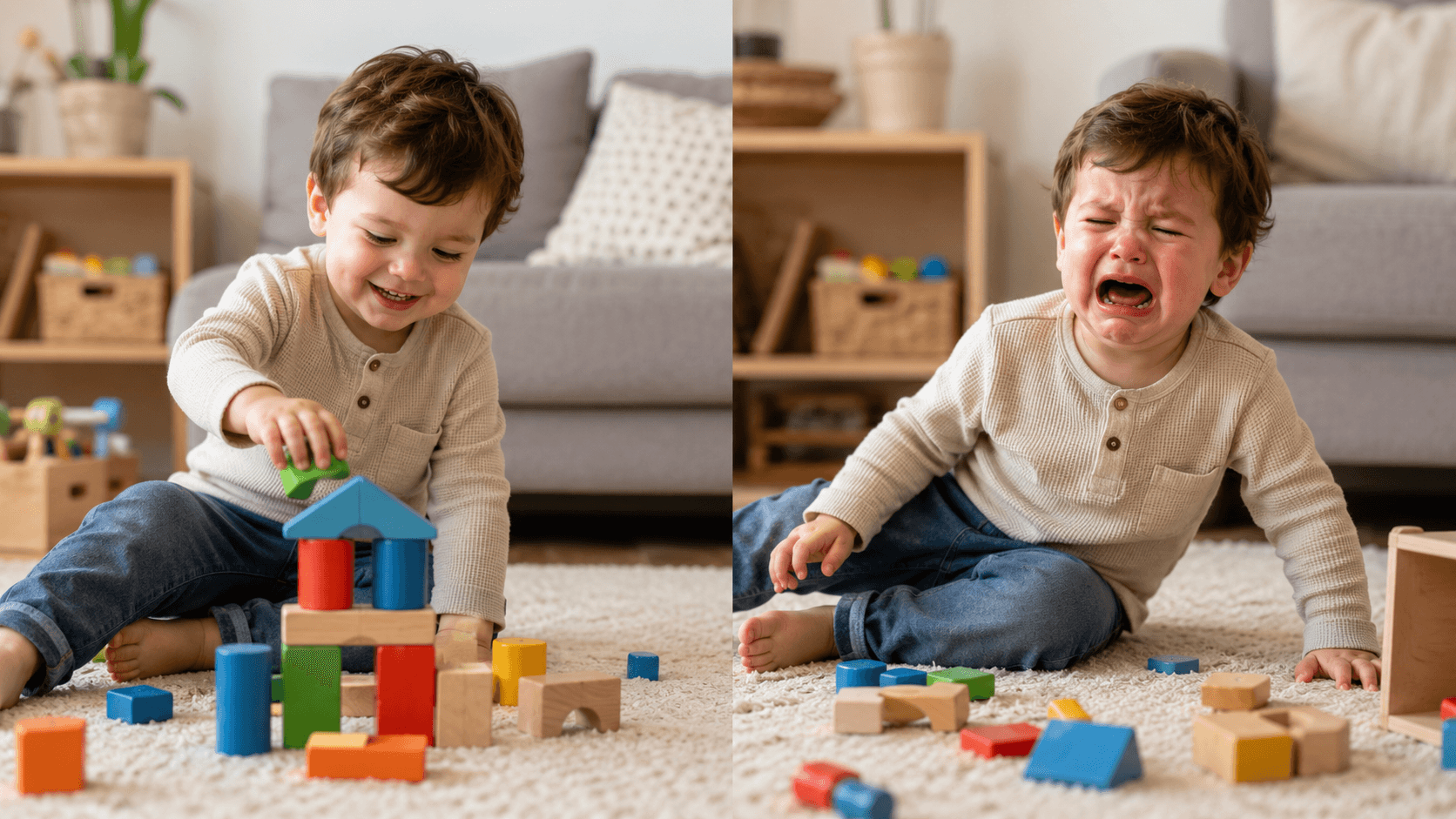
The 18-24 month period can feel like a leap: more words, stronger opinions, more movement, and a growing desire to do things "by myself." Milestones can help you understand what is typical as long as you treat them as flexible ranges, not a pass/fail checklist.
This guide uses reliable milestone references from the CDC and AAP, then adds practical, Montessori-aligned ways to support development at home without pressure.
Looking for a different age? See all milestone guides (0-6) here: Child Development Milestones (0–6): Age-by-Age Hub.
Table of contents
- How to use milestones without stress
- Around 18 months: what you may notice
- 20-22 months: common changes
- By 24 months: what you may notice
- Montessori-aligned ways to support 18-24 months
- When to check in with your pediatrician
- FAQ
- Related reads on Montessori Parent Guide
How to use milestones without stress
- Skills come in bursts; one area may surge while another pauses.
- Normal includes a wide range, especially for language.
- If you have concerns, it is appropriate to bring them up early. Screening is meant to support families, not scare them.
A Montessori-friendly mindset: observe first, then prepare the environment so your child can practice emerging skills independently. If your child wants to carry, climb, name, sort, wipe, or help, your job is to make the useful version easier to reach.
Milestone lists are not a substitute for developmental screening. They are a way to notice patterns, celebrate progress, and know when to ask for more support.
Around 18 months: what you may notice
The CDC 18-month milestone set is a useful baseline at the start of this range.
Social and emotional
- May show more independence and want to do things alone
- Plays near other children through parallel play
- May get upset when sharing or transitions are hard
- Moves away from you, then checks that you are still nearby
Language and communication
- Says several words, though the exact number varies widely
- Points to show what they want or to share interest
- May follow a simple one-step direction, especially in a familiar routine
Thinking and learning
- Uses familiar objects in simple pretend ways, like feeding a doll or talking on a toy phone
- Copies everyday work, like sweeping, wiping, or putting objects away
- Plays with toys in simple, purposeful ways
Movement and physical development
- Walks independently and begins climbing more confidently
- Scribbles
- Tries a spoon or cup with frequent spills
- Climbs on and off low furniture with help nearby
At this age, your home setup does a lot of the teaching. A low hook, a reachable hamper, a small cloth, and a few shelf choices can give your toddler daily practice without turning development into a lesson.
20-22 months: common changes
This middle part of the range is where many parents notice:
- More strong "no" moments and boundary testing
- More frustration during transitions, like leaving, cleanup, or the car seat
- Rapid vocabulary growth for some children and slower, steady growth for others
- More interest in helping with real tasks, like wiping, carrying, and putting away
- Longer bursts of concentration when an activity matches the skill your child is working on
If your child is in a big-feelings phase, that is development, not failure. Their wants are getting stronger while regulation skills are still immature. Clear routines, fewer choices, and predictable limits usually help more than long explanations.
By 24 months: what you may notice
The CDC 24-month milestone set is the clearest reference point for the end of this range.
Social and emotional
- Notices other children and may copy them
- Shows stronger preferences and opinions
- Looks to your face for cues in new situations
Language and communication
- Uses two-word phrases for many children
- Points to things in a book when you ask, like "Where is the dog?"
- Uses gestures and words together more often
Thinking and learning
- Begins simple matching or sorting by shape, color, or category
- Shows more pretend play and imitation
- Follows two-step instructions sometimes, especially when the routine is familiar
Movement and physical development
- Runs, climbs, and may kick a ball
- Uses a spoon more often, still messily
- Helps more with dressing, like pulling off socks or pushing arms through sleeves
Do not worry if every skill does not appear on the same day. The pattern matters: more communication, more purposeful movement, more imitation, and more interest in doing real things.
Montessori-aligned ways to support 18-24 month development
At 18-24 months, Montessori at home is about purposeful independence: real tasks, clear boundaries, and an environment where your child can succeed.
1. Support independence with small real routines
Helpful setups:
- A low hook for a jacket or bag
- A stool at the sink for handwashing, with close supervision
- A simple snack setup, if it is safe in your home
- A hamper your child can reach
- A small cleaning basket with a cloth and tiny brush
For a room-level setup, the Montessori bedroom setup guide can help you think through safe movement, reachable storage, and child-height routines.
Practical life helps reduce frustration by giving toddlers a "yes" way to participate. For more ideas, see Montessori Practical Life Activities.
2. Support language with real-life naming and choices
At this age, language grows fastest when it is tied to daily life:
- Name objects your child touches: "spoon," "shoe," "banana."
- Give simple choices: "water or milk?" "book or blocks?"
- Expand what they say by one word. If they say "truck," you can say "big truck."
- Read short books daily and let your child point, turn pages, and repeat favorites.
For language activities and pre-reading foundations, use Montessori Language Activities (Ages 1-5).
3. Support fine motor with real work materials
Good 18-24 month options are hands-on and concrete:
- Simple pouring, starting dry or with a small amount of water and a sponge nearby
- Transfer work with a spoon, and tongs only when your child is ready
- Posting activities with larger pieces
- Wiping and washing routines
- Easy open-and-close containers
If you want a ready list, start with Montessori Activities for 1 Year Olds (12-24 Months).
4. Support movement with purposeful movement
- Offer outdoor time daily when possible.
- Create safe chances to climb, push, pull, squat, and carry.
- Use carry-and-deliver jobs, like bringing napkins, carrying a book, or putting laundry in a basket.
- Keep open floor space available instead of filling every corner with equipment.
Movement is often the best behavior support at this age. A toddler who has carried, pushed, climbed, and moved with purpose often has an easier time sitting for meals, diaper changes, and bedtime routines.
5. Reduce overwhelm with toy rotation
This age gets overwhelmed easily when there are too many choices. Fewer options often improve focus and reduce tantrums.
Use toys and activities that match what you are observing:
- If your child posts everything, offer a posting box.
- If your child carries objects across the room, offer a basket delivery job.
- If your child imitates cleaning, offer a small cloth and a safe wiping routine.
- If your child is matching or sorting, offer a simple shape or color match with only a few pieces.
The Montessori toy rotation guide for ages 1-3 can help you keep the shelf fresh without making it busy. If you need toy ideas for the end of this age range, see Montessori toys for 2 year olds.
The app can help you choose useful skills to support next and suggest Montessori activities that fit your child's age, interests, and home setup.
When to check in with your pediatrician
The AAP recommends developmental screening at routine well-child visits and autism-specific screening at 18 and 24 months. It is also appropriate to ask for screening any time you have concerns.
Consider checking in if you notice:
- Loss of skills your child previously had
- Persistent concerns about hearing, vision, or communication
- Very limited progress in movement that restricts exploration
- Feeding, swallowing, or motor concerns that feel persistent
- A consistent worry you cannot shake
If you are unsure, write down what you are seeing and bring it to your visit. Concrete examples help: "She points to ask for help but is not using words yet" is easier to discuss than a general worry like "language feels behind."
FAQ
What milestones should I expect between 18 and 24 months?
Between 18 and 24 months, many toddlers show stronger walking and climbing, more imitation, simple pretend play, more gestures and words, early two-word phrases, and more interest in real routines. The exact timing varies.
What if my 18-24 month old is not talking much yet?
Language has a wide normal range, but limited progress, loss of words, hearing concerns, or a worry you cannot shake are good reasons to check in with your pediatrician and ask about developmental screening.
How can Montessori support 18-24 month development?
Montessori support at this age is mostly a prepared environment: reachable routines, real tools, simple choices, fewer shelf options, purposeful movement, and language connected to daily life.
Related reads on Montessori Parent Guide
- Montessori Activities for 1 Year Olds (12-24 Months)
- 15 Montessori Activities for 18 Month Olds
- Montessori Activities for 2 Year Olds (24-36 Months)
- Montessori Language Activities (Ages 1-5)
- Montessori Practical Life Activities
- Montessori Toy Rotation at Home (Ages 1-3)
- Montessori Toys for 2 Year Olds