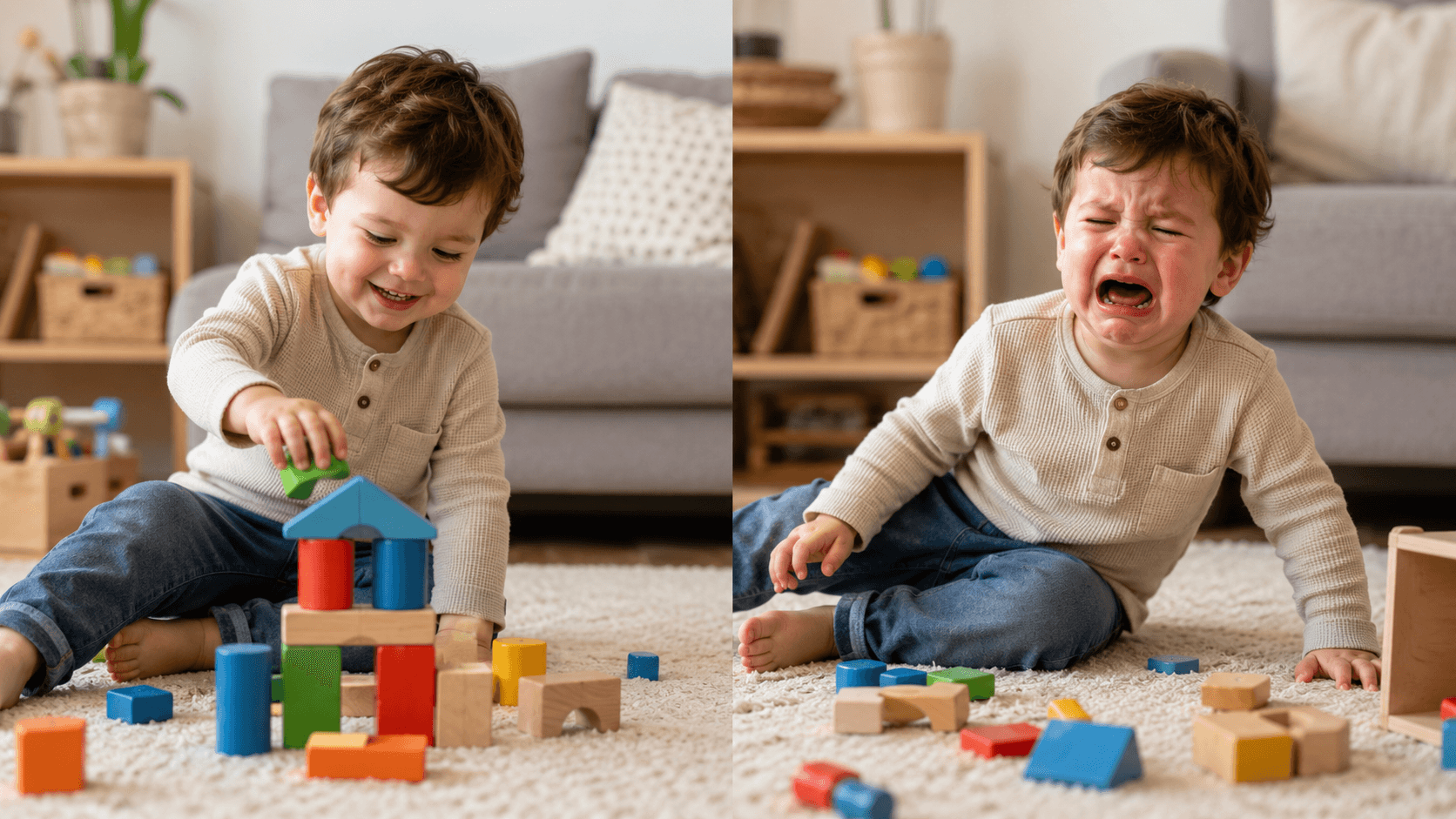
The 12-18 month window is big: first real words, more confident walking, stronger opinions, and lots of "I do it" energy. Milestones can be helpful as long as you treat them as flexible ranges, not a checklist your child must pass.
This guide uses reliable milestone references from the CDC and AAP, then adds practical, Montessori-aligned ways to support development at home without pressure.
Looking for a different age? See all milestone guides (0-6) here: Child Development Milestones (0–6): Age-by-Age Hub.
Table of contents
- How to use milestones without stress
- 12-13 months: what you may notice
- Around 15 months: what you may notice
- By 18 months: what you may notice
- Montessori-aligned ways to support milestones
- When to check in with your pediatrician
- Related reads on Montessori Parent Guide
How to use milestones without stress
- Look for patterns, not one-off moments.
- Skills often come in bursts. A quiet month can be followed by a leap.
- There is a wide range of normal. If you are unsure, it is always okay to ask your pediatrician.
A Montessori-friendly mindset: observe first, then adjust the environment. If a skill is emerging, your job is to make it easier to practice with safe space to move, reachable tools, predictable routines, and fewer distractions.
Milestone lists are not a substitute for a developmental screening tool. They are a way to notice patterns, celebrate progress, and know when to ask for more support.
12-13 months milestones: what you may notice
These are common skills many children show around one year.
Social and emotional
- Plays simple games with you, like pat-a-cake
- May show stranger anxiety or separation upset
- Repeats actions to get your attention
Language and communication
- Uses gestures like waving "bye-bye"
- Calls a parent "mama," "dada," or another special name
- Understands "no" and may pause briefly when you say it
Thinking and learning
- Puts objects into containers, like a block in a cup
- Looks for things you hide during simple object permanence games
Movement and physical development
- Pulls up to stand
- Cruises along furniture
- May take independent steps, though timing varies widely
At this age, your home environment matters more than formal activities. A low shelf, a few safe objects to post or stack, and room to pull up and cruise can give your child many chances to practice.
Around 15 months milestones: what you may notice
The CDC's 15-month milestone set is a helpful midpoint reference for this age band.
What many parents observe around this stage:
- More confident mobility, with walking improving and climbing interest increasing
- Growing imitation, especially copying what adults and older children do
- More purposeful communication, including pointing, showing, and trying more sounds or words
- Early practical life interest, like wanting to carry shoes, put objects in a basket, or help clean up
Tip: If your child seems behind in one area but surging in another, that can be common. Development is not evenly distributed.
By 18 months milestones: what you may notice
These are common skills many children show by 18 months.
Movement and physical development
- Walks without holding on
- Climbs on and off low furniture without help
- Scribbles
- Drinks from a cup without a lid, with spills expected
- Feeds self with fingers and tries using a spoon
Play and thinking
- Plays with toys in simple ways, like pushing a toy car or feeding a doll
- Copies real tasks, like sweeping or wiping
- Follows simple one-step directions, depending on the child and language environment
Social and communication
- Points to show you something interesting
- Moves away from you, then checks that you are still nearby
- Tries several words beyond "mama" or "dada"
Do not worry if every item does not appear on the same day. The pattern matters: more communication, more purposeful movement, more imitation, and more interest in doing real things.
Montessori-aligned ways to support 12-18 month development
Montessori at this age is less about lessons and more about a prepared environment plus real-life practice.
1. Support movement
- Give safe chances to walk, carry, climb, and squat.
- Create "yes spaces" where your child can explore without constant stopping.
- Prioritize outdoor time and open floor space over containers.
- Put a few sturdy baskets or low shelves where your child can practice carrying and returning objects.
For room-level setup, the Montessori bedroom setup guide can help you think through safe movement, reachable storage, and child-height routines.
2. Support hands
Offer simple, repeatable work:
- Posting toys, where your child puts an object into a container
- Stacking or ring work
- Easy open-and-close containers
- Chunky crayons for scribbling
- A small basket of objects to transfer from one place to another
You already have an activity list built for this stage: Montessori Activities for 1 Year Olds (12-24 Months).
3. Support language without flashcards
- Name real objects slowly: "cup," "shoe," "banana."
- Add one word to what your child says. If they say "ball," you can say "red ball."
- Read short books daily. Let your child turn pages, point, and repeat favorites.
- Use the same words during the same routines so language connects to real life.
Object baskets are especially useful here. A few real kitchen objects, clothing items, or outdoor treasures give you natural words to repeat while your child explores.
4. Support independence through practical life
At 12-18 months, independence is tiny steps:
- A stable stool at the sink with close supervision
- A low hook for a jacket
- A reachable water cup if it is safe in your home
- Helping routines like putting laundry in the hamper or wiping spills
Practical life is not a performance. It is the child doing one real part of the family routine. For more ideas, see Montessori Practical Life Activities.
5. Reduce overwhelm with toy rotation
Fewer choices usually means deeper play and less frustration. For many children in this age range, 4-6 shelf options are enough.
Use toys and activities that match what you are observing:
- If your child posts everything, offer a posting box.
- If your child carries objects across the room, offer a basket delivery job.
- If your child imitates cleaning, offer a small cloth and a safe wiping routine.
The Montessori toy rotation guide for ages 1-3 can help you keep the shelf fresh without making it busy. If you need toy ideas for this stage, start with Montessori toys for 1 year olds.
The app can help you choose useful skills to support next and suggest Montessori activities that fit your child's age, interests, and home setup.
When to check in with your pediatrician
Milestones are meant to support early identification, not anxiety. The AAP recommends developmental surveillance at every health supervision visit, general developmental screening at 9, 18, and 30 months, and autism-specific screening at 18 and 24 months.
Consider checking in sooner if you notice:
- Loss of skills your child previously had
- Persistent concerns about hearing, vision, or communication
- Movement delays that limit exploration
- Feeding, swallowing, or motor concerns that feel persistent
- A consistent worry you cannot shake
If you are unsure, bring a short list of observations to your next visit. A concrete note like "she points to ask for help but is not using words yet" is easier to discuss than a general worry like "language feels behind."
FAQ
What milestones should I expect between 12 and 18 months?
Between 12 and 18 months, many children move from pulling up and cruising toward independent walking, stronger gestures, early words, simple pretend play, basic one-step directions, scribbling, self-feeding, and more interest in helping with real routines. The exact timing varies.
What if my 12-18 month old seems behind in one area?
Look for patterns over time, not one isolated day. If your child has lost skills, is not progressing in movement, communication, hearing, or vision, or you are consistently worried, check in with your pediatrician and ask about developmental screening.
How can Montessori support 12-18 month development?
Montessori support at this age is mostly a prepared environment: safe movement space, reachable tools, simple practical life routines, fewer toys, real language, and activities that let your child practice emerging skills without pressure.
Related reads on Montessori Parent Guide
- Montessori Activities for 1 Year Olds (12-24 Months)
- Montessori Toys for 1 Year Old
- Montessori Toy Rotation at Home (Ages 1-3)
- Montessori Practical Life Activities
- 15 Montessori Activities for 18 Month Olds