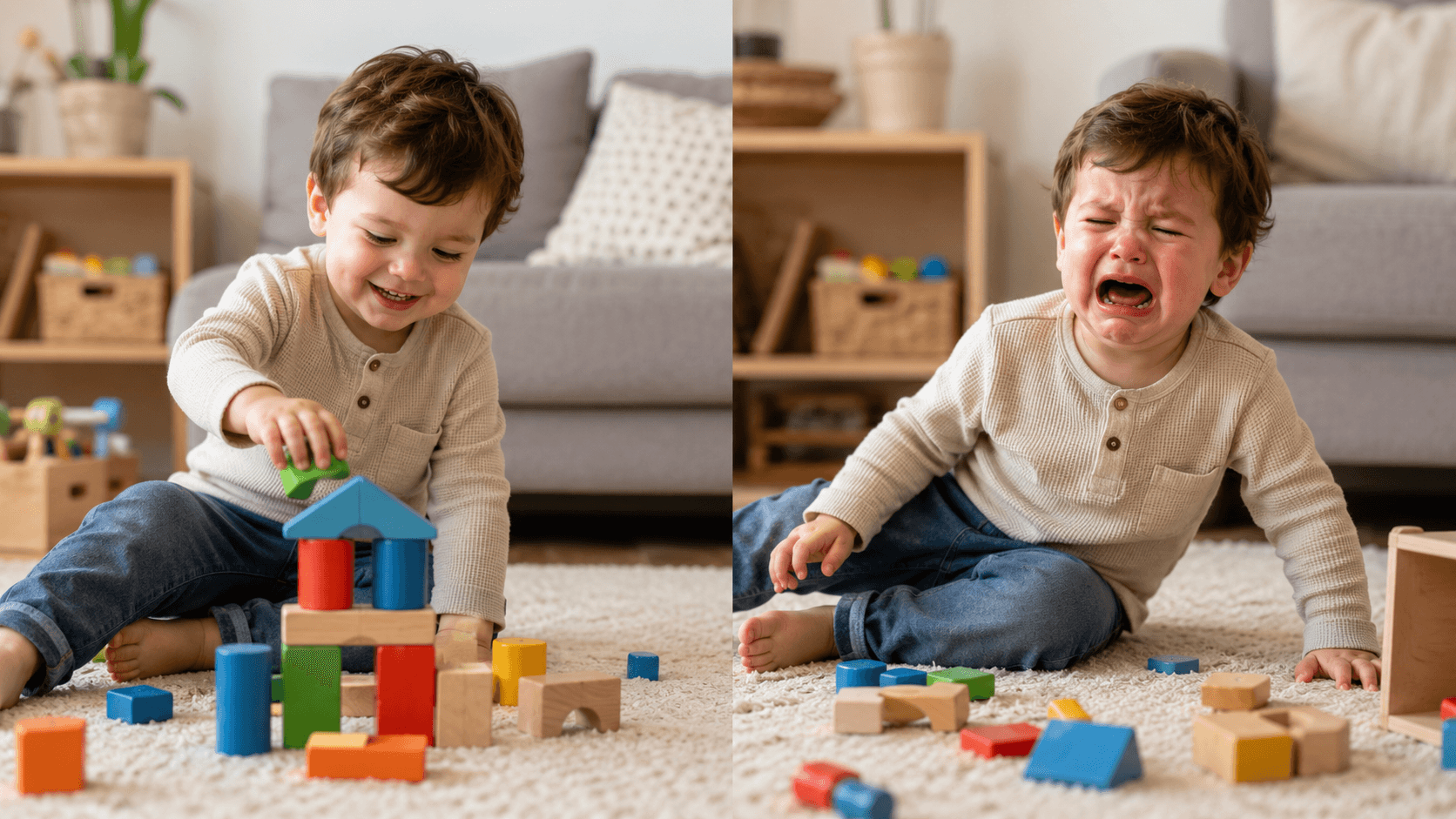
If your child is biting at daycare, it can feel stressful fast: incident reports, worried teachers, upset parents, and your own fear that your child will be labeled. The most helpful mindset is this:
Daycare biting is usually a systems problem, not a "bad kid" problem.
It is often about crowding, transitions, communication limits, sensory needs, or being tired and hungry at predictable times.
Each biting incident report is useful data, not a verdict on your child.
This guide is specifically about the daycare situation:
- exactly what to say to teachers
- what to ask them to track so you find the real trigger
- how to align a consistent response across daycare and home
- what prevention changes reduce biting quickly
- what to do if your daycare mentions suspension or removal
For the broader guide to why toddlers bite and what to do at home, start with Toddler Biting: Why It Happens + How to Stop It.
First: What To Say To Daycare
The goal is not to defend your child or prove the teachers wrong. The goal is to get everyone working from the same calm plan.
Script 1: Calm partnership
"Thanks for letting me know. I want us to work as a team. Can we track when it happens, like time, activity, and transition, so we can find the pattern? I will use the same response at home and would love to align on a consistent plan."
Script 2: If you feel judged or blamed
"I understand this is hard. My goal is not to excuse it, it is to reduce it. If we can identify the trigger and keep responses consistent, we should see improvement. Can we agree on the steps you will use in the moment, and I will mirror them at home?"
Script 3: If another parent is upset through the school
"I am sorry this happened, and we are taking it seriously. We are working with the teachers on a plan to prevent it and teach safe alternatives. Thank you for your patience while we address it."
What not to say
Even if you are panicking, these lines usually make the situation worse:
- "They would never do that."
- "Just watch them more."
- "Punish them harder."
Those responses can make teachers defensive, reduce collaboration, and push everyone away from the actual pattern.
The 5 Things To Ask Daycare To Track
Biting decreases faster when you stop guessing and start tracking.
Ask teachers to note these on each incident, or for one focused week of observation:
- time of day
- what was happening right before
- location
- who was bitten
- adult proximity
This matters because daycare biting often clusters in predictable bottlenecks:
- cleanup time
- lining up
- waiting for a popular toy
- outdoor-to-indoor transitions
- tired late afternoons
If the same pattern shows up three times, you usually have your best starting point.
A Consistent In-The-Moment Plan For Daycare Staff
You do not want a long lecture or a dramatic reaction. You want a predictable sequence that protects safety and teaches the next step.
Ask daycare to use this pattern:
1. Block with a neutral limit
- "I won't let you bite."
- "Teeth are not for biting people."
2. Quickly attend to the bitten child
- comfort
- check the skin
- give brief care first
This matters because it keeps the focus on safety, not on giving the biter a big emotional spotlight.
3. Reset the child who bit, without shame
- move the child slightly away from the group for a brief calm reset
- offer one replacement right away
- "You can say help."
- "You can say move."
- "You can ask for a turn."
4. Return to play with coaching
- "Try again: turn please."
- "Tap my arm and say help."
- "Say move."
Why this works: it removes reinforcement, protects safety, and teaches a replacement that can actually be used next time.
Montessori-aligned note: the tone should stay calm, matter-of-fact, and respectful. No humiliation. No labels. No long lectures during dysregulation.
If you want help interpreting the pattern and choosing the simplest intervention that fits your child, our Montessori chat support can help you build a daycare-ready plan with consistent language for both school and home.
The Most Common Daycare Triggers (And What To Change)
Once you know the pattern, small environment tweaks usually work faster than bigger punishments.
Trigger A: Crowding and tight spaces
Fix: reduce bottlenecks.
- stagger transitions for your child
- give them an early job so they move first or last
- avoid long lines when possible
Trigger B: Toy conflict
Fix: reduce competition.
- duplicates of top conflict toys
- fewer toys out at once
- rotate materials weekly
- more works with a clear start and finish
Trigger C: Waiting with nothing to do
Fix: give the body a job.
- carry something
- hold a card
- push a bin
- use teacher prompts like "hands on belly" or "hands holding strap"
Trigger D: Communication breakdown
Fix: teach one fast help signal.
- tap the teacher's arm and say "help"
- use a simple picture cue for younger toddlers
- practice "move" or "turn please" during calm moments
Trigger E: Sensory needs
Fix: provide a safe outlet.
- a teacher-approved teether if allowed
- crunchy snacks at snack time
- heavy work jobs like pushing a cart, carrying books, or stacking chairs with supervision
What To Do At Home To Support The Daycare Plan
This is daycare-specific support, not the full biting guide. The goal is to make daycare easier before the hard moments happen.
1. Add a morning regulation buffer
Before daycare, or in the car:
- offer water and a small snack if timing allows
- do 2 minutes of movement like jumping, wall pushes, or carrying a bag
- use one calm connection phrase: "I am with you. Today we use a gentle mouth."
2. Practice the daycare replacement phrase for 30 seconds a day
Pick the exact phrase daycare will use:
- "Help."
- "Move."
- "Turn please."
Role-play it once a day and keep it playful. Short, repeated practice works better than long talks.
3. Protect sleep
Daycare biting often spikes when children are overtired. An earlier bedtime is one of the fastest changes many families can make.
If Your Daycare Says, "We Have A Biting Policy"
Many centers have a daycare biting policy, but they vary a lot.
Ask:
- What is the policy exactly, in writing?
- What interventions are tried before removal?
- What support can staff provide during known hot times?
Reasonable supports to request, without sounding accusatory:
- extra supervision during known trigger windows
- removing one high-conflict toy temporarily
- giving your child a predictable job during transitions
- using one consistent response plan across all staff
If Your Child Is The Frequent Biter
If you are worried about suspension, focus on data and a short-term plan.
1. Ask for a 7-day pattern report
Not a judgment. Data.
- times
- transitions
- location
- triggers
2. Ask for a short intervention plan
For example:
- "For 2 weeks, we will shadow during transitions and coach help or turn."
- "We will reduce crowding at cubbies."
- "We will offer a teether at specific times if allowed."
3. Offer a quick check-in schedule
- "Can we do a quick 3-minute check-in at pickup for two weeks?"
If a daycare will not collaborate at all, it may be a fit issue, not only a child issue.
When Daycare Biting May Mean More Support Is Needed
Consider extra support if:
- biting is intense and frequent across settings for months
- there are significant communication delays
- your child is highly dysregulated beyond daycare too
- daycare cannot keep peers safe despite consistent interventions
Start with your pediatrician and ask whether parent coaching, occupational therapy, or speech support would make sense.
Quick Checklist For Your Next Daycare Conversation
Bring this list into your next conversation about toddler biting at daycare:
- What time does it happen most?
- What happens right before?
- Where does it happen?
- Who is being bitten?
- What do adults do immediately after?
- What replacement will staff prompt?
- What prevention tweak will we try for 2 weeks?
- When will we review progress?
Related Resources
- Toddler Biting: Why It Happens + How to Stop It
- Toddler Hitting: What to Do in the Moment + How to Stop It
- 2 Year Old Hitting: Why It Happens + What to Do
- Montessori School Tour: What to Look For + Questions to Ask (Ages 1-6)
One line to remember: daycare biting improves fastest when adults stop blaming, start tracking, and respond with one calm, consistent plan.