Mindfulness for kids does not have to mean long meditations or perfect stillness.
For young children, mindfulness is simply noticing what is happening inside the body and mind, then choosing a calmer response. The goal is practical: fewer meltdowns, smoother transitions, better sleep, and stronger emotional regulation.
In Montessori terms, mindfulness supports the same outcomes Montessori values: self-regulation, concentration, independence, and respectful connection. You offer tools, practice them when your child is calm, and children learn to use them when they need them.
If you want the broader philosophy behind this approach, start with What Is Montessori?. Mindfulness works best when it sits inside the same prepared, respectful home environment.
This guide gives you 20 quick mindfulness activities for kids ages 2-6. Most take under 2 minutes and require no special supplies.
Table of Contents
- How to make mindfulness work for kids
- 20 mindfulness activities for kids
- Quick routines that fit family life
- Common mistakes and easy fixes
- Related reading
- Final thoughts on mindfulness for kids
How to make mindfulness work for kids
A few simple rules make mindfulness more effective and more Montessori-aligned:
- Practice when calm first. Do not introduce a brand-new tool during a meltdown.
- Keep it short. 30-90 seconds is enough for toddlers and preschoolers.
- Offer choice. Try, "Do you want balloon breaths or candle breaths?"
- Avoid pressure. If your child refuses, model it yourself and try again later.
- Use the body. Young children often regulate through movement before words.
The most useful mindfulness tools are simple, repeatable, and easy for a child to recognize. Think of them like practical life work for feelings: small actions practiced often, in a predictable way.
20 mindfulness activities for kids
These activities are grouped by situation so you can pick the tool that fits the moment.
Breathing exercises kids actually do
These are quick wins for bedtime, transitions, waiting, and moments when your child is upset but still able to listen.
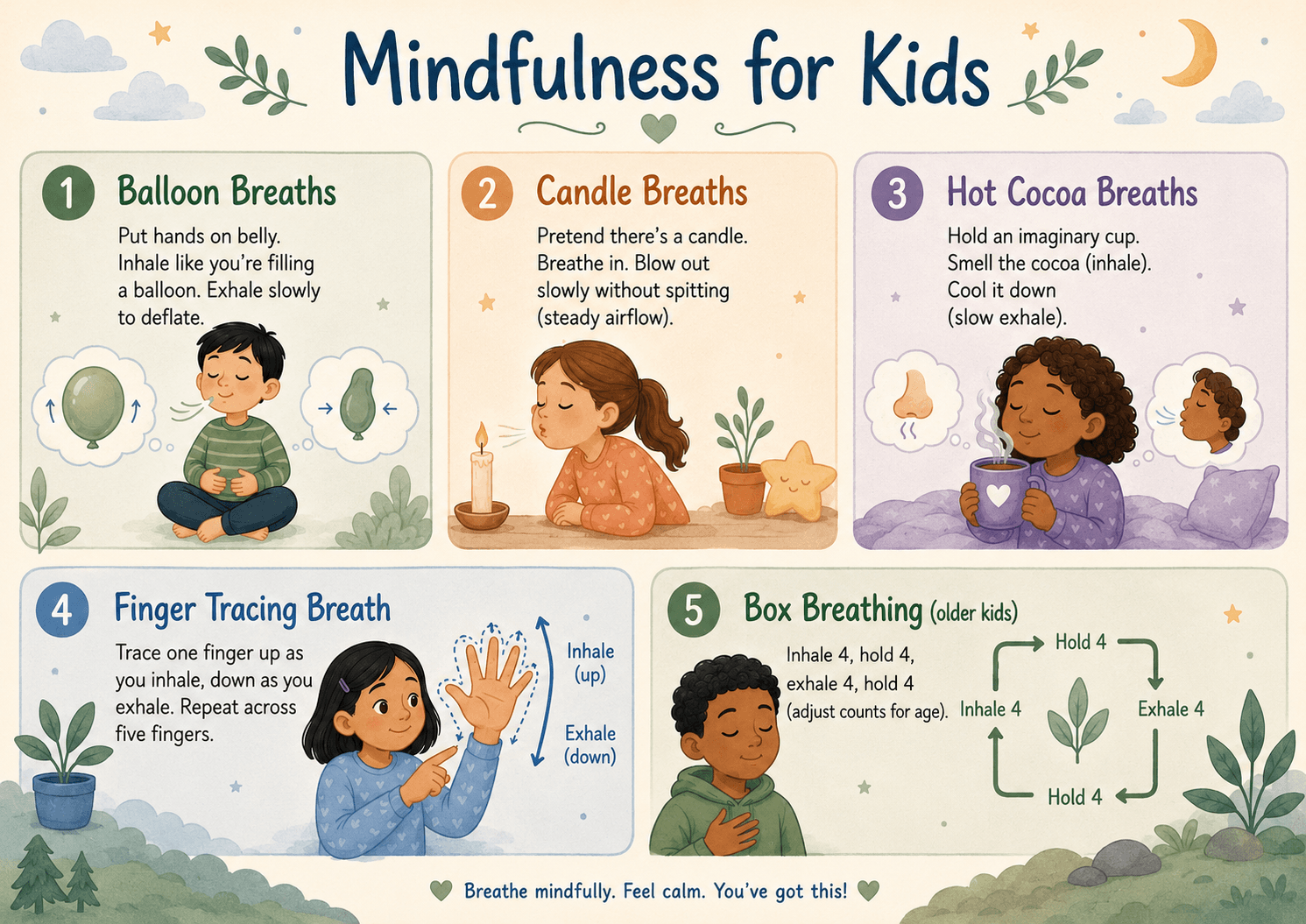
1. Balloon Breaths
Put hands on belly. Inhale like you are filling a balloon. Exhale slowly to deflate.
2. Candle Breaths
Pretend there is a candle. Breathe in. Blow out slowly without spitting, using steady airflow.
3. Hot Cocoa Breaths
Hold an imaginary cup. Smell the cocoa as you inhale. Cool it down with a slow exhale.
4. Finger Tracing Breath
Trace one finger up as you inhale, then down as you exhale. Repeat across five fingers.
5. Box Breathing
For children who can count comfortably: inhale 4, hold 4, exhale 4, hold 4. Adjust the count for age. For ages 2-4, "in... out..." is usually enough.
Body-based calming for big energy
Some children cannot calm down by sitting still. They need muscle work, pressure, or slow movement first.
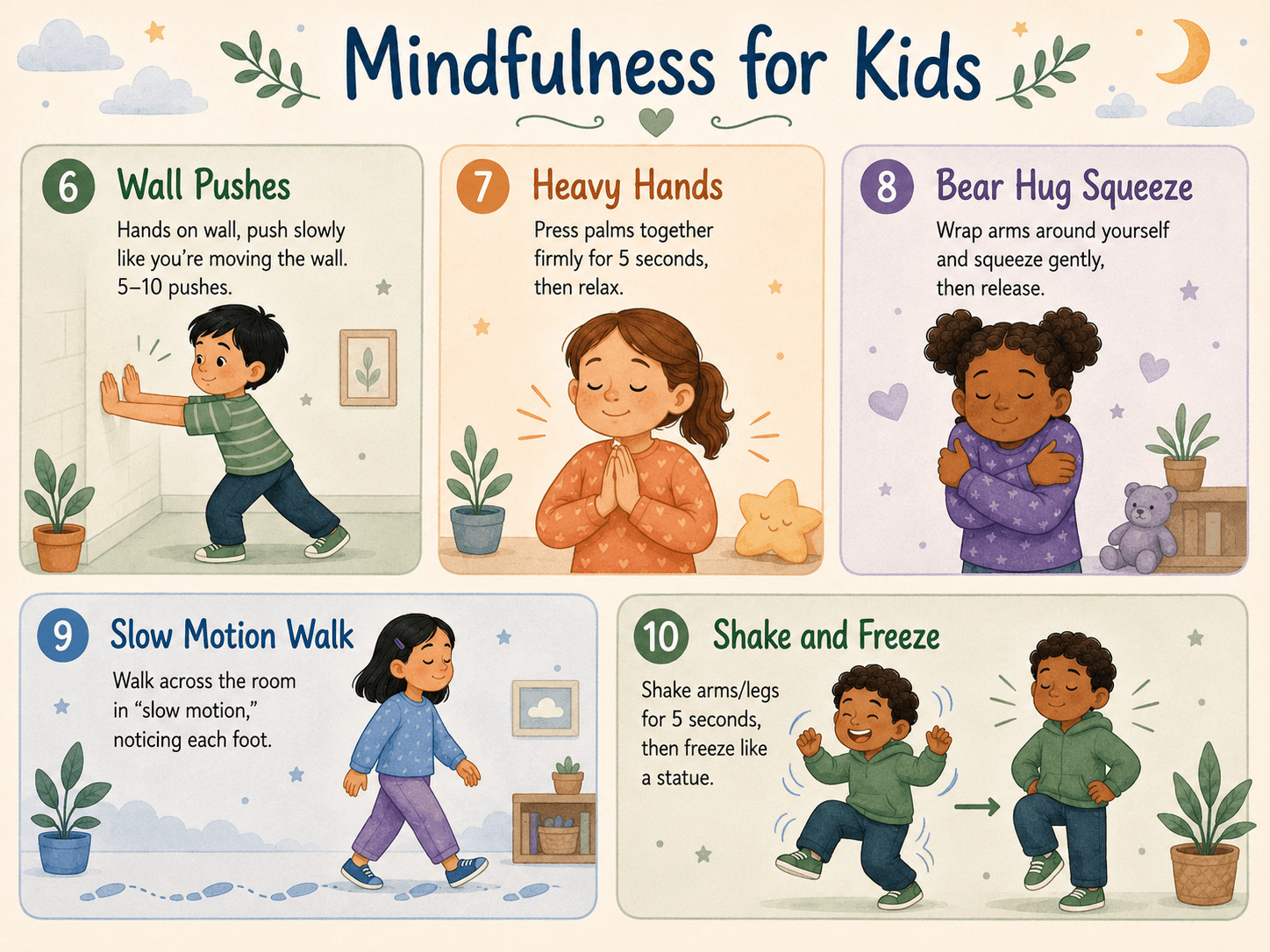
6. Wall Pushes
Place both hands on a wall. Push slowly like you are moving the wall. Try 5-10 pushes.
7. Heavy Hands
Press palms together firmly for 5 seconds, then relax. Repeat a few times.
8. Bear Hug Squeeze
Wrap arms around yourself and squeeze gently, then release.
9. Slow Motion Walk
Walk across the room in slow motion, noticing each foot touch the floor.
10. Shake and Freeze
Shake arms and legs for 5 seconds, then freeze like a statue.
Mindfulness for emotions
These tools help children notice feelings without shame. They are especially useful when a child needs language for big emotions.
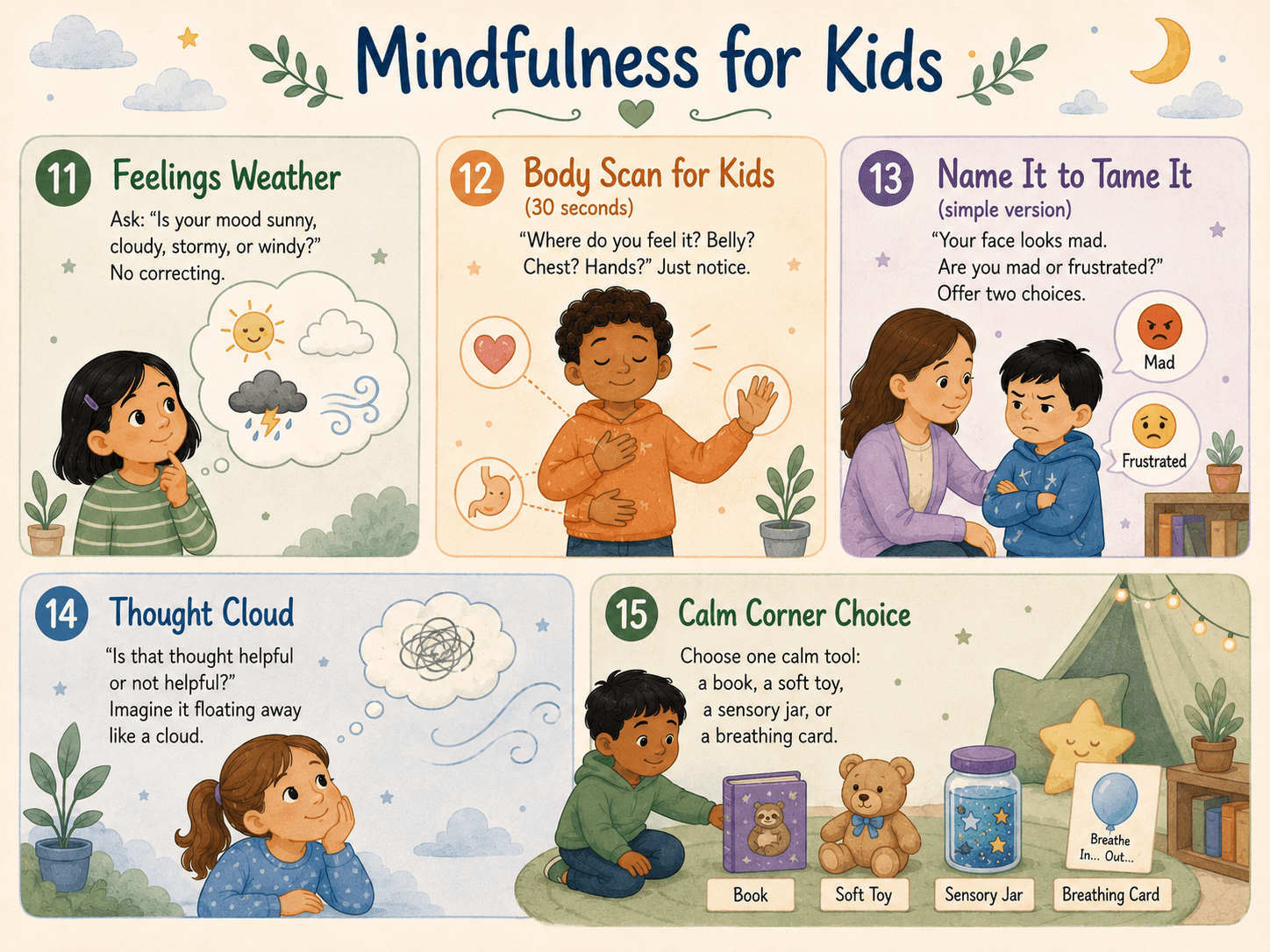
11. Feelings Weather
Ask, "Is your mood sunny, cloudy, stormy, or windy?" There is no correcting. You are helping your child notice.
12. Body Scan for Kids
Try a 30-second body scan: "Where do you feel it? Belly? Chest? Hands?" Just notice.
13. Name It to Tame It
Offer two choices: "Your face looks mad. Are you mad or frustrated?" Naming the feeling can lower the intensity.
14. Thought Cloud
Ask, "Is that thought helpful or not helpful?" Then imagine it floating away like a cloud.
15. Calm Corner Choice
Invite your child to choose one calm tool: a book, a soft toy, a sensory jar, or a breathing card.
A calm corner works best when it is part of a prepared environment, not a punishment spot. For setup ideas, see Montessori Bedroom Setup and How to Be a Calm Parent.
Mindfulness through senses
Sensory mindfulness is useful for anxious, overstimulated, or tired children because it gives the brain something concrete to notice.
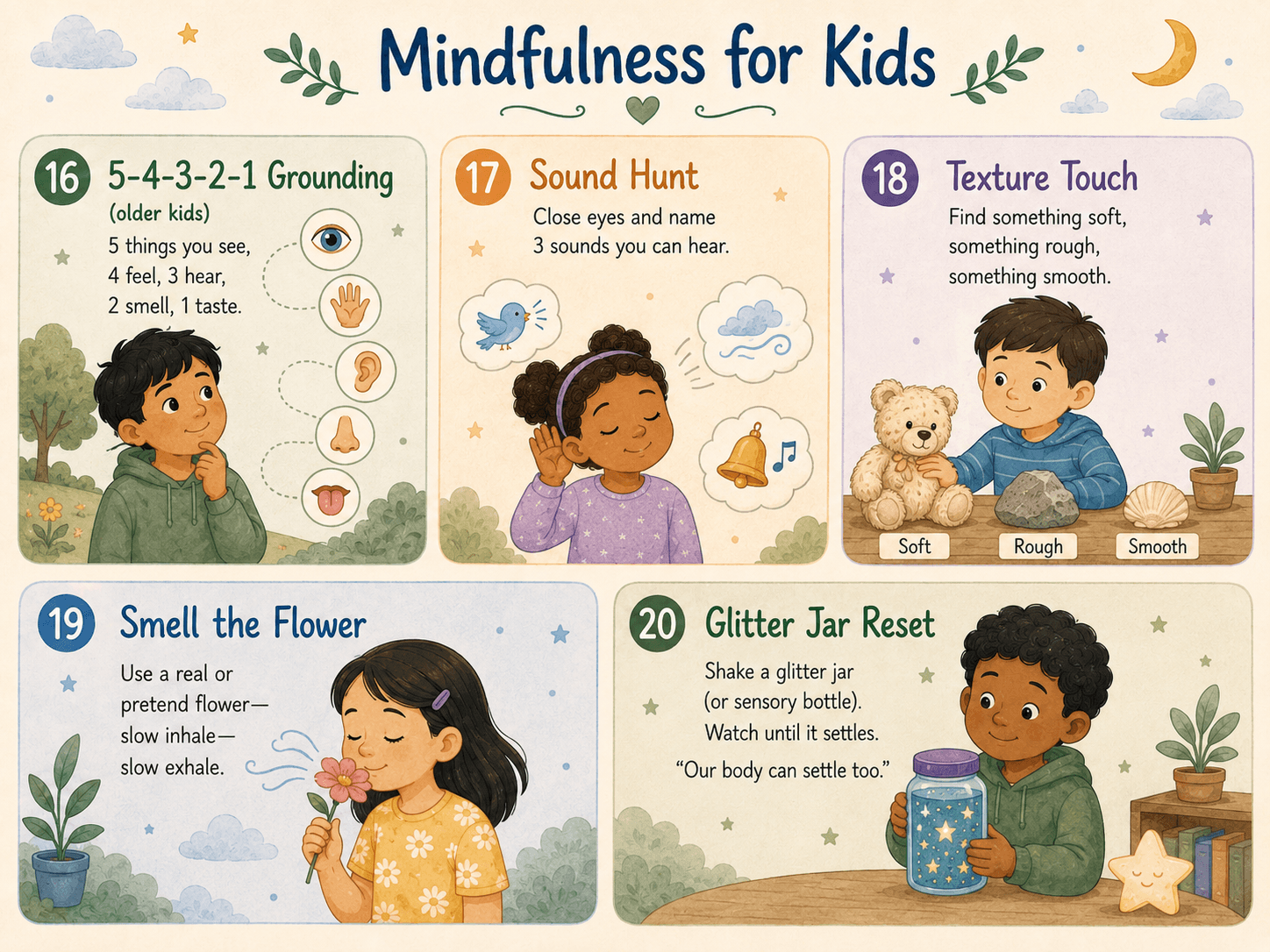
16. 5-4-3-2-1 Grounding
For children who can follow a longer sequence: name 5 things you see, 4 things you feel, 3 things you hear, 2 things you smell, and 1 thing you taste.
17. Sound Hunt
Close eyes and name 3 sounds you can hear.
18. Texture Touch
Find something soft, something rough, and something smooth.
19. Smell the Flower
Use a real or pretend flower. Slow inhale. Slow exhale.
20. Glitter Jar Reset
Shake a glitter jar or sensory bottle. Watch until it settles. You can say, "Our body can settle too."
If your child loves hands-on sensory work, Sensory Play Ideas for Babies, Toddlers, and Preschoolers has more calm, Montessori-aligned options.
Share your child's age and the hardest moments, like bedtime, transitions, preschool anxiety, or tantrums. Our in-app Montessori chat support can suggest a simple weekly plan and mindfulness activities that fit your routine.
Quick routines that fit family life
You do not need to use all 20 activities. Pick one small routine and repeat it until it feels familiar.
Morning routine: 1 minute
- Balloon breaths, 3 times
- Wall pushes, 5 times
- "Today I want to feel..." with one choice: calm, brave, or kind
Transition routine: 30 seconds
- Finger tracing breath on one hand
- Freeze and melt: freeze like a statue, then melt slowly
Bedtime routine: 2 minutes
- Hot cocoa breaths, 3 times
- Short body scan: relax forehead, shoulders, hands
- Gratitude: "One good thing today was..."
Bedtime mindfulness pairs well with a steady sleep routine. If evenings are the hardest part of your day, Montessori Sleep Guide can help you build a calmer rhythm around rest.
Common mistakes and easy fixes
Mindfulness can backfire when it becomes another demand. Keep the tone light and practical.
- Mistake: using mindfulness only during meltdowns. Practice one tool daily when calm. After breakfast works well.
- Mistake: making it a performance. Avoid "Do it right." Model it yourself and invite your child to join.
- Mistake: making it too long. Stop after 30-60 seconds. Short wins build buy-in.
- Mistake: only sitting still. Include body-based tools like wall pushes, slow walking, and shake and freeze.
You can also reduce the need for constant calming by simplifying the environment. Montessori Toy Rotation at Home is a useful next step if toys, clutter, or decision fatigue are adding to the chaos.
Related reading
These pair well with mindfulness because they reduce chaos and support regulation:
- Montessori Practical Life Activities
- Montessori Toy Rotation at Home
- Montessori Language Activities
- Child Discipline: Calm, Effective Strategies for Ages 1-6
If you are feeling stuck, our Montessori chat support can help you troubleshoot what is driving dysregulation and build a simple plan with mindfulness, routines, and environment changes for your child's age.
Final thoughts on mindfulness for kids
Mindfulness for kids works best when it is small, concrete, and practiced before the hard moment.
Start with one tool. Use it when your child is calm. Keep the language simple. Over time, these tiny moments become familiar options your child can reach for when big feelings show up.