A bored kid can make a parent feel instantly responsible.
Your child says, "I'm bored," and suddenly you feel like you need to become an entertainer, activity planner, screen-time negotiator, and emotional coach all at once.
But a bored child is not always a problem to fix.
Sometimes boredom is the doorway to deeper play, creativity, independence, and problem-solving. The goal is not to rescue your child from every bored moment. The goal is to help them learn what to do with that feeling.
A Montessori approach is especially helpful here because it does not treat children as passive consumers of entertainment. It prepares the environment, offers meaningful choices, and gives children time to discover their own work.
This guide covers:
- why children say "I'm bored"
- when boredom is actually useful
- how to respond without becoming the entertainment
- Montessori-inspired ideas for babies, toddlers, and preschoolers
- simple home setup changes that make bored moments easier
Table of Contents
- What "I'm bored" often means
- Is boredom good for kids?
- What to do when your child says "I'm bored"
- What not to do with a bored child
- Montessori-inspired ideas for a bored kid
- Bored kid activities by age
- A simple "I'm bored" activity menu
- How to create a boredom-friendly home
- When boredom is really a sign of something else
- What to say instead of "go find something to do"
- FAQ
- Final thoughts
What "I'm bored" often means
Children say "I'm bored" for many different reasons.
Sometimes they truly do not know what to do next. Sometimes they are tired, hungry, overstimulated, lonely, or craving connection. Sometimes they are used to adults or screens filling every empty space.
A bored child may actually be saying:
- "I need help starting."
- "I want your attention."
- "I'm tired of my toys."
- "I do not know how to play alone yet."
- "I want something exciting."
- "I need movement."
- "I'm overwhelmed by too many choices."
- "I'm used to being entertained."
That is why the best response is not always a new activity. First, try to understand what kind of boredom you are seeing.
Is boredom good for kids?
Boredom can be uncomfortable, but it can also be useful.
When children are not instantly entertained, they have a chance to:
- imagine
- invent
- problem-solve
- return to old materials in new ways
- practice independent play
- notice their own interests
- build patience
In Montessori terms, children need time to choose meaningful work. If every quiet moment is filled by an adult, a screen, or a scheduled activity, the child has fewer chances to build inner direction.
That does not mean you should ignore your child. It means you do not need to panic every time they feel bored.
What to do when your child says "I'm bored"
The best response is calm, brief, and supportive.
Try this simple three-step approach:
1. Connect first
Before offering solutions, acknowledge the feeling.
You can say:
- "You feel bored."
- "You're not sure what to do next."
- "That can feel frustrating."
- "You want something interesting."
This helps your child feel seen without making you responsible for immediately fixing it.
2. Offer a small bridge, not a full rescue
Instead of planning the whole activity for them, help them start.
You might say:
- "Let's look at your shelf together."
- "You can choose blocks or drawing."
- "I'll help you start, then I'm going back to my work."
- "Pick one thing from your activity basket."
A small bridge is enough. You are not becoming the entertainment.
3. Step back
This is the hardest part.
Once your child begins, give them space. Independent play often starts awkwardly. Some children need a few minutes to settle into it.
If you keep suggesting, correcting, or adding ideas, they may never take ownership of the play.
Montessori Parent Guide helps you find age-based activities based on your child's stage, your time, and your energy level. It is especially useful on "I'm bored" days when you want something simple, purposeful, and realistic.
What not to do with a bored child
When you have a bored child at home, these responses usually make the problem bigger over time:
- offering a screen every time
- listing 20 activity ideas at once
- constantly entertaining your child
- buying new toys too often
- turning boredom into a lecture
- shaming them for feeling bored
- interrupting too quickly when they start to play
A bored kid does not need a parent who panics. They need a parent who calmly believes they can find something meaningful to do.
Montessori-inspired ideas for a bored kid
Montessori-aligned boredom support starts with the environment.
Instead of asking, "How do I entertain my child?" ask:
"What can my child do independently in this space?"
That question changes everything.
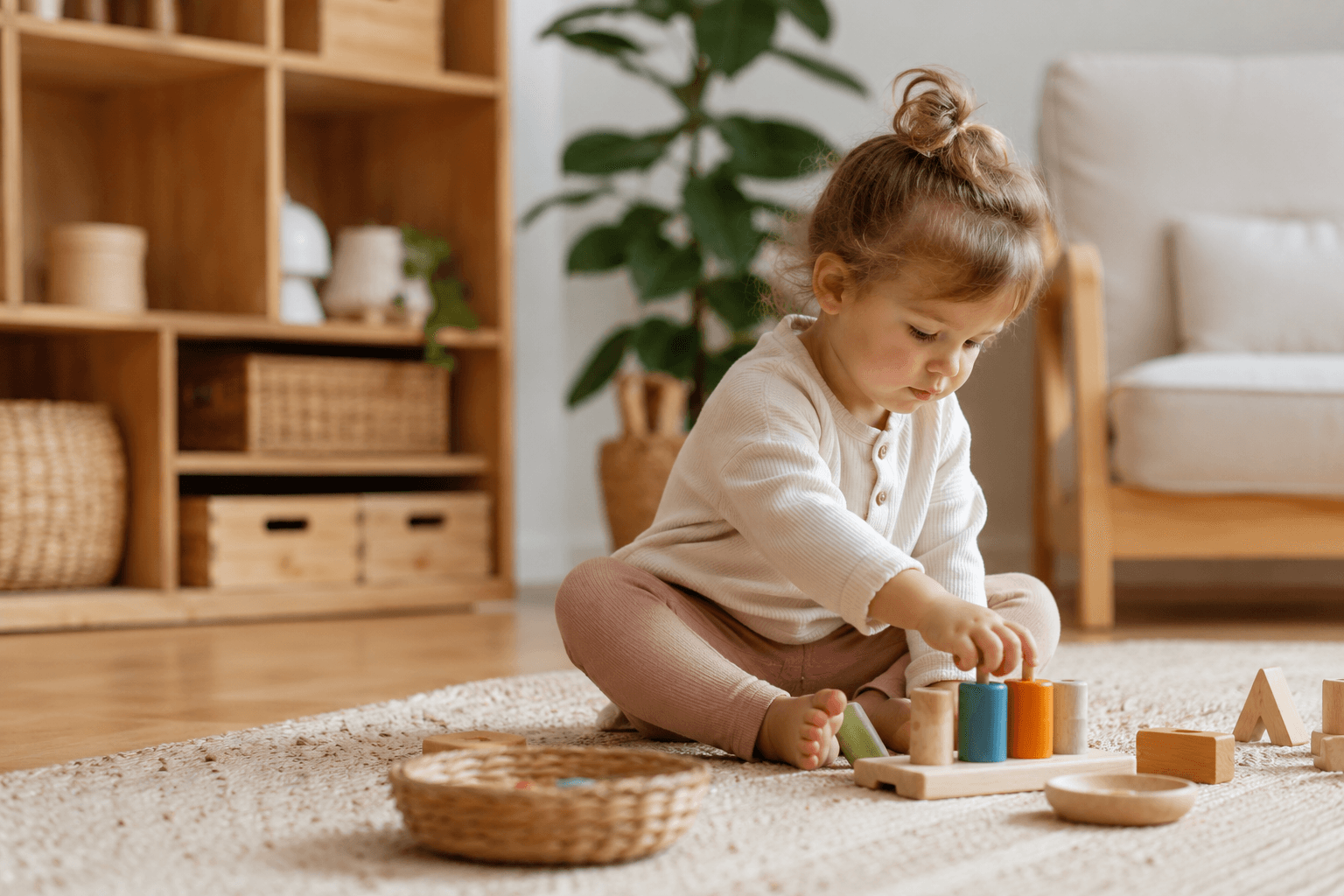
1. Rotate toys instead of adding more
Too many toys can make children more bored, not less. When everything is out, nothing feels interesting.
Try a simple Montessori toy rotation:
- keep fewer toys available
- store the rest away
- rotate when interest drops
- keep favorites longer
- avoid changing everything at once
2. Add practical life work
A bored child often wants something real to do.
Practical life activities are powerful because they are not just busy work. They help children feel capable and included.
Try:
- washing fruit
- wiping the table
- watering plants
- matching socks
- sweeping crumbs
- transferring laundry
- helping prepare snack
- folding small towels
3. Create a simple activity shelf
A Montessori-style shelf does not need to be fancy.
Include a few clear choices:
- puzzle
- blocks
- drawing tray
- matching activity
- basket of books
- practical life tray
- simple fine motor activity
The key is that your child can see what is available and return materials independently. If you want a room-level setup, the Montessori bedroom setup guide helps you build low, visible zones that make this easier.
4. Use fewer words
When a child says "I'm bored," it is tempting to overtalk.
Try short phrases instead:
- "You can choose."
- "Look at your shelf."
- "Start with one thing."
- "I'll watch for one minute."
- "Your idea can grow."
Boredom often needs space more than explanation.
Bored kid activities by age
Different ages need different kinds of support. A toddler's boredom is not the same as a preschooler's boredom.
Bored baby ideas
For babies, boredom often means they need a change in position, texture, view, or connection.
Try:
- tummy time with one interesting object
- a texture basket
- a baby-safe mirror
- rolling a soft ball nearby
- looking out the window together
- water play with close supervision
- a simple song with hand motions
Keep it simple. Babies do not need constant novelty. If you want more movement-based options, gross motor activities by age pair well with this stage.
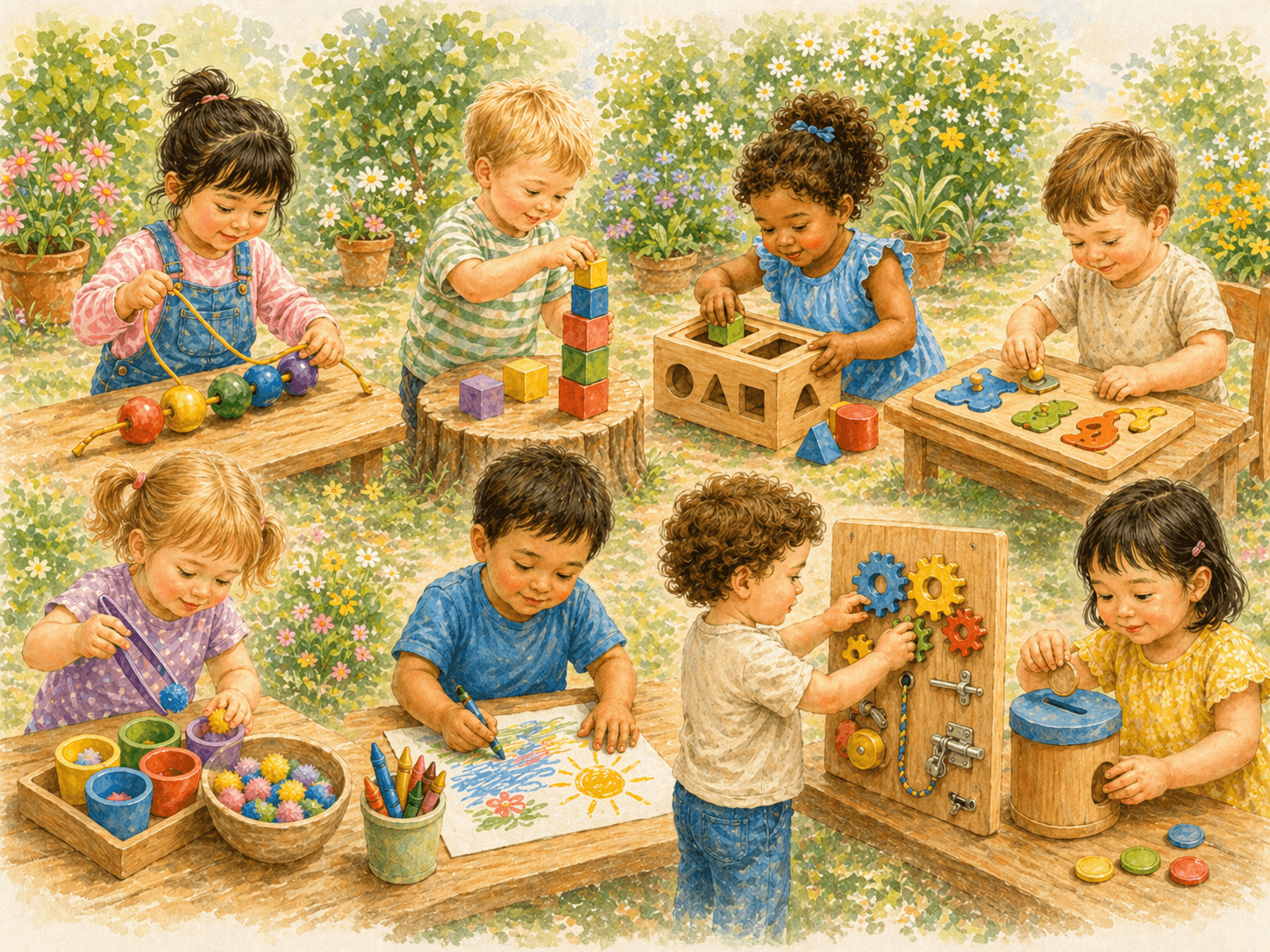
Bored toddler ideas
Toddlers need movement, repetition, and real participation.
Try:
- washing toy animals
- pouring water between cups
- carrying socks to a drawer
- pushing a laundry basket
- matching lids to containers
- sticker play
- large block building
- snack preparation
- sweeping with a child-sized broom
For more toddler options, start with the Montessori toddler activity hub, then go deeper with Montessori activities for 1 year olds or Montessori activities for 2 year olds.
Bored preschooler ideas
Preschoolers can handle more independence, imagination, and responsibility.
Try:
- building a blanket fort
- sorting buttons by color or size
- drawing a map of the house
- washing vegetables
- making a simple snack
- creating a pretend store
- cutting paper strips
- setting the table
- watering plants
- making a nature collection
- building with blocks from a photo challenge
If your child is in the 3-5 range, Montessori preschool activities gives you more classroom-style ideas you can use at home.
A simple "I'm bored" activity menu
Sometimes children need visible choices. You can make a small boredom menu and keep it on the fridge.
Use categories instead of one long list.
Move your body
- jump on pillows
- do animal walks
- dance and freeze
- carry a basket
- go outside
Use your hands
- draw
- build
- sort
- pour
- wash
Help the house
- wipe the table
- match socks
- water plants
- sweep crumbs
- set napkins
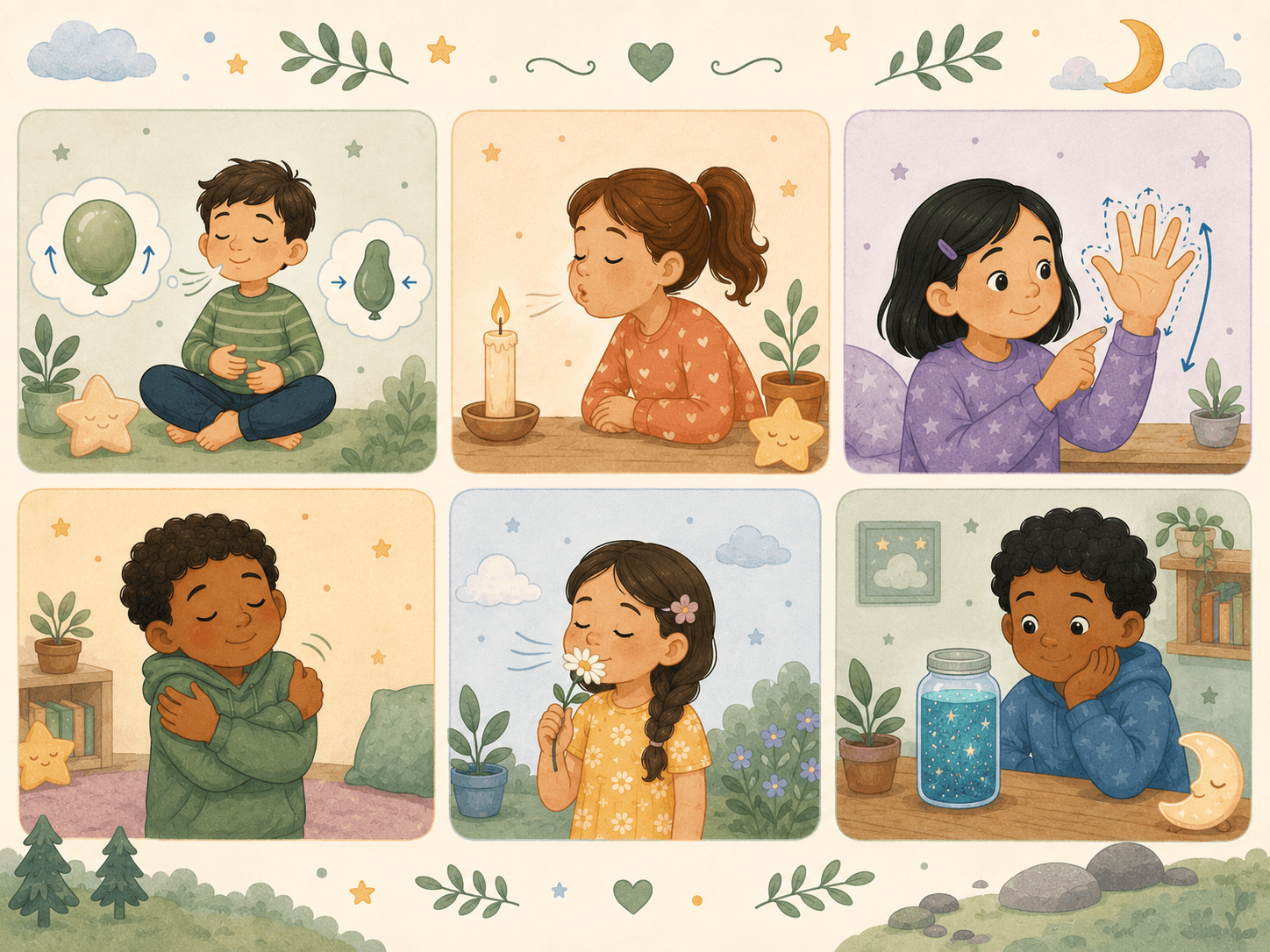
Calm your body
- read books
- look at photos
- do a puzzle
- listen to music
- rest with a soft toy
This gives structure without making the parent responsible for inventing something new every time.
How to create a boredom-friendly home
A boredom-friendly home is not a home full of toys.
It is a home where children can find meaningful things to do.
1. Make materials visible
Children engage more easily when they can see a few clear options.
Use:
- low shelves
- open baskets
- simple trays
- limited choices
- clear categories
2. Create independence zones
A bored child often needs access to useful work.
Helpful zones include:
- book basket
- art tray
- water bottle station
- snack preparation area
- child-accessible clothes
- practical life shelf
The Montessori wardrobe guide and Montessori bedroom setup guide both support this because independence at home reduces constant parent involvement.
3. Keep some activities special
Not everything needs to be available all the time.
Keep a few low-effort reset activities stored away:
- Water Wow book
- sticker book
- special puzzle
- magnetic tiles
- small sorting tray
- playdough
Bring one out when the day needs a reset.
4. Protect unstructured time
If every minute is scheduled, children do not get much practice creating their own play.
Leave some open time in the day. At first, your child may complain. Over time, they often begin to fill that space with deeper play.
5. Let your child struggle a little
A bored child may wander, complain, or reject a few ideas before finding something.
That is not failure. That is part of learning how to begin.
You can stay warm without taking over.
Try:
- "I know. Starting is hard."
- "I'll sit nearby while you choose."
- "You can be bored for a bit. An idea may come."
- "I trust you to find something."
When boredom is really a sign of something else
Sometimes boredom is not really boredom.
It may be:
- hunger
- tiredness
- overstimulation
- loneliness
- a need for movement
- too much screen use
- too many toys
- not enough outdoor time
- a need for connection
Before offering another activity, check the basics:
- Has my child eaten?
- Do they need sleep or rest?
- Have they moved their body today?
- Have I connected with them directly?
- Is the environment too cluttered?
- Have screens made slower play feel harder?
If the answer is yes, solve that need first.
What to say instead of "go find something to do"
"Go find something to do" can work for older children, but many young children need a little more support.
Try:
- "Look at your shelf and choose one work."
- "You can draw or build."
- "I'll help you start for two minutes."
- "You can help me with laundry."
- "Your body might need movement. Let's start with ten jumps."
- "I'm not choosing for you, but I can help you look."
This keeps the responsibility with the child while giving enough structure to begin.
FAQ
Is it okay to let my child be bored sometimes?
Yes. Short stretches of boredom can help children build imagination, patience, self-direction, and independent play. The goal is not to ignore your child. The goal is to avoid solving every empty moment for them.
Why is my child bored with all their toys?
Too many toys often create overwhelm, not engagement. Children usually play better with fewer visible options, a clearer shelf, and regular rotation.
What should I do if my toddler says "I'm bored" every day?
Start by looking for patterns. Many children say it at the same times each day because they are tired, hungry, overstimulated, or unsure how to begin independent play. Tightening the routine and preparing one or two easy go-to activities often helps.
When should I worry that boredom points to a bigger issue?
Pay attention if boredom always comes with intense dysregulation, nonstop screen-seeking, major sleep issues, chronic overwhelm, or strong resistance to all play and daily activities. In that case, step back and look at the bigger picture of sleep, rhythm, connection, and environment.
Montessori Parent Guide helps you find calm, realistic activity ideas, practical life work, and routine support without turning you into a full-time entertainer.
Final thoughts
A bored child is not a parenting emergency.
It is often a sign that your child is learning how to choose, begin, imagine, and stay with an idea.
That takes practice.
With a Montessori-aligned environment, simple routines, practical life work, and fewer overwhelming choices, boredom can become less of a daily struggle and more of an invitation.
An invitation to play.
An invitation to help.
An invitation to move.
An invitation to imagine.
An invitation to become more independent.