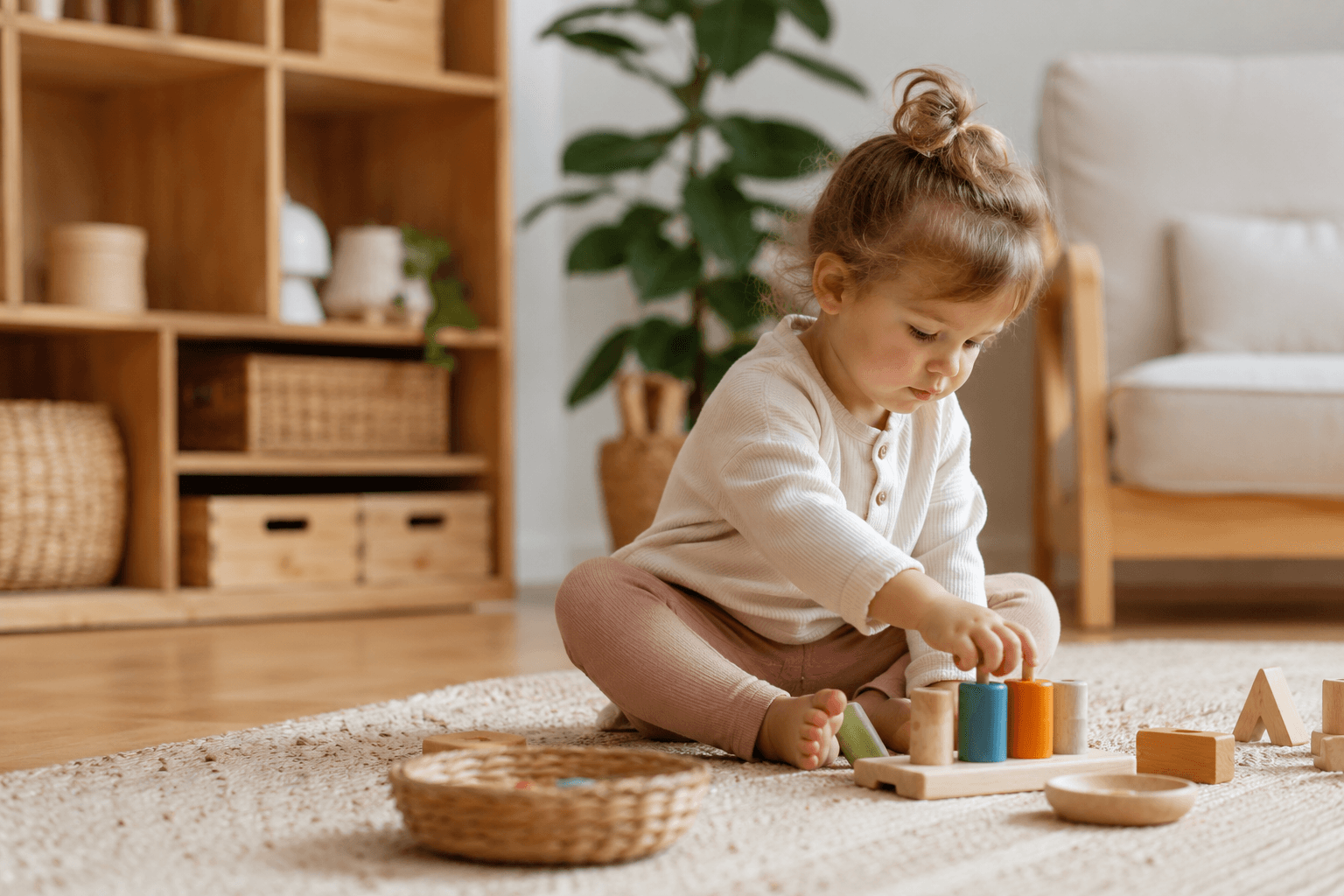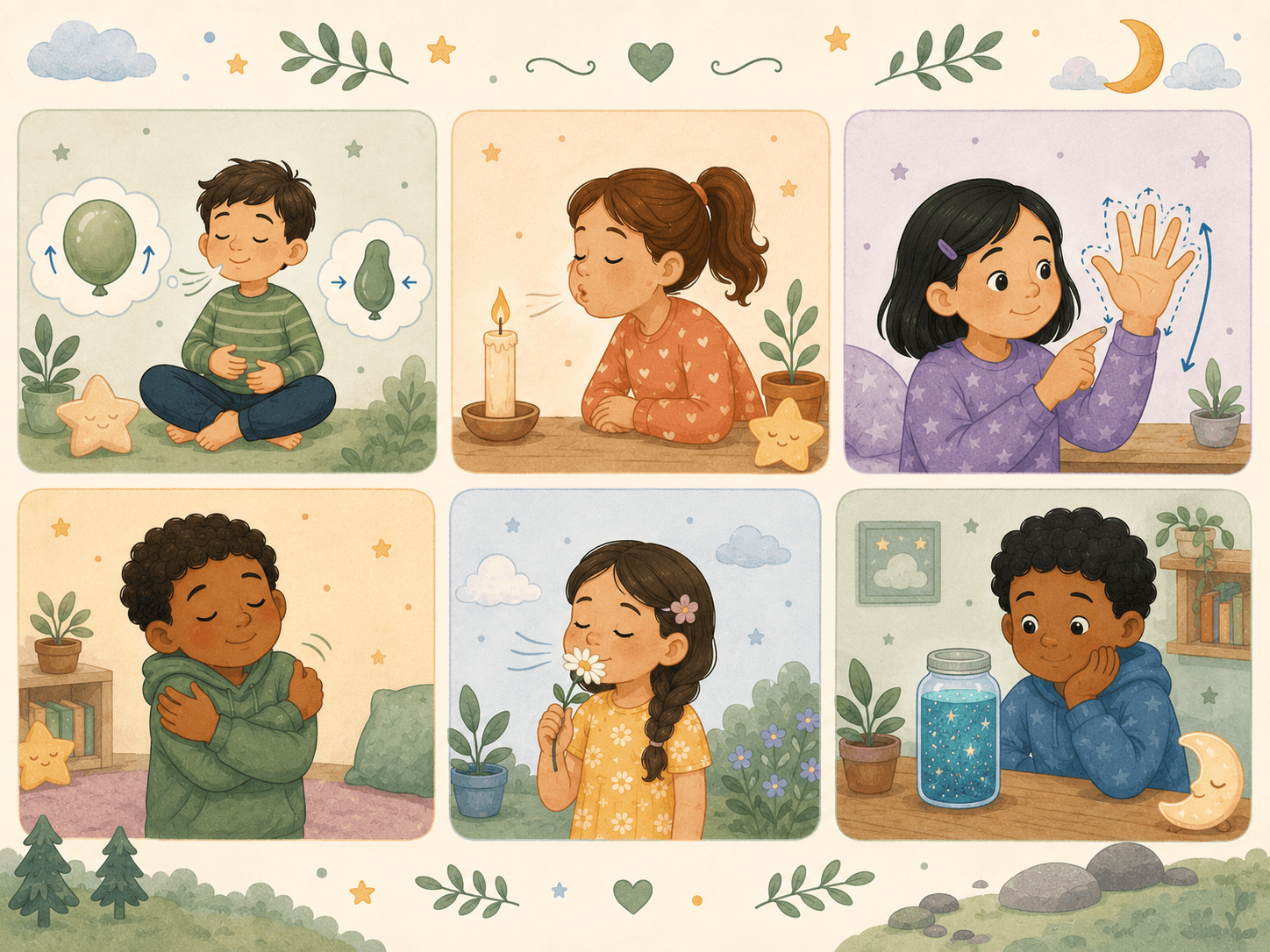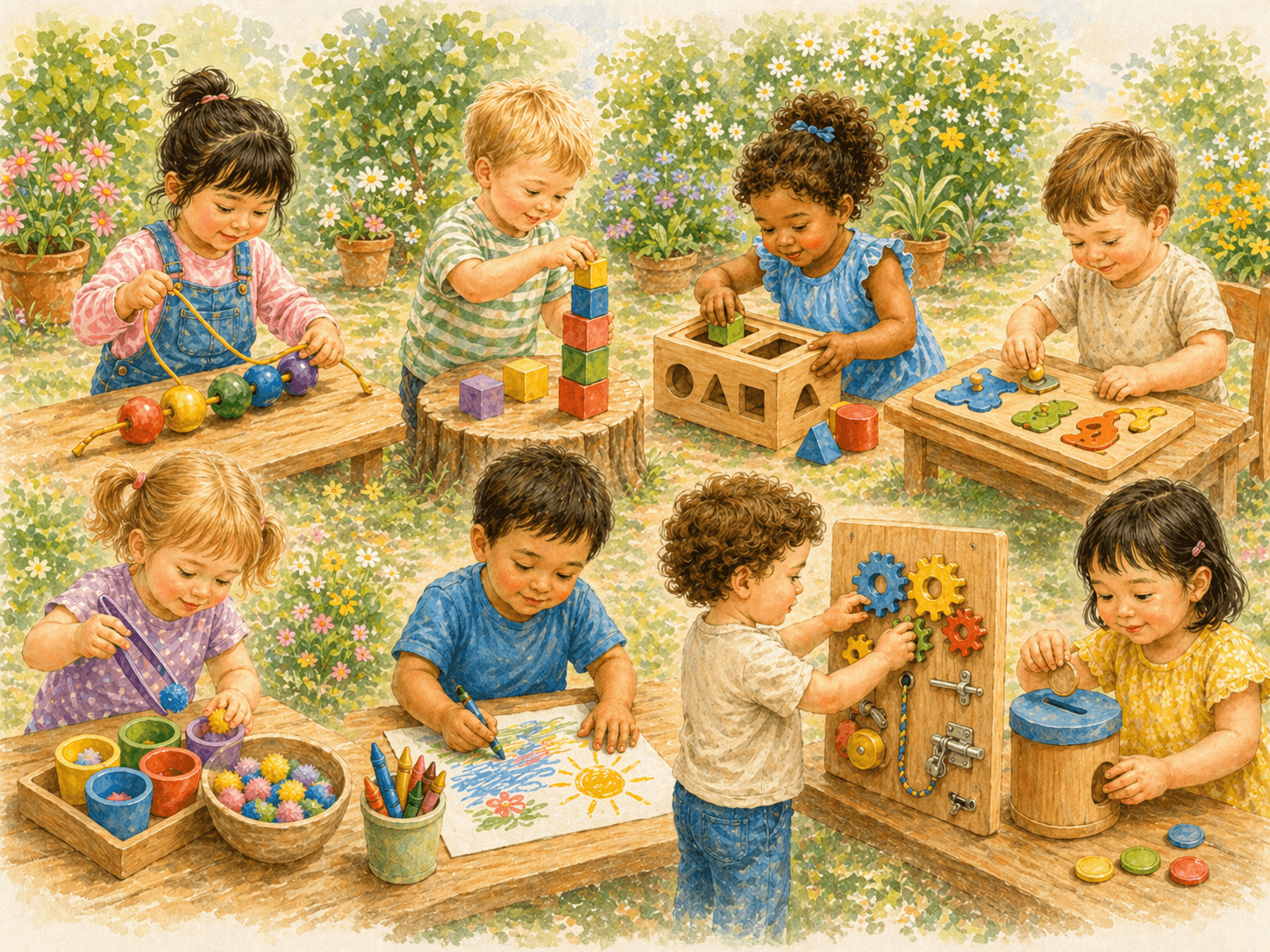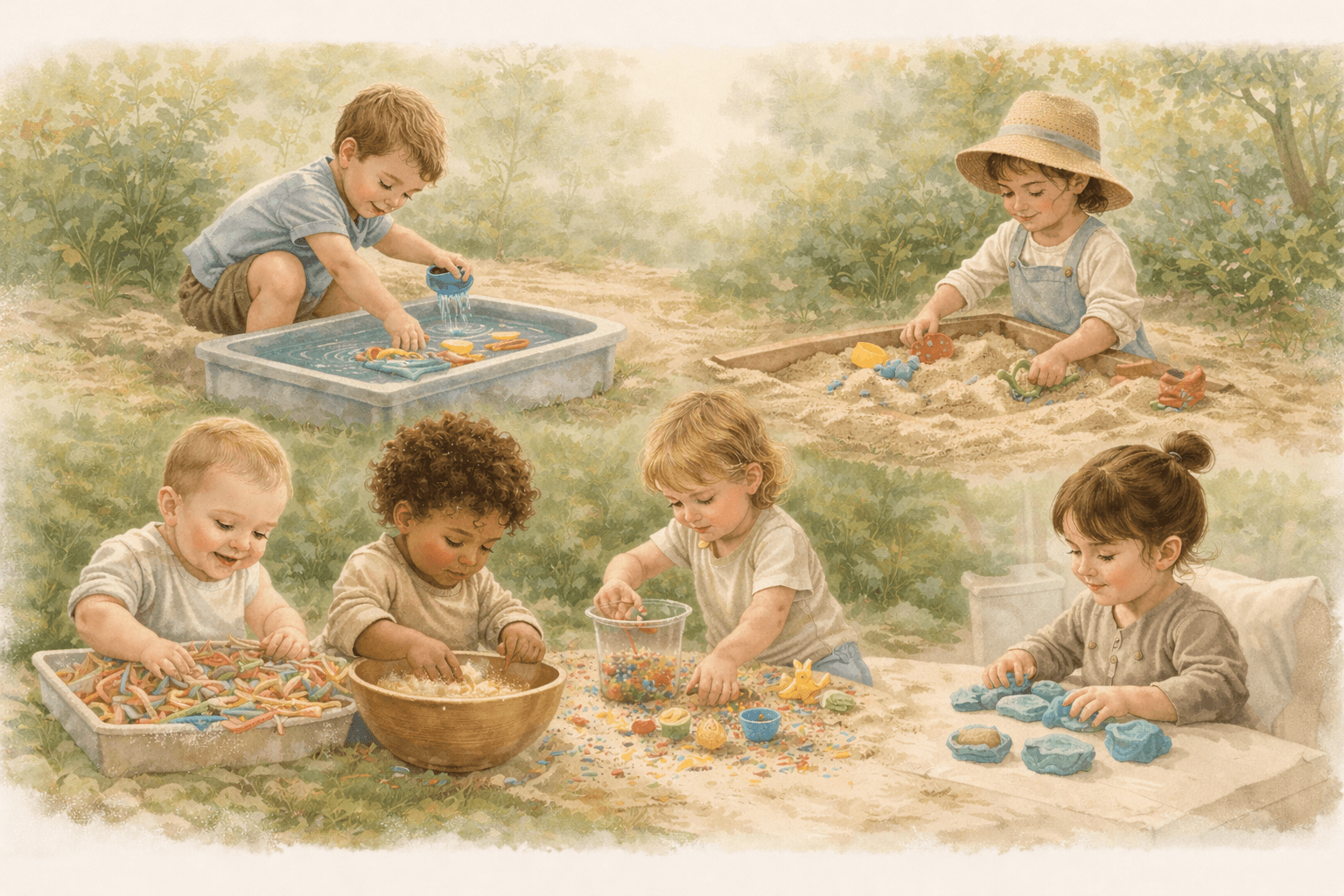
Sensory play is one of the easiest ways to keep young children engaged without needing complicated supplies or a perfect setup.
A bowl of water. A scoop and dry oats. A sponge and two cups. A tray of safe textures to touch.
These simple activities can hold a child's attention far longer than many expensive toys.
And the best part is that good sensory play does not need to be chaotic, flashy, or overstimulating. In a Montessori-aligned home, sensory play can be calm, purposeful, and beautifully simple.
This guide gives you practical sensory play ideas for babies, toddlers, and preschoolers, plus tips for setting them up in a way that feels manageable for parents too.
Table of Contents
- What is sensory play?
- Why sensory play is so useful
- What makes sensory play Montessori-aligned?
- Sensory play safety tips before you start
- Sensory play ideas for babies
- Sensory play ideas for toddlers
- Sensory play ideas for preschoolers
- Easy sensory play ideas by type
- How to set up sensory play without making your house feel chaotic
- Common sensory play mistakes parents make
- When sensory play is especially helpful
- FAQ
- Related reading
- Final thoughts on sensory play
What is sensory play?
Sensory play is any activity that helps children explore through their senses.
That can include:
- Touch
- Sight
- Sound
- Smell
- Movement
- Sometimes taste, when it is age-appropriate and safe
Young children learn through hands-on experience. They want to feel, pour, squeeze, shake, scoop, pat, carry, and compare. Sensory play gives them a safe way to do that.
In Montessori terms, this kind of exploration works best when the activity is:
- Simple
- Real
- Child-sized
- Hands-on
- Not overly stimulating
- Easy to repeat independently
Why sensory play is so useful
Parents often think of sensory play as something messy you do when you run out of ideas. But it can do much more than fill time.
Simple sensory play can help children practice:
- Concentration
- Hand control
- Coordination
- Language
- Observation
- Independence
- Calm, focused engagement
It can also be a wonderful reset on long days when your child needs something absorbing but not screen-based.
If you enjoy simple activity ideas like these, you may also want Montessori Activities for 1 Year Olds (12-24 Months), Montessori Activities for 2 Year Olds (24-36 Months), and Montessori Preschool Activities (Ages 3-5).
What makes sensory play Montessori-aligned?
Montessori families do not need to avoid sensory play. The key is choosing activities that feel grounded and purposeful instead of random and overstimulating.
Montessori-aligned sensory play usually means:
- Fewer materials, not more
- Calm colors and real objects when possible
- Activities based on pouring, scooping, washing, transferring, sorting, and exploring texture
- Clear limits
- Child involvement in setup and cleanup
So instead of a huge neon sensory bin with twenty objects mixed together, think:
- Rice and a scoop
- Water and a sponge
- Lavender playdough
- Sliced fruit to smell and touch
- Ice cubes in warm water
- Fabric swatches in a basket
If you want a broader picture of the philosophy behind this approach, What Is Montessori? is a strong place to start.
Sensory play safety tips before you start
Before jumping into ideas, a few simple safety rules matter:
- Always supervise young children closely
- Avoid choking hazards
- Match materials to your child's age and stage
- Skip anything sharp, toxic, or strongly scented
- Be extra careful with babies who still mouth everything
- Keep activities simple enough that you can actually watch and enjoy them
For babies and younger toddlers, the safest sensory play often involves water, fabric, food-safe textures, and larger objects that cannot be swallowed.
Sensory play ideas for babies
With babies, sensory play should be gentle, simple, and mostly about touch, sight, movement, and sound.
You do not need big setups. A baby usually finds one new texture or one interesting object more than enough.
1. Texture basket
Fill a small basket with a few safe textures such as:
- Soft washcloth
- Silicone spatula
- Large wooden spoon
- Crinkly fabric
- Textured ball
Let your baby explore with hands and mouth as appropriate for age.
2. Water mat or shallow water play
A very shallow tray with a little water can be fascinating for babies who are sitting steadily and closely supervised.
Add:
- One cup
- One floating toy
3. Fabric scarf pull
Place a few lightweight scarves or cloths in a tissue box or basket and let your baby pull them out one by one.
4. Ice in a bowl
Let your baby touch a large ice cube in a bowl or tray while you narrate:
- Cold
- Wet
- Slippery
Keep it very short and supervised.
5. Citrus or herb smell moment
Let your baby smell a cut orange, lemon peel, mint, or basil while you describe it simply.
6. Crinkly paper in a safe basket
A piece of tissue paper or crinkly material inside a supervised basket can be a fun sound-and-touch experience.
7. Mirror and soft brush
Offer a baby-safe mirror and let your baby feel a soft brush on hands, feet, or hair.
8. Sponge squeeze with warm water
A warm damp sponge can be surprisingly engaging for babies who enjoy touch and water.
If your child is moving out of babyhood and into a more active shelf-work stage, Montessori Activities for 1 Year Olds (12-24 Months) gives you more age-matched ideas.
The Montessori Parent Guide app helps you find simple, calm activities based on your child's age, your time, and your energy level. It is useful on the days when you want one purposeful idea without spending forever planning it.
Sensory play ideas for toddlers
Toddlers usually love sensory play because it lets them move, repeat, experiment, and use their hands in a meaningful way.
This age is perfect for transferring, scooping, pouring, washing, digging, and sorting.
1. Dry rice scooping
Set out:
- Dry rice
- One bowl or tray
- One scoop or spoon
- One cup
Keep it small. The activity is the repetition.
2. Water pouring station
Use two small pitchers or cups and let your toddler pour water back and forth.
This is sensory play and practical life at the same time. If your child enjoys this kind of work, Montessori Practical Life Activities has many more ideas built around pouring, transferring, washing, and polishing.
3. Oat bin with measuring spoons
Dry oats are a nice alternative to rice if you want a softer texture.
Add:
- One spoon
- One small jar
- One funnel if your child enjoys it
4. Washing toy animals
Put a few toy animals, warm water, a sponge, and a towel in a tray.
Children love the sensory element of water plus the purpose of washing.
5. Cloud dough or homemade dough
A simple dough gives toddlers a rich sensory experience through squeezing, flattening, poking, and rolling.
6. Ice rescue
Freeze a few large safe objects in ice and let your toddler use warm water and a spoon to help melt it.
7. Nature sensory tray
Use safe natural materials such as:
- Leaves
- Large shells
- Pinecones
- Smooth stones
- Flower petals
This feels calmer and more Montessori-aligned than bright plastic filler.
8. Pom-pom transfer with supervision
If your child is past the mouthing stage, transferring pom-poms with fingers, tongs, or a spoon can be a great sensory and fine motor activity.
9. Bubble foam wash
Make a little foam with water and mild soap and let your toddler wash plastic cups, spoons, or toy dishes.
10. Smelling jars
Use a few cotton pads or jars with very mild scents like vanilla, cinnamon, or lemon.
Offer two or three only. Let your toddler compare them.
11. Sticky contact paper collage
Tape contact paper to a wall or table and offer a few safe items to stick on, such as paper scraps, felt, or fabric.
12. Sand or kinetic sand tray
A small tray with sand, scoopers, and cups can keep toddlers busy for a long time when you keep the setup simple.
For this age, Montessori Activities for 2 Year Olds (24-36 Months) and Montessori Toy Rotation for Ages 1-3 are natural next reads.
Sensory play ideas for preschoolers
Preschoolers are often ready for more complexity, more pretend elements, and more independence in setup and cleanup.
The best sensory play ideas for this age still do not need to be elaborate.
1. Color mixing with water
Offer cups of colored water, droppers, and empty containers for experimenting.
2. Baking sensory activity
Measuring flour, stirring batter, kneading dough, and sprinkling cinnamon are wonderful sensory experiences with a real purpose.
3. Sink or basin washing work
Preschoolers often love washing dishes, vegetables, windows, or toy items with real tools.
4. Sorting by texture
Offer a tray with materials to sort by feel:
- Soft
- Rough
- Smooth
- Bumpy
5. Mystery bag
Put a few familiar objects in a cloth bag and let your child feel and guess what they are.
6. Scent matching
Use pairs of jars with safe mild scents and invite your preschooler to match them.
7. Nature soup or flower water play
Water, petals, herbs, lemon slices, and spoons can become a beautiful sensory setup.
8. Salt tray pre-writing
Pour a thin layer of salt or semolina into a tray and let your child trace shapes, lines, or early letters.
9. Mud kitchen or outdoor mixing
Outside sensory play can be easier for everyone. Water, dirt, leaves, bowls, and spoons go a long way.
10. Sound jars
Fill containers with different materials like rice, beans, or beads and compare the sounds.
11. Peeling and preparing fruit
Peeling oranges, slicing bananas with a child-safe knife, or washing berries adds smell, touch, and taste in a real-life way.
12. Clay with natural tools
Use clay plus items like sticks, shells, leaves, and stones for a calmer open-ended sensory experience.
For older preschoolers, Montessori Preschool Activities (Ages 3-5) and What Is Montessori? fit especially well with this stage.
Easy sensory play ideas by type
Some parents do better with categories than ages. Here is a simpler way to choose sensory play based on what you want.
If you want low-mess sensory play
Try:
- Texture basket
- Smelling jars
- Mystery bag
- Fabric tray
- Sticker activity
- Contact paper collage
- Sound jars
If you want water sensory play
Try:
- Pouring station
- Sponge squeeze
- Washing toy animals
- Flower water play
- Color mixing
- Dish washing
If you want outdoor sensory play
Try:
- Mud kitchen
- Leaf collecting
- Nature soup
- Water and brush painting outside
- Sand tray
- Digging area
If you want edible sensory play
Try:
- Cooked pasta exploration
- Fruit washing
- Peeling oranges
- Oats tray
- Dough
- Baking work
How to set up sensory play without making your house feel chaotic
A lot of parents like the idea of sensory play but avoid it because they imagine a giant mess.
You do not need that.
A calmer setup usually means:
- Use a tray or mat
- Offer fewer materials
- Choose one clear activity
- Keep a towel nearby
- Stop while the child is still engaged, not after total chaos
- Include cleanup as part of the activity
One of the most Montessori-aligned things you can do is teach cleanup as part of the process:
- Wipe the table
- Carry the bowl
- Sweep spilled rice
- Put the sponge back
- Empty the water
That makes sensory play feel more sustainable for parents.
If you want to make this easier across the whole home, Montessori Bedroom Setup and Montessori Toy Rotation for Ages 1-3 both help create a calmer prepared environment.
Common sensory play mistakes parents make
Offering too much
More materials do not make the activity better. They usually make it harder.
Choosing overstimulating setups
Very bright colors, too many textures, loud materials, and clutter can make some children more dysregulated, not more engaged.
Expecting long attention spans right away
Some children engage for three minutes. That still counts.
Ignoring the child's stage
A sensory play idea that is wonderful for a preschooler may be unsafe for a baby.
Skipping cleanup support
Children can often help more than parents expect.
When sensory play is especially helpful
Sensory play can be especially useful when your child:
- Is restless indoors
- Needs a screen-free activity
- Seems cranky and needs a reset
- Wants to use their hands
- Is in a throwing, pouring, or dumping phase
- Needs a calmer afternoon activity
- Loves repetition
It also works beautifully as part of a rhythm that includes movement, practical life, and open-ended play.
FAQ
What is sensory play?
Sensory play is any hands-on activity that helps children explore through touch, sight, sound, smell, movement, and sometimes taste when it is safe and age-appropriate.
Is sensory play Montessori?
Yes. Sensory play fits Montessori well when it is calm, purposeful, and simple. The best Montessori-style sensory activities use real materials, defined limits, and a full work cycle that includes cleanup.
What are some low-mess sensory play ideas?
Good low-mess options include texture baskets, smelling jars, mystery bags, fabric trays, sound jars, and simple contact paper collages.
How do I make sensory play less chaotic at home?
Use a tray or mat, offer one activity at a time, keep materials limited, and make cleanup part of the work. A prepared space matters more than having lots of supplies.
Related reading
- Montessori Activities for 1 Year Olds (12-24 Months)
- Montessori Activities for 2 Year Olds (24-36 Months)
- Montessori Preschool Activities (Ages 3-5)
- Montessori Practical Life Activities
- What Is Montessori?
- Montessori Toy Rotation for Ages 1-3
Final thoughts on sensory play
The best sensory play is not the most expensive, most colorful, or most Pinterest-perfect.
It is the kind your child actually engages with.
Simple. Calm. Hands-on. Repeatable.
For babies, that might be a texture basket. For toddlers, it might be a pouring tray. For preschoolers, it might be washing vegetables, mixing dough, or tracing in salt.
That is the beauty of sensory play in a Montessori-aligned home: it does not need to be loud to be rich.