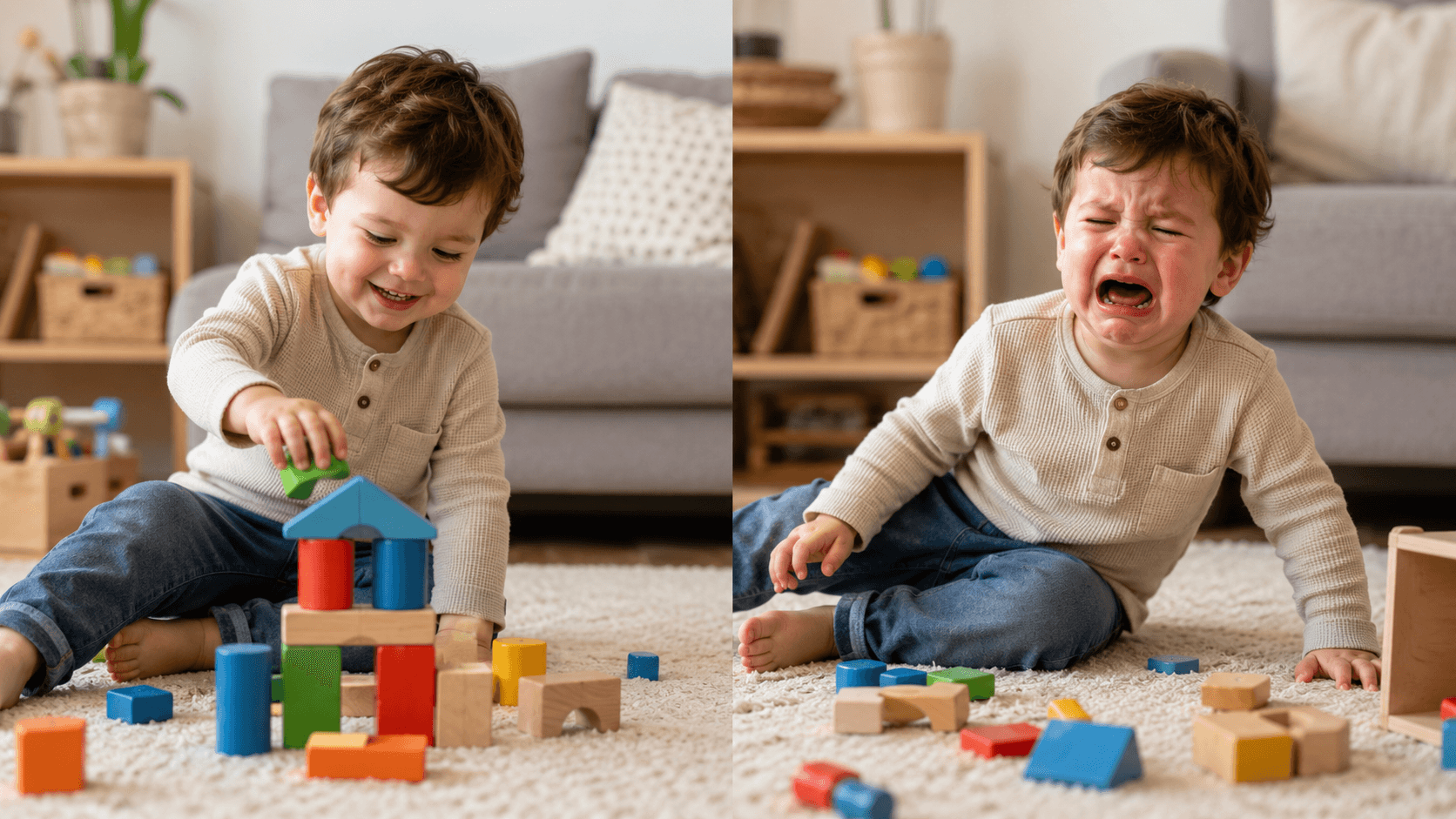
Three-year-olds often feel like tiny people: they want to be capable, included, and understood. You may see big leaps in language and imagination, along with big feelings, strong preferences, and growing social awareness.
Milestones can help you understand what is typical at this age as long as you treat them as flexible ranges, not a checklist your child must pass. This guide uses reliable milestone references from the CDC and AAP, then adds practical, Montessori-aligned ways to support development at home without pressure.
Looking for a different age? See all milestone guides (0-6) here: Child Development Milestones (0–6): Age-by-Age Hub.
Table of contents
- How to use milestones without stress
- 3-year-old milestones by domain
- Montessori-aligned ways to support 3-year-old development
- When to check in with your pediatrician
- FAQ
- Related reads on Montessori Parent Guide
How to use milestones without stress
- Growth is uneven. A child may surge in language while social skills take longer, or the other way around.
- Skills often appear in bursts.
- If you have concerns, talk to your pediatrician. Screening is designed to support families, not label children.
A Montessori-friendly mindset: observe first, then prepare the environment so your child can practice new skills with increasing independence.
Milestone lists are not a substitute for developmental screening. They are a way to notice patterns, celebrate progress, and know when to ask for more support.
3-year-old milestones by domain
The CDC's 3-year milestone list is a useful reference point around 36 months.
Social and emotional milestones
Many 3-year-olds:
- Calm down within about 10 minutes after separation, such as childcare drop-off
- Notice other children and join them in play
- Show a stronger desire for independence and helping
- May take turns sometimes, especially with adult support
What parents often notice: more negotiation, more fairness language, and stronger opinions. Your child is building identity and social awareness, but self-regulation is still developing.
Language and communication milestones
Many 3-year-olds:
- Talk with you in short back-and-forth conversations
- Ask "who," "what," "where," or "why" questions
- Say what action is happening in a picture or book when asked
- Say their first name when asked
- Talk well enough for others to understand most of the time
Tip: If your child's speech is hard for familiar adults to understand, or frustration around communication is high, it is worth checking hearing and asking your pediatrician about speech-language screening.
Thinking and learning milestones
Many 3-year-olds:
- Draw a circle when you show them how
- Avoid touching hot objects, like a stove, when warned
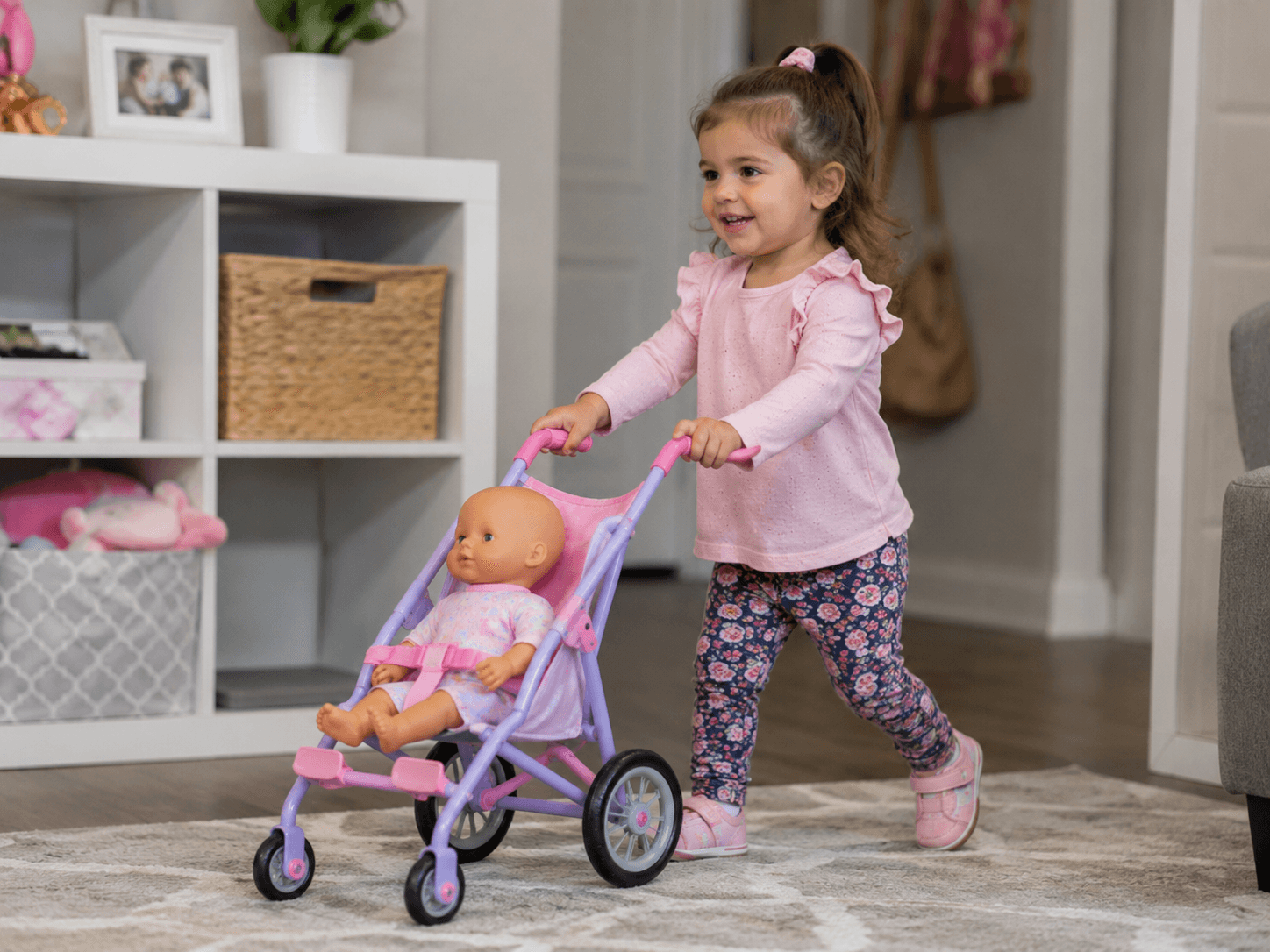
- Use pretend play with more sequence, such as feeding a doll and putting the doll to bed
- Remember familiar routines and may insist on the "right" order
- Follow 2-3 step directions sometimes, especially inside predictable routines
What parents often notice: more memory for routines and a stronger preference for how things should happen. Order can feel very important at this age.
Movement and physical milestones
Many 3-year-olds:
- String large items together, like beads or macaroni
- Put on some clothes independently, such as loose pants or a jacket
- Use a fork
- Run, climb, and jump with more control than they had at age 2
- Need a lot of movement for regulation
Key point: three-year-olds still need many chances to move. Behavior often softens when children have enough time to climb, carry, push, pull, jump, walk, and help with real work.
Montessori-aligned ways to support 3-year-old development
At age 3, Montessori at home looks like independence, order, meaningful work, language, and movement. You do not need a full classroom, just a few consistent systems.
1. Support independence with practical life
Great age-3 routines:
- Set the table with 2-3 items, such as a napkin, cup, and spoon
- Wipe the table after meals
- Water plants
- Fold small towels
- Put laundry in a hamper and help sort by color
- Carry a small bag, basket, or stack of books
Practical life gives a 3-year-old a useful way to belong. For more ideas, use Montessori Practical Life Activities.
For a room-level setup, the Montessori bedroom setup guide can help you create safe movement, reachable storage, and child-height routines.
2. Support language with richer conversation
Try:
- Narrating daily routines: "First shoes, then outside."
- Expanding feeling words: "You are disappointed." "You are excited."
- Using story prompts: "What happened next?" "How did it feel?"
- Reading together and asking open questions about the pictures
- Adding one clear sentence to what your child says
This is not quizzing. It is real conversation connected to real life. For more structured ideas, see Montessori Language Activities (Ages 1-5).
3. Support thinking skills with sorting, sequencing, and work cycles
At 3, many children love structured sequences:
- 3-step routines, like wash hands, dry hands, hang towel
- Sorting by category, such as animals, vehicles, or foods
- Matching real objects to picture cards
- Simple puzzles and pattern work
- Beginning, middle, and end story cards
Keep the work concrete and small. A clear beginning and end helps your child feel capable and makes cleanup part of the activity.
4. Support social-emotional development with simple scripts
In Montessori classrooms, this is often called grace and courtesy. At home, it can be simple language you practice when everyone is calm:
- "Turn please."
- "Stop. My body."
- "Can I have a turn next?"
- "I am using this."
- "Help me."
Practicing scripts when calm gives your child words to reach for when emotions are high. You may still need to step in, but the language becomes familiar.
5. Support movement daily
Useful movement outlets:
- Outdoor play when possible
- Climbing, jumping, balancing, and carrying
- Heavy-work jobs, like carrying books or pushing a laundry basket
- Short walks with a real job, such as holding the list or carrying a small snack bag
- Practical work that uses the whole body, like sweeping or wiping a low table
Movement is often the easiest way to reduce tension. A child who has moved with purpose usually has an easier time with meals, dressing, bedtime, and transitions.
6. Reduce overwhelm with toy rotation and clear choices
Three-year-olds can still get overwhelmed by too many options. Fewer, well-chosen materials often improve focus and behavior.
Use shelf choices that match what you are observing:
- If your child wants to sort, offer a small category sort.
- If your child wants to pretend, offer a simple sequence with dolls, dishes, or animal figures.
- If your child wants to help, offer one real task instead of another toy.
- If your child wants to move, offer a carrying, balance, or outdoor job.
The Montessori toy rotation guide for ages 1-3 can help you keep the shelf useful without making it busy. If you want age-specific materials, see Montessori toys for 3 year olds.
For preschool-style at-home work, start with Montessori Preschool Activities (Ages 3-5).
The app can help you choose useful skills to support next and suggest Montessori activities that fit your child's age, interests, and home setup.
When to check in with your pediatrician
The AAP recommends developmental surveillance at every health supervision visit, general developmental screening at 9, 18, and 30 months, and screening any time parents, clinicians, or early childhood professionals have concerns. HealthyChildren also encourages parents to bring up missed milestones, lost skills, or concerns at the 3-year visit.
Consider checking in if you notice:
- Loss of skills your child previously had
- Persistent concerns about hearing, vision, or communication
- Speech that familiar adults often cannot understand
- Limited social engagement or little back-and-forth interaction
- Frequent extreme meltdowns that do not improve with support
- A consistent worry you cannot shake
Bring specific examples to your appointment. A concrete note like "she asks for help with gestures but rarely uses words with people outside our family" is easier to discuss than a general worry like "communication feels behind."
FAQ
What milestones should a 3 year old have?
Around 36 months, many children use short back-and-forth conversations, ask who/what/where/why questions, join other children in play, draw a circle when shown how, put on some clothes, use a fork, and show more independence. Milestones are flexible ranges, not a pass/fail checklist.
What if my 3 year old is hard to understand?
Speech clarity varies, but if familiar adults often cannot understand your child, frustration is high, hearing is a concern, or your child has lost words or skills, check in with your pediatrician and ask about developmental screening.
How can Montessori support 3 year old development?
Montessori support at age 3 is practical: child-height routines, simple real responsibilities, orderly shelf choices, richer conversation, grace-and-courtesy scripts, purposeful movement, and predictable work cycles.
Related reads on Montessori Parent Guide
- Montessori Preschool Activities (Ages 3-5)
- Montessori Language Activities (Ages 1-5)
- Montessori Practical Life Activities
- Montessori Toy Rotation at Home (Ages 1-3)
- Montessori Toys for 3 Year Olds