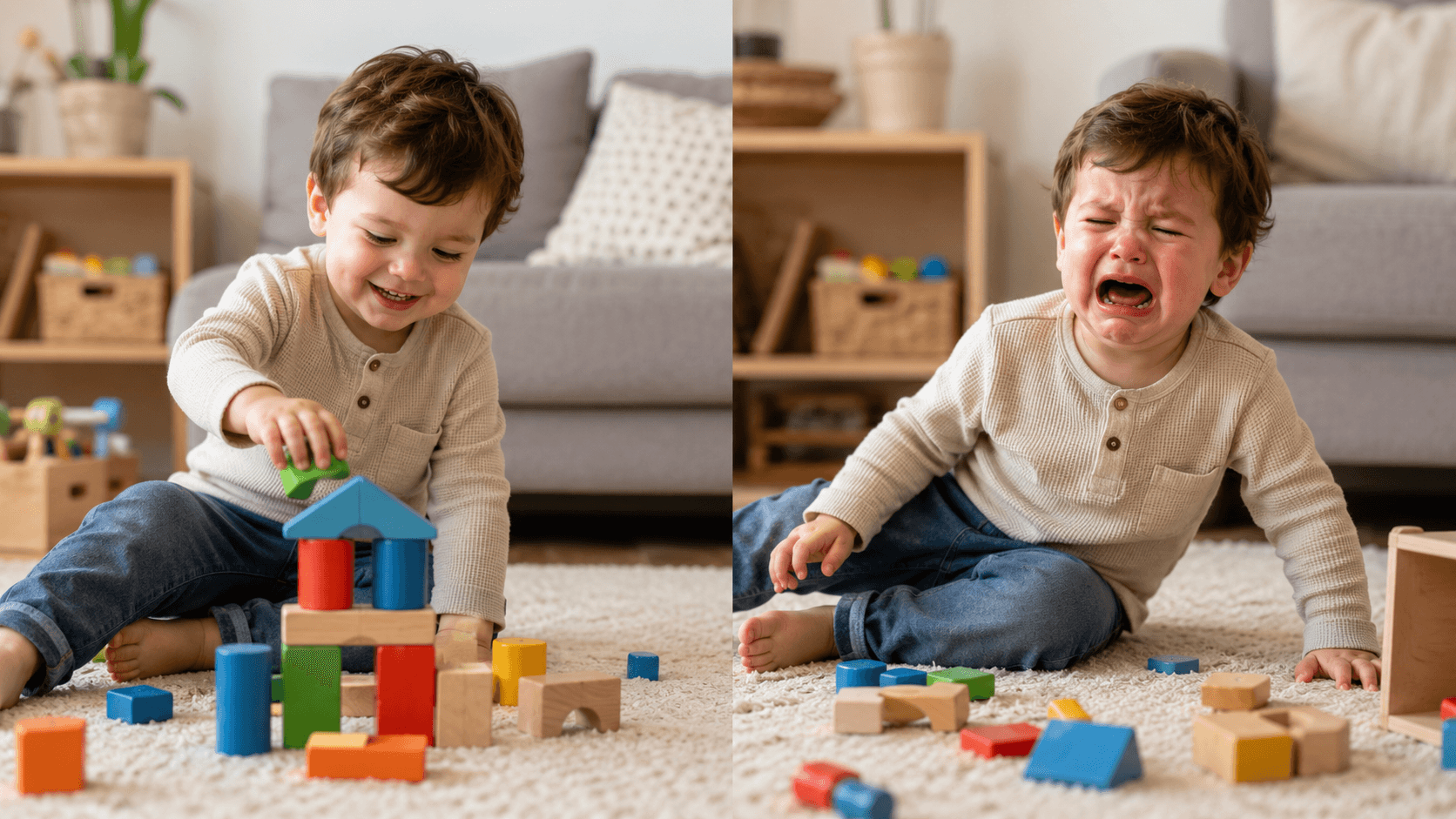
Age two can feel like a whole new child: more opinions, more words, more movement, and bigger feelings. Milestones can help you understand what is typical at this age as long as you treat them as flexible ranges, not a pass/fail checklist.
This guide uses reliable milestone references from the CDC and AAP, then adds practical, Montessori-aligned ways to support development at home without pressure.
Looking for a different age? See all milestone guides (0-6) here: Child Development Milestones (0–6): Age-by-Age Hub.
Table of contents
- How to use milestones without stress
- 2-year-old milestones by domain
- Montessori-aligned ways to support 2-year-old development
- When to check in with your pediatrician
- FAQ
- Related reads on Montessori Parent Guide
How to use milestones without stress
- Development is not linear; skills often come in bursts.
- A child may be surging in movement and slower in language, or the other way around.
- If you are concerned, early conversations with your pediatrician are appropriate. Screening is meant to support families.
A Montessori-friendly mindset: observe first, then adjust the environment so your child can practice emerging skills independently.
Milestone lists are not a substitute for developmental screening. They are a way to notice patterns, celebrate progress, and know when to ask for more support.
2-year-old milestones by domain
The CDC's 2-year milestone list is a useful reference point around 24 months.
Social and emotional milestones
Many 2-year-olds:
- Notice when others are hurt or upset
- Look to your face to see how to react in a new situation
- Show strong preferences and independence: "mine," "no," "again"
- May have trouble sharing, waiting, and transitioning, which is common at this age
What parents often see: more power struggles during transitions, like getting dressed, leaving the park, or getting into the car seat. Your child wants more control, but self-regulation is still immature.
Language and communication milestones
Many 2-year-olds:
- Say at least two words together, like "more milk" or "go outside"
- Point to things in a book when you ask, like "Where is the dog?"
- Use words and gestures together to get needs met
- Point to body parts when you ask
- Use more gestures than waving and pointing, like nodding yes
Important note: language has a wide range at this age. If you are unsure, it is appropriate to ask your pediatrician about hearing checks, speech-language screening, or developmental screening.
Thinking and learning milestones
Many 2-year-olds:
- Play with more than one toy at the same time, like putting toy food on a toy plate
- Hold something in one hand while using the other hand
- Try switches, knobs, or buttons on a toy
- Follow simple instructions, especially inside familiar routines
- Show memory for routines and where things belong
What parents often notice: stronger "I remember" and "I want it that way" behavior. Order and routine often matter more at this age.
Movement and physical milestones
Many 2-year-olds:
- Run and climb more confidently
- Walk up a few stairs with or without help
- Kick a ball
- Eat with a spoon, still messily
What parents often notice: a lot of movement needs. Many behavior problems soften when toddlers have enough time to run, climb, carry, push, pull, and move with purpose.
Montessori-aligned ways to support 2-year-old development
At age 2, Montessori at home is about independence, order, and purposeful work. You do not need a classroom, just simple access and repeatable routines.
1. Support independence through practical life
Great age-2 routines:
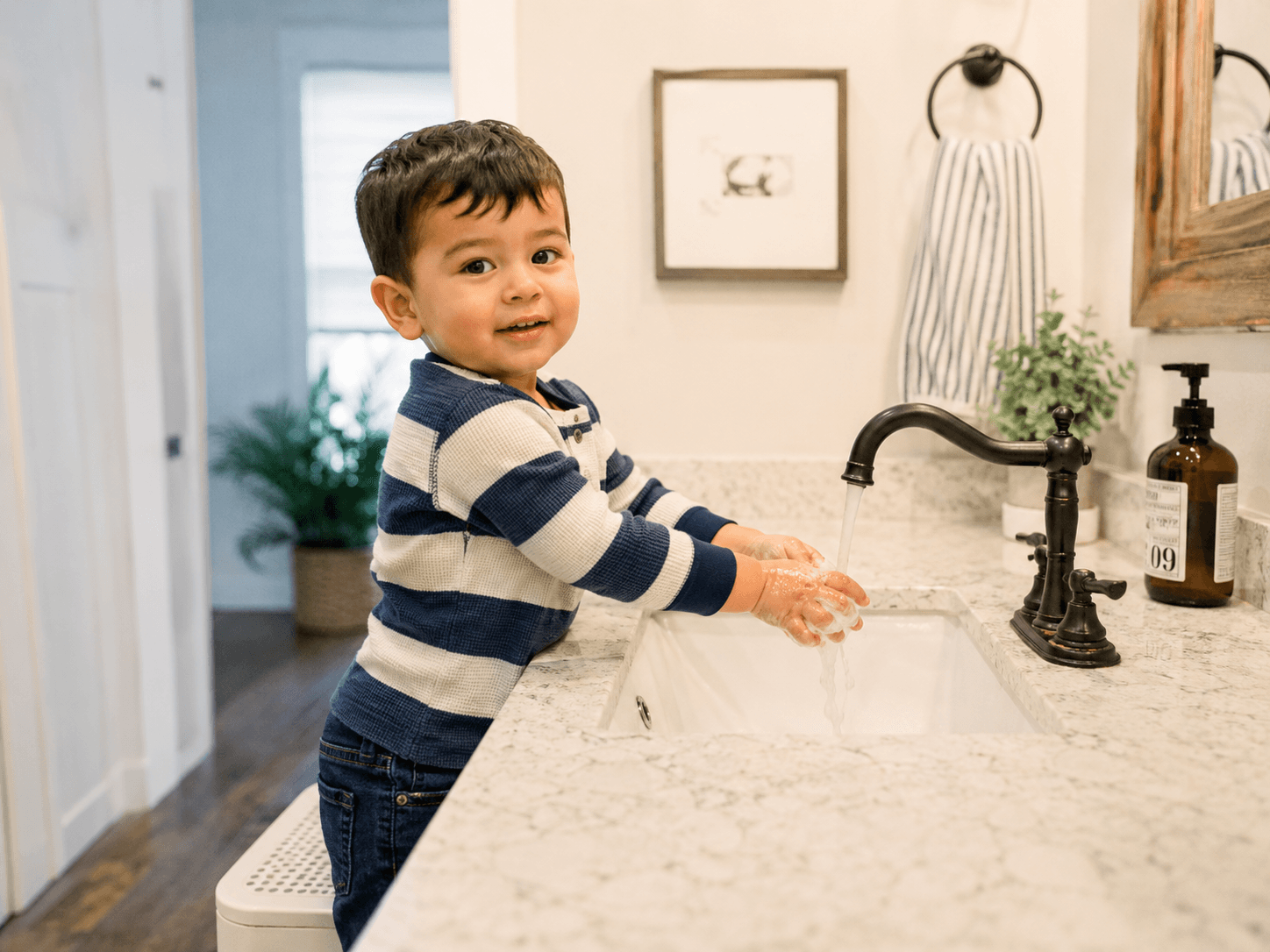
- Handwashing with a stool and reachable towel hook
- Carrying laundry to a basket
- Wiping small spills
- Setting one item on the table, like a napkin or spoon
- Putting shoes in a clear "parking spot"
Practical life gives toddlers a useful way to participate instead of only hearing "no." For more examples, use Montessori Practical Life Activities.
For a room-level setup, the Montessori bedroom setup guide can help you create safe movement, reachable storage, and child-height routines.
2. Support language with real-life conversation and choices
Try:
- Naming what your child touches: "cup," "zipper," "banana"
- Adding one word to their words: if they say "truck," you say "big truck"
- Offering simple choices: "blue shirt or red shirt?"
- Reading short books and letting your child point, turn pages, and repeat favorites
Choices reduce power struggles while building language. For more structured ideas, see Montessori Language Activities (Ages 1-5).
3. Support thinking skills with sorting and sequencing
At 2, thinking is hands-on:
- Sort socks by color or owner
- Match real objects to simple photo cards
- Do two-step routines: wipe, then put the cloth away
- Sort a few toy animals, vehicles, or kitchen objects into simple groups
Keep the material small. Three to six objects is often enough for a toddler to see the pattern without getting overwhelmed.
4. Support movement daily
Useful movement outlets:
- Outdoor time when possible
- Carry-and-deliver jobs, like bringing napkins or carrying books
- Safe climbing, pushing, pulling, squatting, and balancing
- Short walks where your child has a real job, like carrying a small bag
Movement is often the best reset at age 2. A toddler who has moved with purpose usually has an easier time with meals, diaper changes, bedtime, and transitions.
5. Reduce overwhelm with toy rotation
Too many choices often leads to dumping, conflict, and shorter play. Fewer choices usually improve focus.
Use shelf choices that match what you are observing:
- If your child wants to carry everything, offer a basket delivery job.
- If your child imitates cleaning, offer a small cloth and safe wiping routine.
- If your child is matching or sorting, offer a simple shape or color sort with only a few pieces.
- If your child wants practical work, offer one real task instead of another toy.
The Montessori toy rotation guide for ages 1-3 can help you keep the shelf useful without making it busy. If you want age-specific materials, see Montessori toys for 2 year olds.
For activity ideas built for this stage, start with Montessori Activities for 2 Year Olds (24-36 Months).
The app can help you choose useful skills to support next and suggest Montessori activities that fit your child's age, interests, and home setup.
When to check in with your pediatrician
The AAP recommends developmental surveillance at routine health supervision visits, general developmental screening at 9, 18, and 30 months, and autism-specific screening at 18 and 24 months. It is also appropriate to ask for screening any time you have concerns.
Consider checking in if you notice:
- Loss of skills your child previously had
- Persistent concerns about hearing, vision, or communication
- Limited progress in movement that restricts exploration
- Rare response to name or limited social engagement
- A consistent worry you cannot shake
Write down examples and bring them to your appointment. A concrete note like "he points to ask for help but is not using words yet" is easier to discuss than a general worry like "language feels behind."
FAQ
What milestones should a 2 year old have?
Around 24 months, many children use two-word phrases, point to things in books, use more gestures, play with more than one toy at a time, run, kick a ball, walk up stairs with help, and eat with a spoon. Milestones are flexible ranges, not a pass/fail checklist.
What if my 2 year old is not talking much yet?
Language varies widely at age 2, but loss of words, hearing concerns, very limited progress, or a worry you cannot shake are good reasons to check in with your pediatrician and ask about developmental screening.
How can Montessori support 2 year old development?
Montessori support at age 2 is practical: child-height routines, real-life choices, purposeful movement, simple language, fewer shelf options, and small real tasks that build independence.
Related reads on Montessori Parent Guide
- Montessori Activities for 2 Year Olds (24-36 Months)
- Montessori Practical Life Activities
- Montessori Language Activities (Ages 1-5)
- Montessori Toy Rotation at Home (Ages 1-3)
- Montessori Toys for 2 Year Olds