Montessori potty training, often called toilet learning, is less about "training" and more about supporting independence with the right environment, timing, and respectful support. The Montessori approach helps your child learn toileting skills with dignity, choice, and real responsibility, without shame, bribes, or power struggles.
This guide will help you:
- Spot readiness signs
- Set up your home for success (bathroom, clothing, routines)
- Follow a clear step-by-step Montessori toilet learning plan
- Troubleshoot common problems (refusal, accidents, poop anxiety, night training)
Key takeaways
- Readiness is more important than age; look for several signs together.
- A child-sized setup and easy clothing remove most friction.
- Consistent, calm routines teach the sequence faster than reminders.
- Accidents are learning data, not failure.
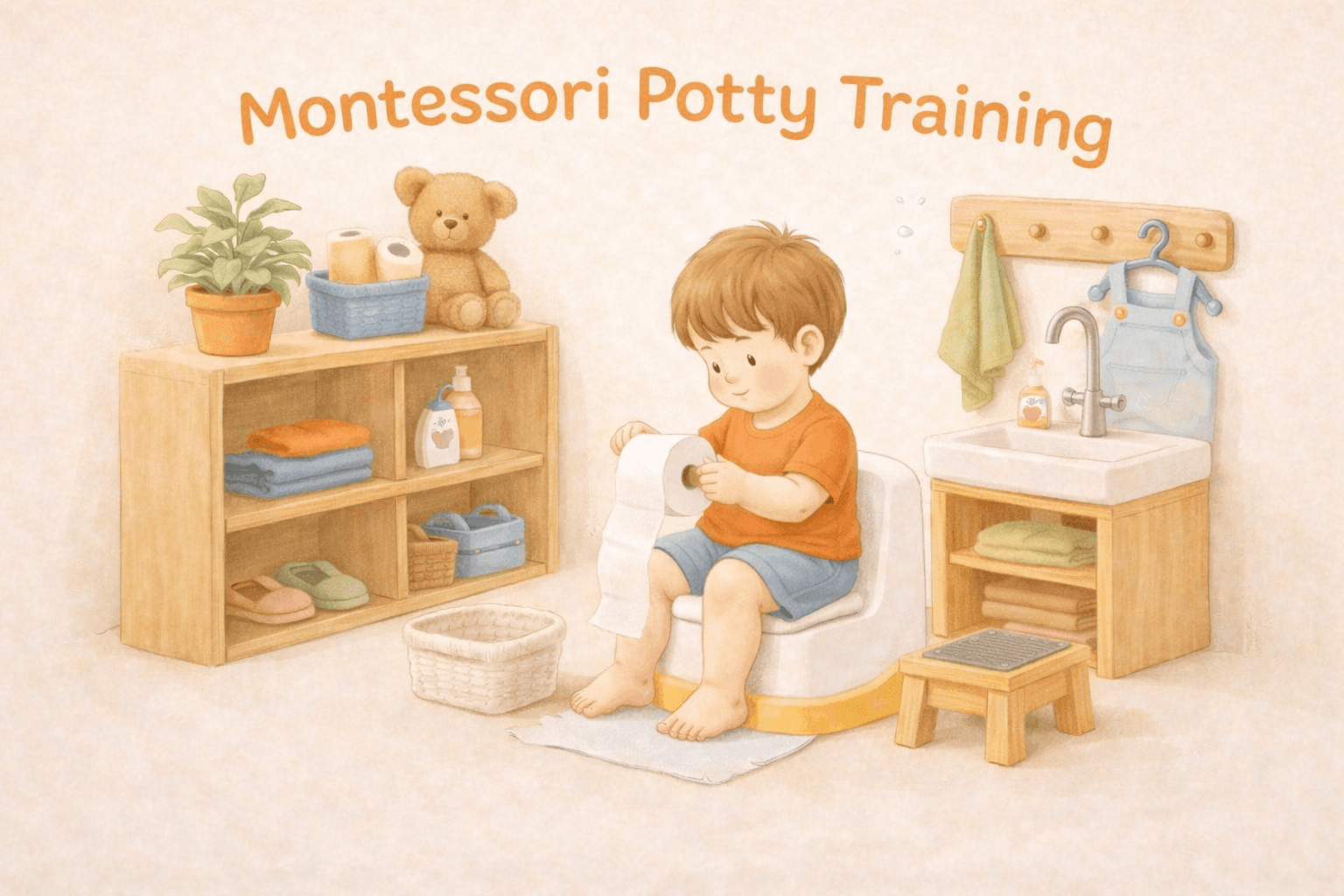
Table of contents
- What is Montessori potty training?
- Readiness signs for toilet learning
- The Montessori home setup
- Step-by-step Montessori toilet learning plan
- Toileting language Montessori parents can use
- Common problems and Montessori-friendly solutions
- Toilet learning at daycare
- Night training: separate skill, later timeline
- FAQ: Montessori potty training
- Montessori toilet learning checklist
- Related guides
What is Montessori potty training?
In Montessori, toilet learning is part of practical life. A child learns to care for their body the same way they learn to wash hands or put away dishes. Adults prepare the environment and offer calm, consistent support. The child practices until the skill is mastered.
Key Montessori principles:
- Prepared environment: the child can access the toilet and supplies independently
- Respect: no punishment or humiliation for accidents
- Consistency: simple routines, predictable steps
- Independence: the child participates in cleanup and self-care
Readiness signs for toilet learning (Montessori-friendly)
Readiness is more important than age. Some children are ready closer to 18-24 months, many between 2-3 years, and some later. Look for a pattern of several signs, not just one.
Strong readiness signs
- Stays dry 2+ hours at a time (or wakes dry after nap)
- Shows awareness: says "pee/poop," squats, hides, pauses, or announces
- Can follow a 2-step direction ("go to bathroom, sit")
- Can pull pants up and down with help
- Dislikes wet or soiled diapers and wants a change
- Interested in the bathroom or wants to imitate you
- Regular, somewhat predictable bowel movements
- Can sit calmly for 30-60 seconds
Nice-to-have signs (helpful but not required)
- Understands simple body cues ("I need to go")
- Can wash hands with guidance
- Communicates needs with words or gestures
Signs it might be better to wait a bit
- Major life changes: move, new baby, travel, daycare transition
- Very intense resistance or anxiety around the bathroom
- Constipation or painful stools (address medically first)
The Montessori home setup (this is half the success)
A Montessori toilet learning setup is simple: child-sized access, clear steps, and easy cleanup.
Bathroom essentials
- Child potty or toilet seat reducer (choose the option your child feels safest with)
- Stable stool so feet are supported (reduces fear and helps bowel movements)
- Toilet paper within reach
- Handwashing access (stool at sink or a low sink if available)
- Small towel at child height
- Laundry basket or wet bag for accidents
- Cleaning kit (child-safe): small cloths and a spray bottle with water or child-safe cleaner
- Extra clothes accessible (not locked away)
Clothing essentials (often overlooked)
The number-one Montessori potty training blocker is clothing your child cannot manage.
Choose:
- Elastic waist pants or shorts
- Simple underwear
- Dresses or long shirts paired with easy shorts
Avoid early on:
- Tight leggings
- Overalls, complicated snaps, or belts
Step-by-step Montessori potty training plan (toilet learning)
This is a practical plan you can follow at home. Adjust the pace to your child.
Step 1: Normalize the bathroom routine (2-7 days)
Goal: the bathroom becomes predictable and safe.
- Invite bathroom visits at natural transition times: waking up, before or after meals, before leaving the house, before bath, before sleep
- Use consistent language: "Your body can pee or poop in the potty"
- Offer choice (Montessori style): "Potty or toilet?" "Would you like to walk or be carried?"
- Keep it calm and brief
- Wash hands every time to anchor the routine
Avoid asking every 10 minutes. That can create control battles.
Step 2: Start underwear at home (when readiness is clear)
Choose a period when you can be consistent (a weekend or a few calm days). The Montessori approach is that the child learns body awareness best with real feedback.
- Switch from diapers to underwear during awake time at home
- Keep a potty accessible (especially in the early days)
- Say what you see without shame: "Your pants are wet. Pee goes in the potty"
- Involve your child in cleanup (simple, not punitive)
- Carry wet clothes to laundry
- Wipe the floor with you
- Put on dry clothes
Key point: accidents are expected data, not failure.
Step 3: Teach the full toileting sequence (the "work cycle")
Montessori children do best when the steps are consistent. Teach this sequence slowly, the same way each time:
- Notice body signal
- Walk to bathroom
- Pull pants down
- Sit
- Wipe (you assist as needed)
- Flush
- Pull pants up
- Put clothes in laundry if needed
- Wash hands
Helpful Montessori tool: a simple picture routine (3-6 pictures) at child eye level.
Step 4: Build independence gradually (1-4 weeks)
Independence grows in layers:
- First: child sits willingly
- Then: child starts to go sometimes
- Then: child initiates sometimes
- Then: child manages clothing and hygiene with less help
Praise effort specifically, not just "good job":
- "You listened to your body"
- "You got to the potty in time"
- "You cleaned up and tried again"
Toileting language Montessori parents can use
Keep language neutral and factual.
Use:
- "Pee goes in the potty"
- "Your body is learning"
- "Accidents happen. We clean up"
- "Let's try again next time"
- "Would you like privacy or company?"
Avoid:
- Shame language ("yucky," "bad," "you're a baby")
- Pressure ("You have to go right now")
- Rewards that create bargaining or anxiety (Montessori favors intrinsic motivation)
Common problems and Montessori-friendly solutions
"My child refuses to sit"
Try:
- Make sitting optional at times: "You can sit or you can try later"
- Use transition prompts: "First potty, then we go outside" (neutral, not a threat)
- Check fear factors: dangling feet, loud flush, cold seat
- Offer autonomy: "Potty or toilet?" "Door open or closed?"
Frequent accidents
Often means the child is not noticing body cues yet, is too engaged in play to pause, or needs more predictable bathroom times.
Try:
- More routine timing (wake, eat, leave, return)
- Fewer reminders, but consistent transitions
- Easier clothing
- Keep potty closer to play area temporarily
Poop anxiety or holding
This is common and deserves gentleness.
Try:
- Feet supported (stool)
- Privacy option
- Consistent after-meal sit time
- Avoid pressure or "performance" talk
- Check constipation (pain = fear cycle)
If constipation is ongoing or stools are painful, consider speaking to a pediatrician.
Regression after progress
Often triggered by travel, illness, a new sibling, or a daycare change.
Montessori response:
- Stay calm
- Return to routine steps
- Offer more help temporarily
- Rebuild confidence
Toilet learning at daycare (how to coordinate)
Ask your childcare provider:
- Can my child wear easy clothing and underwear?
- What are your bathroom routines or times?
- How do you handle accidents?
- Can we use consistent language?
Send:
- Extra clothes (multiple sets)
- Wet bag
- Slip-on shoes
- A short note with the routine and language you are using
Consistency across environments reduces confusion.
Night training: separate skill, later timeline
In Montessori terms, nighttime dryness is largely biological. Many children need more time.
What you can do:
- Toilet before bed
- Accessible night light and stool
- Protect bedding (waterproof layer)
- Keep nighttime calm and low stimulation
If your child wakes dry for many mornings, you can experiment with underwear at night. Otherwise, use training pants or diapers without shame.
FAQ: Montessori potty training / toilet learning
What age is best for Montessori potty training?
It depends on readiness signs, not the calendar. Many children start showing readiness between 18 months and 3 years, but variation is normal.
Should I use a potty chair or the toilet?
Either is fine. Choose what feels safest and easiest for your child. Many families start with a potty chair and gradually transition to the toilet with a seat reducer and stool.
How long does toilet learning take?
Expect a learning curve. Some children progress in days, many need weeks, and it is normal for mastery to develop gradually.
Are rewards okay?
Montessori typically avoids rewards that turn toileting into a negotiation. If you use a small motivator temporarily, keep it low pressure and fade it out quickly.
A simple Montessori toilet learning checklist
If you want a quick "are we ready?" summary:
- My child shows multiple readiness signs
- Bathroom setup is accessible (stool, potty or toilet seat, towels)
- Clothing is easy (elastic waist)
- We have a calm routine (wake, meals, leave, return, bed)
- We are ready to treat accidents as learning and cleanup
Related guides
- Montessori Wardrobe (Open Wardrobe): Heights, Setup & Routine
- Montessori Bedroom Setup: Floor Bed, Bookshelf and Storage
- Montessori Sleep: Bedtime Routines by Age (1-6)